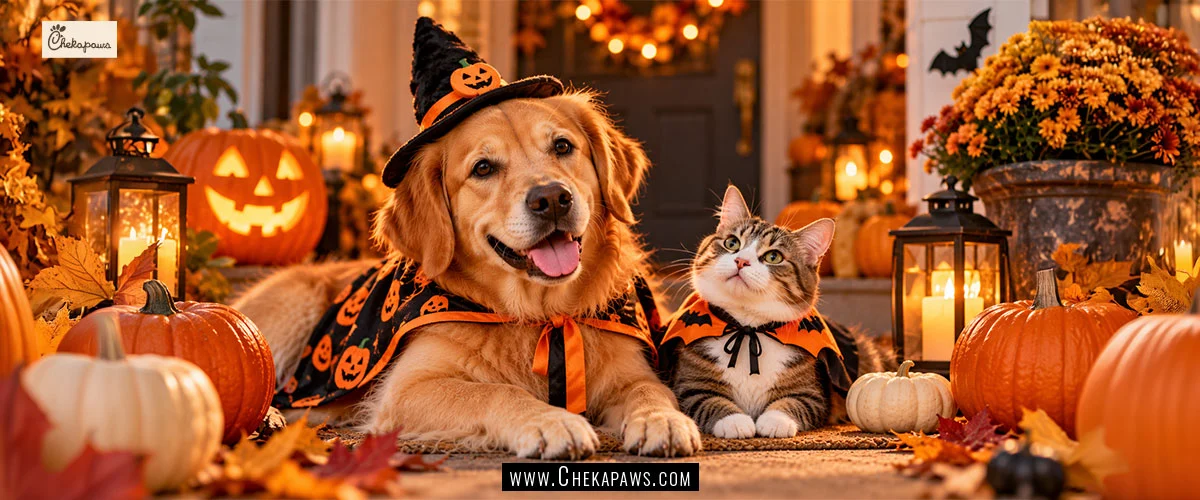
Halloween means costumes, decorations, treats, and a front door that keeps opening. For people, it’s a fun night. For dogs and cats, it can mean a stream of strangers, strange sounds, tempting snacks and new objects to chew or climb.
Table of Contents
Introduction
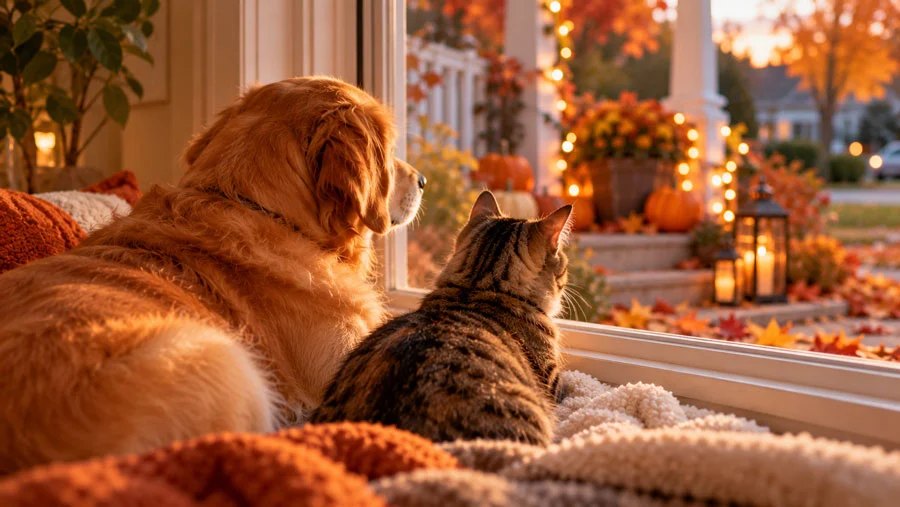
Most Halloween problems are easy to prevent with a little planning. This guide covers ten practical safety tips, how Halloween risks differ for dogs and cats, how to prepare a calm space, a simple plan for the night itself, and what to do if something goes wrong.
At Chekapaws, we want every pet parent to enjoy the season without an emergency vet visit.
Related Topics:
- Dog Skin Care After Shaving: 5 Warning Signs, Aftercare Tips and When to Call the Vet
- Dog POV Cameras: What I Learned Filming My Dog, Plus a Complete Safety Guide
- Cat POV & Collar Cameras: See the World Through Your Cat’s Eyes
Why Halloween Is Different for Pets
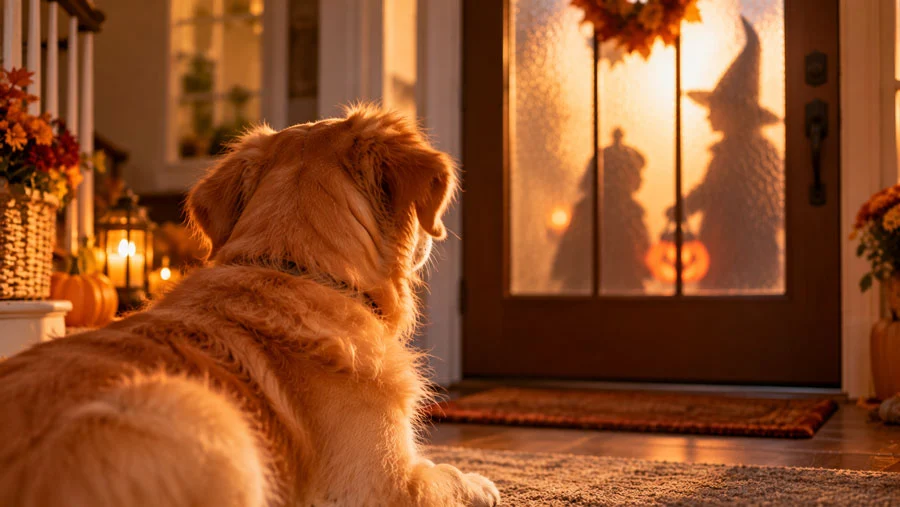
Pets rely on routine. Halloween disrupts almost every part of it: the doorbell rings repeatedly, unfamiliar people arrive in masks and costumes, and the house smells and looks different.
How Dogs and Cats React Differently
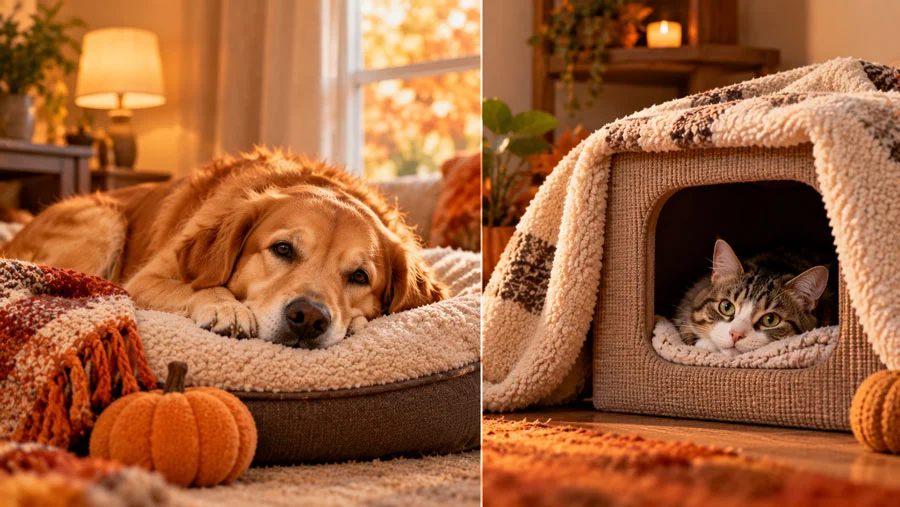
| Dogs | Cats | |
|---|---|---|
| Common reactions | Barking, excitement, jumping, anxiety, trying to greet visitors | Hiding, freezing, fleeing or bolting through open doors |
| Biggest risks | Eating candy, chewing decorations, door dashing | Hiding in unsafe spots, escaping, batting at small objects or cords |
| Best setup | A quiet room with familiar bedding and a chew or puzzle toy | A closed room with a hiding spot, litter box and water |
Knowing which pattern fits your pet helps you prepare for the right problems.
Related Topics:
- Dog Strollers 101: A Complete Guide to Choosing, Introducing & Using One Safely
- Cat vs Big Cat: Key Differences, Similarities and Fascinating Facts
- 5 Eco-Friendly Ways to Clean Up After Your Dog on a Walk
10 Halloween Pet Safety Tips Every Pet Parent Should Know
1. Keep Candy and Chocolate Out of Reach
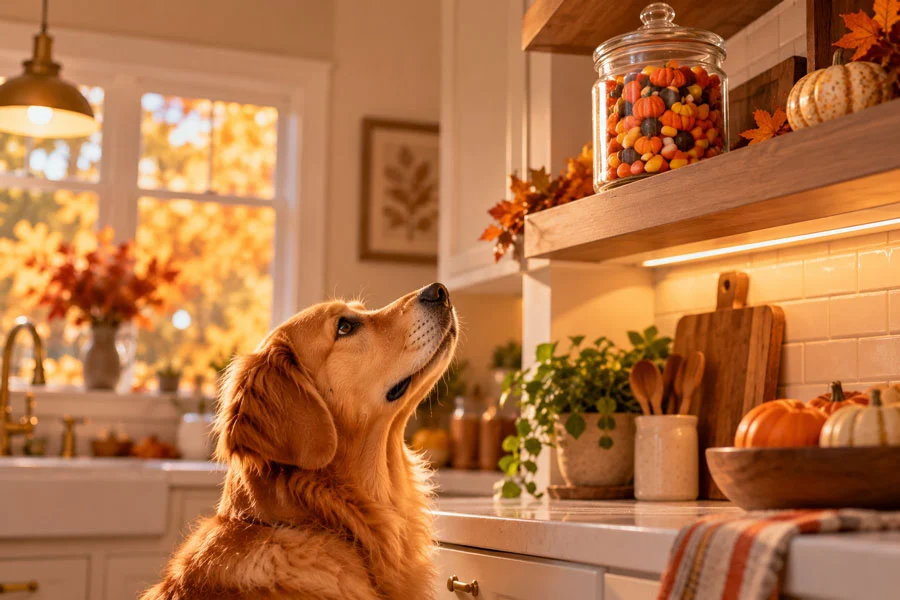
Halloween candy is one of the biggest hazards for pets. Chocolate contains theobromine and caffeine, which are toxic to dogs and can also harm cats. Dark and baking chocolate are the most dangerous.
Sugar-free candy and gum may contain xylitol, a sweetener that can cause a dangerous drop in blood sugar in dogs. Raisins are another risk and candy wrappers can cause choking or blockages if swallowed.
How to prevent it:
- Store candy in closed cupboards or sealed containers, not on low tables or in open bowls.
- Keep trick-or-treat bags off the floor and out of reach of curious noses.
- Teach children not to share treats with pets.
- Offer pet-safe treats instead so your pet doesn’t feel left out.
If your pet eats something dangerous: Contact a veterinarian right away. Don’t wait for symptoms and don’t try to make your pet vomit unless a vet tells you to.
Related Topics:
- Why Is My Cat Pooping Outside the Litter Box? 5 Common Reasons and How to Fix It
- Dog Safety on Raksha Bandhan: The Complete Pet Parent’s Guide to a Joyful, Hazard-Free Rakhi
- Balancing Work and Pet Care: A Practical System for Working Pet Parents
2. Choose Safe, Comfortable Costumes
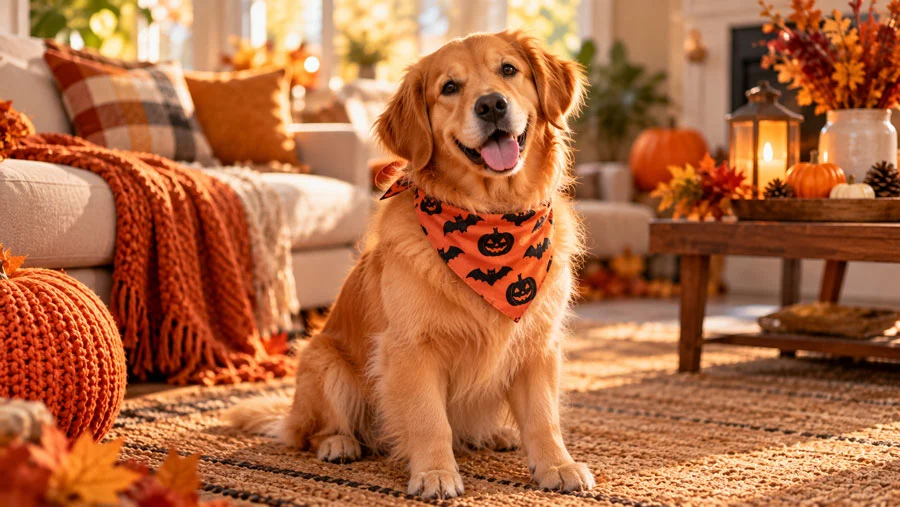
A costume should never get in the way of breathing, seeing, hearing or moving. Tight straps, heavy fabric and loose pieces can cause stress, overheating or choking.
Costume safety checks:
- Choose a lightweight design that fits properly.
- Make sure your pet can walk, sit, lie down, and see clearly.
- Avoid dangling pieces, buttons, ribbons, and small detachable parts.
- Check for tight straps around the neck, chest, and legs.
- Stay with your pet whenever they’re wearing it.
Signs your pet isn’t happy: freezing in place, flattened ears, repeated scratching, trying to back away, or constantly trying to pull it off. If you see any of these, remove the costume right away.
Try a Costume Practice Run
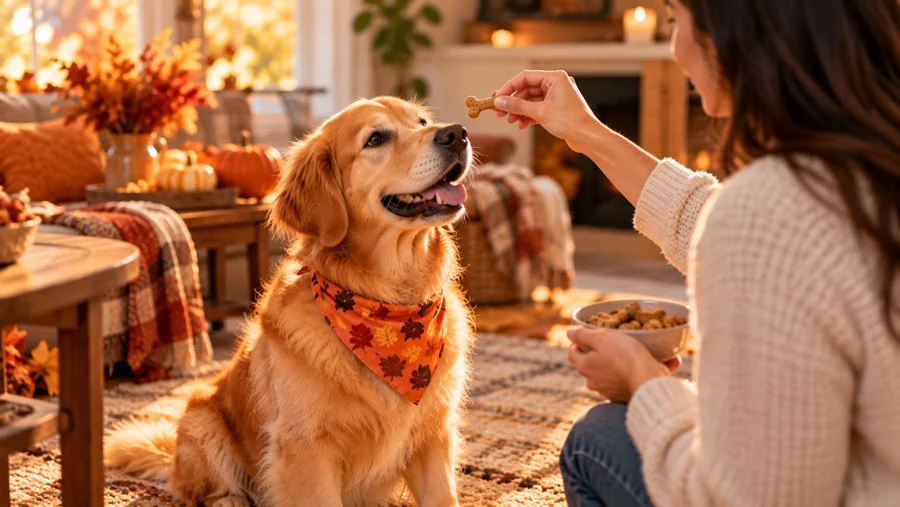
Let your pet wear the costume for a few minutes a few days before Halloween, with treats and praise. If they’re still uncomfortable, a festive collar or bandana is a safer choice.
Related Topics:
- What to Do If Your Dog Has an Accident Indoors: A Complete Guide for Pet Parents
- How to Prevent Dog Fights at Home: A Complete Guide to Building a Peaceful Multi-Dog Household
- What Dogs Can Teach Us About Loyalty: 10 Heartwarming Lessons Every Pet Parent Can Learn
3. Keep Decorations Out of Reach
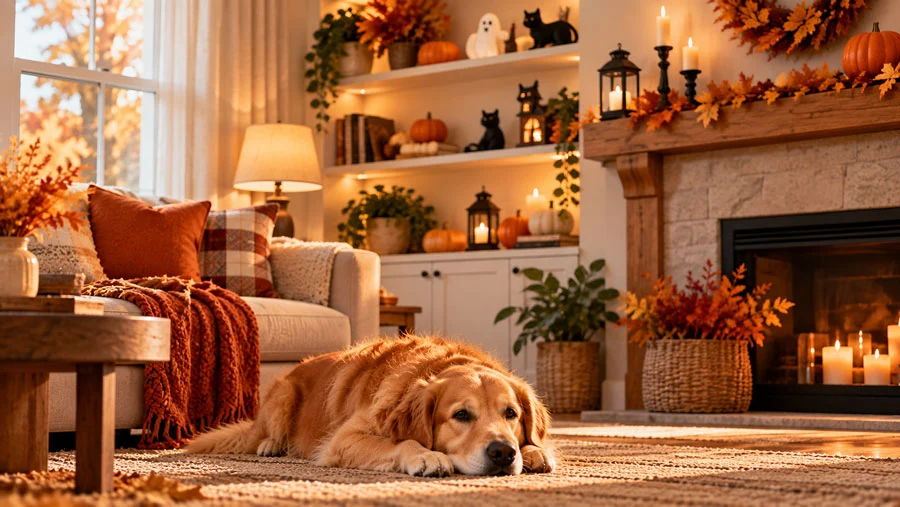
Fake cobwebs, plastic spiders, ribbons, strings, and small ornaments can all cause choking or intestinal blockages. Electrical cords and lights are also risky for chewers.
Pet-friendly decorating tips:
- Place small decorations on high, stable surfaces.
- Avoid loose cobwebbing and anything with detachable parts.
- Secure cords and keep lights out of chewing range.
- Keep breakable items away from play areas.
- Check decorations for damage before and after Halloween.
A carved pumpkin left out for days can also grow mold, so avoid letting pets chew or lick old pumpkin pieces.
4. Swap Open Flames for Safer Lighting
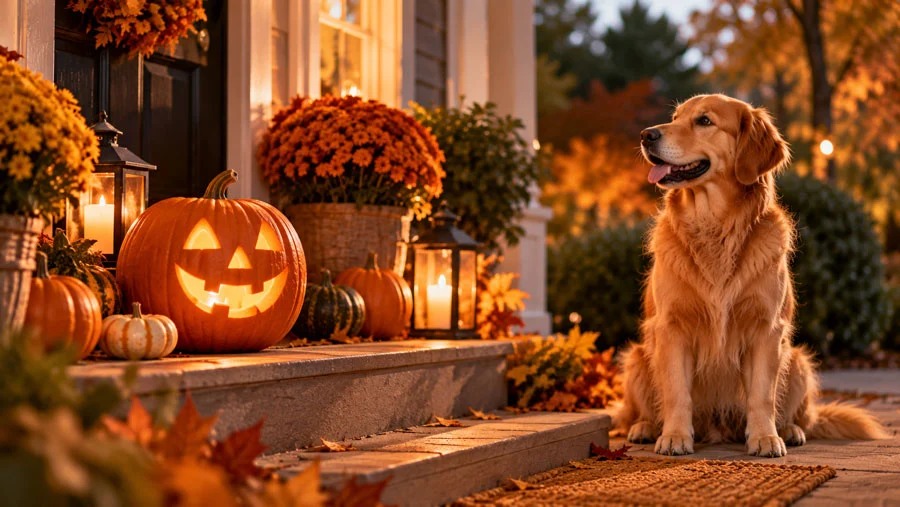
A wagging tail or a cat jumping on a table is all it takes to knock over a candle. Battery-operated LED candles give you the same glow without the burn or fire risk.
Extra precautions:
- Never leave a pet alone near a flame.
- Place pumpkins and lanterns where they can’t be tipped over.
- Keep lights and cords away from chewing pets.
Related Topics:
- 15 Fun Rainy Day Activities for Dogs to Keep Them Happy, Active, and Mentally Stimulated
- What Every Dog Owner Should Know: 15 Essential Lessons for a Happier, Healthier Dog
- How to Train a Rescue Dog: A Complete Guide to Building Trust and Good Behavior
5. Keep Pets Calm During Trick-or-Treating
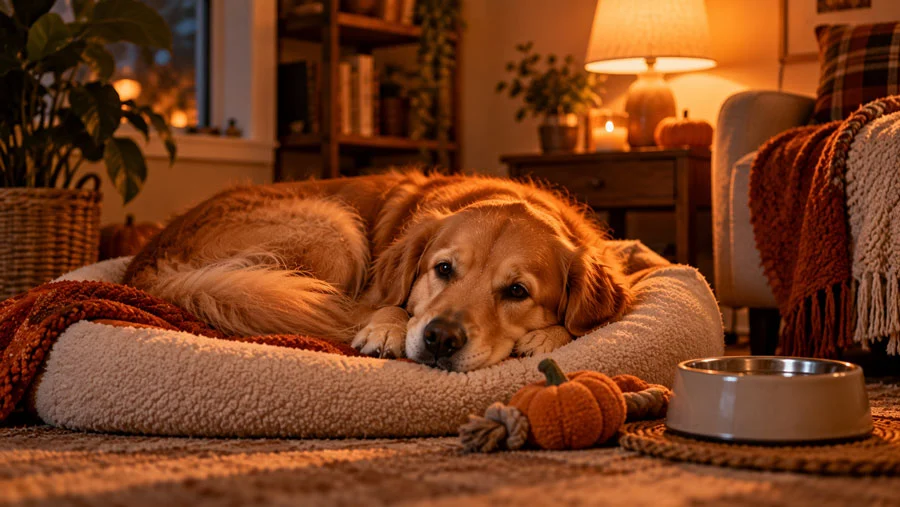
Doorbells, loud greetings, and costumed visitors can overwhelm sensitive pets. Some bark, pace, or tremble. Others hide or try to escape.
Ways to reduce Halloween anxiety:
- Set up a quiet room away from the front door before the evening begins.
- Provide familiar bedding, toys, and fresh water.
- Close curtains to reduce visual stimulation.
- Play soft background music to mask outside noise.
- Offer a puzzle feeder or long-lasting chew if your pet enjoys one.
Never force your pet to greet visitors. If your pet becomes severely distressed during noisy events, talk to your veterinarian about a management plan.
6. Prevent Escapes Through Open Doors
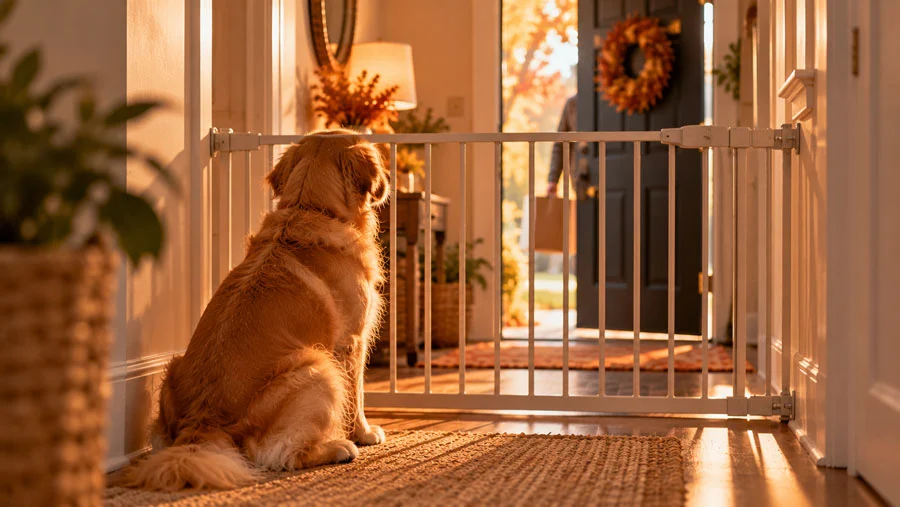
With trick-or-treaters arriving all evening, the front door opens again and again. A frightened or excited pet can slip out in a second and become lost in an unfamiliar crowd.
To prevent escapes:
- Keep pets in a secure room during busy periods.
- Use a pet gate or barrier at the entrance if appropriate.
- Check that windows, balcony doors and other exits are secure.
- Make sure your pet wears an ID tag with current contact details.
- Confirm microchip details are up to date, if your pet is microchipped.
- Use a secure leash and well-fitted harness for any outdoor bathroom breaks.
Indoor cats should have ID too, since unexpected escapes happen most during busy events.
Related Topics:
- The Best Games to Play with High-Energy Dogs
- How Dogs Communicate with Body Language: Understanding What Your Dog Is Really Saying
- What Makes Dogs Trust Humans? Understanding the Science and Heart Behind Canine Trust
7. Watch Out for Glow Sticks and Small Accessories
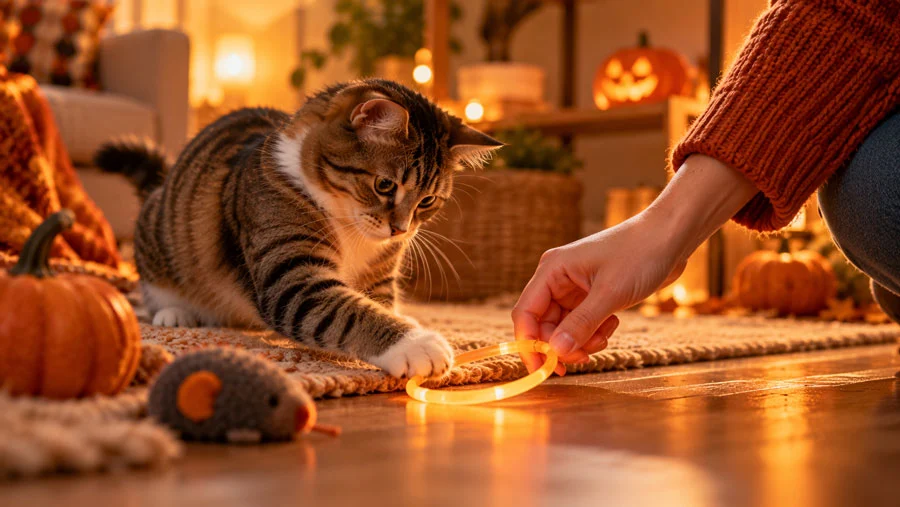
Glow sticks, glow jewellery, plastic fangs and small costume pieces can cause problems when chewed. The liquid inside many glow products tastes bitter and may cause drooling and mouth irritation and plastic pieces can create choking or blockage risks.
Precautions:
- Store glow sticks and small accessories securely.
- Don’t let pets chew Halloween jewelry or costume pieces.
- Clean up broken items immediately.
- Check the floor after parties and trick-or-treating.
If your pet chews or swallows something hazardous, contact your veterinarian. If your pet has trouble breathing, collapses, or shows severe symptoms, seek emergency care.
8. Keep Party Foods and Leftovers Away From Pets
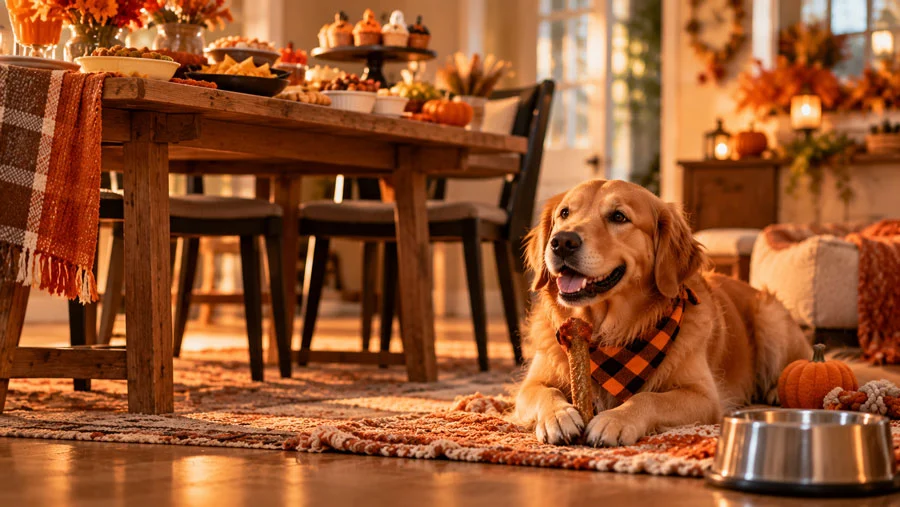
Candy isn’t the only Halloween food hazard. Parties and gatherings bring desserts, snacks and leftovers that can upset or poison pets.
| Food or ingredient | Why it’s a concern |
|---|---|
| Chocolate and caffeine | Can affect the heart and nervous system |
| Xylitol | Can cause dangerous low blood sugar and liver problems in dogs |
| Grapes and raisins | Can cause kidney injury in dogs |
| Onions and garlic | Can damage red blood cells in dogs and cats |
| Alcohol | Can cause serious poisoning |
| High-fat foods | Can trigger stomach upset and pancreatitis |
| Cooked bones | Can splinter and cause choking or internal injury |
Keep your pet’s regular diet consistent. If you want to give a special treat, choose a food you already know is safe for them and offer a small portion.
Related Topics:
- Complete Spring Pet Grooming Checklist for Dogs and Cats
- How to Brush Your Pet’s Teeth Without the Struggle
- How to Help Your Cat Adjust to Seasonal Changes: A Complete Guide for Pet Parents
9. Protect Outdoor Pets and Community Animals
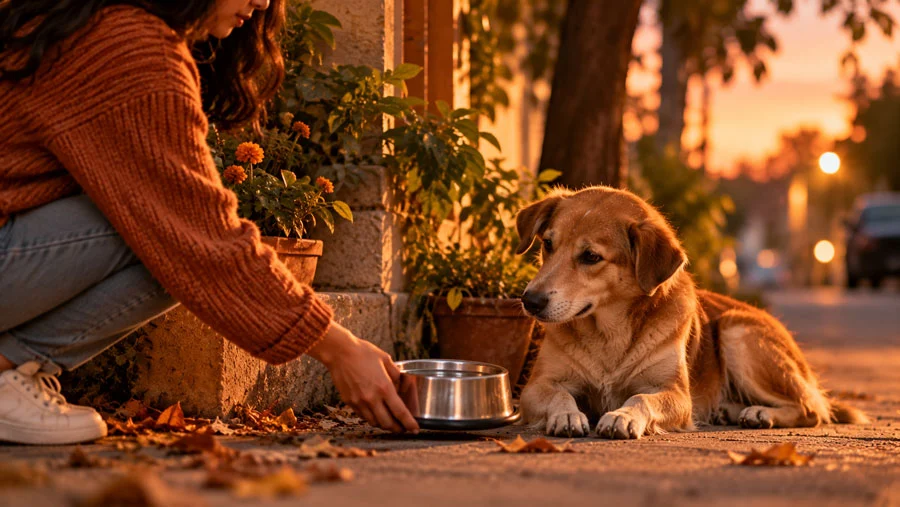
Increased traffic, crowds, and sudden noises can frighten outdoor pets and stray animals. If you care for community dogs or cats, a few small steps can help.
- Provide clean water in a safe, familiar spot.
- Keep feeding areas away from busy roads and crowds.
- Avoid loud noises like firecrackers near animals.
- Don’t force costumes or accessories on unfamiliar animals.
- Keep wrappers and plastic decorations away from feeding spots.
- Contact a local vet or animal welfare group if an animal appears injured or unwell.
If your own pet usually spends time outside, bring them indoors during the busiest part of the evening.
10. Prepare a Halloween Pet Emergency Plan
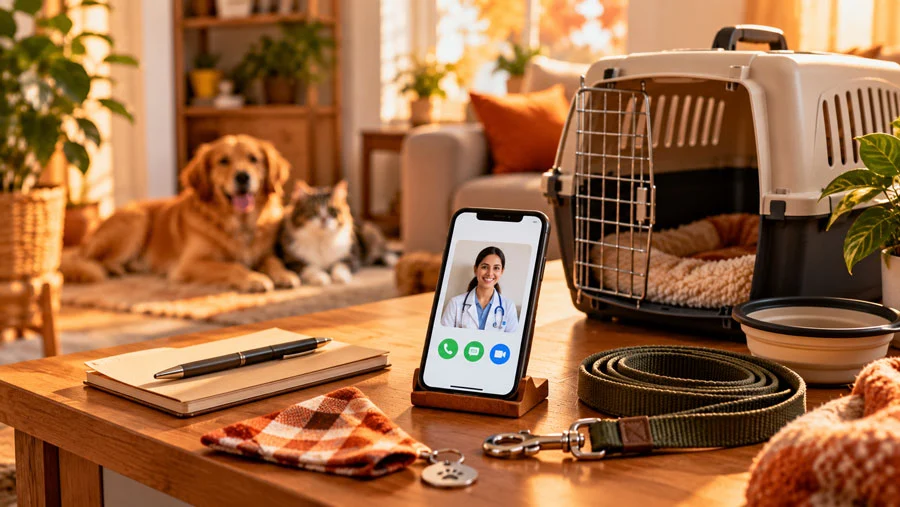
Even careful households have accidents, so preparation saves time.
Before Halloween:
- Save your veterinarian’s phone number.
- Identify an emergency clinic that’s open after hours.
- Keep your pet’s carrier or leash easy to reach.
- Store medications and cleaning products securely.
- Note what, how much, and when if your pet eats something unusual.
- Keep any packaging so you can share the ingredients with a vet.
If you suspect poisoning, call a veterinary professional immediately, even if your pet seems fine. Some toxins cause delayed symptoms. Seek urgent care if your pet has trouble breathing, collapses, has seizures or shows severe symptoms.
Related Topics:
- How to Care for a Pregnant or Nursing Cat: Complete Guide for Healthy Mom and Kittens
- How to Train a Dog to Come When Called: Easy Recall Training Tips
- Pet Garden Safety Guide: Introducing Outdoor Spaces Without Risks
Signs Your Pet May Need Veterinary Help
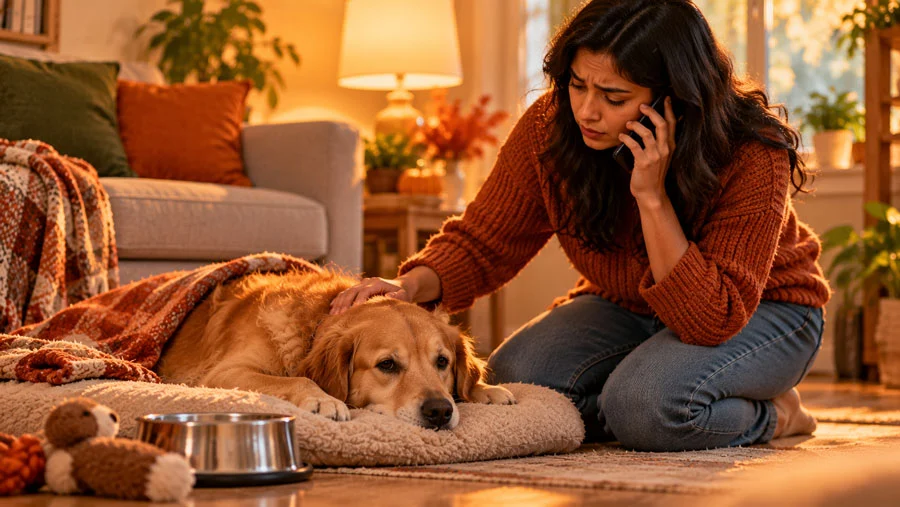
Call your vet or an emergency clinic if you notice:
- Repeated vomiting or diarrhea
- Restlessness, tremors, or seizures
- Excessive drooling
- Rapid breathing or heartbeat
- Weakness, collapse, or unusual lethargy
- Swollen or painful belly
- Trouble breathing at any point
If you’re unsure, it’s always better to call than to wait.
Related Topics:
- Therapy Dogs vs Facility Dogs: Key Differences Every Pet Lover Should Know
- What My Dog Thinks of My Work-From-Home Meetings
- How Having a Pet Impacts Your Family Dynamic
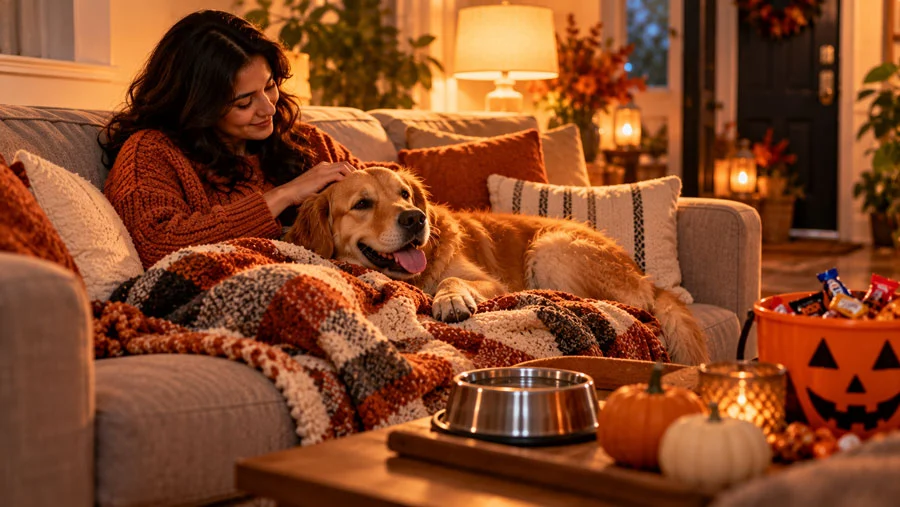
A Simple Halloween Night Plan for Pet Parents
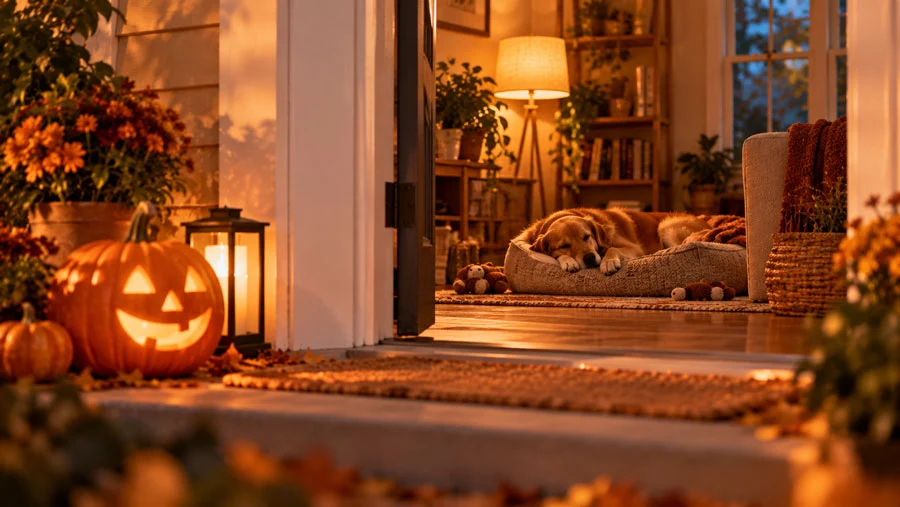
A plan beats improvising when the doorbell starts ringing.
Earlier in the Day
- Give your pet a good walk or play session to burn off energy.
- Set up their quiet room with bedding, water, and toys.
- Put candy and decorations in their safe places.
Before Trick-or-Treating Begins
- Check ID tags and secure gates and doors.
- Move your pet into their quiet space before the first visitors arrive.
- Turn on soft music or a fan to dampen noise.
During the Evening
- Keep the door area clear and use a bowl on the porch if you can.
- Check on your pet regularly without making a fuss.
- Avoid letting them near the door or crowd.
After the Night Ends
- Sweep the floor and yard for dropped candy and wrappers.
- Put away decorations and cords.
- Give your pet a calm, quiet wind-down.
Related Topics:
- 11 Fascinating Facts About Cats Every Pet Parent Should Know (Backed by Science!)
- Eco-Friendly Pet Parenting: Sustainable Tips to Raise Happy Pets & Protect the Planet
- Pet-Safe Balcony Design: How to Create a Safe Balcony or Terrace for Dogs and Cats
Quick Halloween Pet Safety Checklist
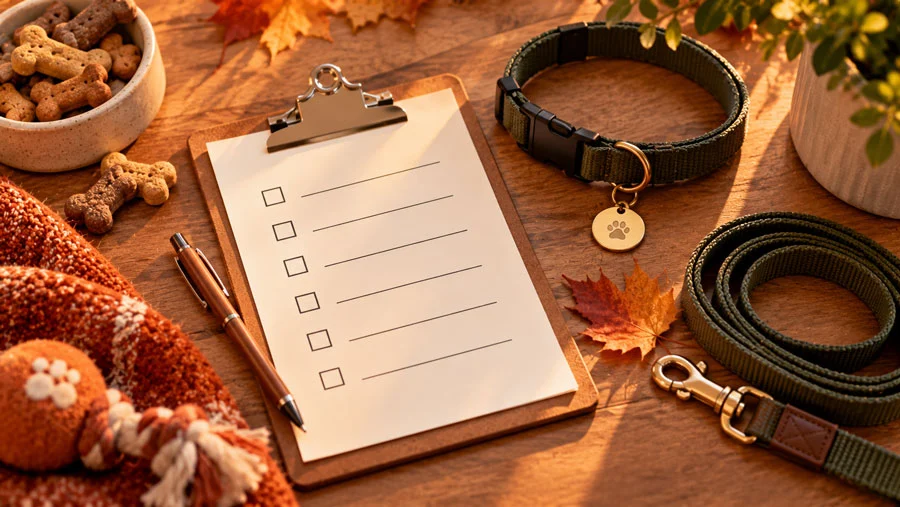
- Candy, chocolate, and unsafe foods stored securely
- Costume tested for comfort, if used
- Decorations and cords secured or removed
- LED lights in place of open flames
- Quiet, secure space prepared
- Doors, windows, and gates checked
- Collar, ID tag, and microchip details up to date
- Glow sticks and small accessories put away
- Outdoor pets protected from crowds and noise
- Vet and emergency clinic details saved
Related Topics:
- Signs Your Dog Is Bored: Causes, Behaviors & How to Keep Them Happy
- How to Make Holi a Pet-Friendly Celebration: A Complete Safety Guide for Dog and Cat Parents
- Pet-Friendly Hotel Reviews & Road Trip Safety Tips for Traveling with Pets
Frequently Asked Questions
Is Halloween dangerous for dogs and cats?
Not by itself, but it introduces risks like toxic candy, unsafe decorations, restrictive costumes, and loud, stressful situations. With preparation and supervision, most pets stay safe.
Can dogs eat Halloween candy?
No. Chocolate, xylitol-containing sweets, and raisins can be toxic, and wrappers can cause choking or blockages. Stick to pet-safe treats.
Should I dress my dog or cat in a costume?
Only if they’re comfortable. Choose a lightweight, properly fitted design, never force it, and remove it if your pet shows signs of stress.
How can I keep my pet calm on Halloween night?
Set up a quiet room with familiar bedding, water, and toys. Keep your pet away from the front door, reduce noise where you can, and let them rest.
Are Halloween decorations safe for pets?
Some are, but candles, cords, fake cobwebs, ribbons, small plastic items, and fragile ornaments can cause harm. Keep them out of reach and supervise curious pets.
What should I do if my pet eats chocolate or candy?
Contact your veterinarian or an emergency clinic right away. Tell them what your pet ate, how much, and when, and keep the packaging handy. Don’t induce vomiting unless a vet instructs you to.
Is pumpkin safe for pets?
Plain, fresh pumpkin is generally considered safe in small amounts for many pets, but carved or decorated pumpkins that have been sitting out can grow mold and may have candle wax or decorations nearby. Ask your vet before feeding any new food.
Should I take my dog trick-or-treating?
Only if your dog is relaxed around crowds, costumes, and noise. Many dogs prefer a quiet night at home. Use a secure leash and harness if you do go.
Related Topics:
- How to Host a Doggy Valentine’s Party: Fun, Safe & Paw-fect Ideas
- Healing with Paws: How a Dog Can Help Mend a Broken Heart
- Dog Digestive Problems Explained: Causes, Signs & Treatment
Final Thoughts: Keep Halloween Fun and Safe for Your Pets
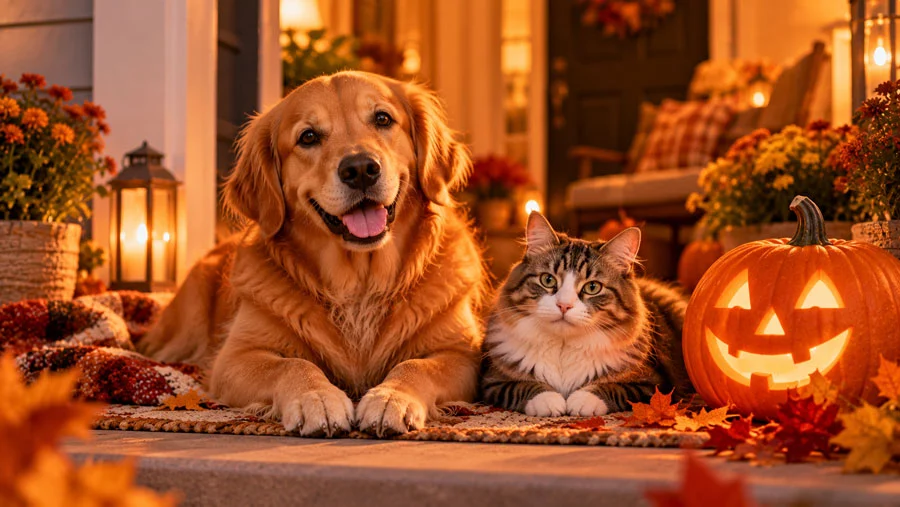
A safe Halloween comes down to a few habits: keep unsafe foods and decorations out of reach, choose comfortable costumes, plan for the doorbell and give your pet a calm place to wait it out. Every pet is different, so pay attention to what yours enjoys and what overwhelms them.
At Chekapaws, we encourage every pet parent to make safety and kindness part of every celebration. Take your photos, enjoy the decorations and put your pet’s comfort first.
Happy Halloween from Chekapaws.
Disclaimer: This article is for general information and isn’t veterinary advice. If you think your pet has eaten something harmful or seems unwell, contact your veterinarian immediately.
Related Topics:
- A Cat Parent’s Guide to Creating a Stress-Free Daily Routine for Cats
- How to Bond With a Fearful Cat and Earn Their Trust Naturally
- How to Read Your Cat’s Body Language and Behavior
- Are You Overfeeding Your Cat This Winter? Common Holiday Feeding Errors
- Cat Daily Water Intake: How Much Is Enough?
- Cat-Friendly Winter Holiday Tips Every Pet Parent Should Know
- How to Dog-Proof Your Christmas Tree And Decorations
- 10 Best Healthy Dog Treats of 2025
- Can Cats Find Their Way Home
- Self-Help for Correct Dog Discipline