Dogs are “man’s best friend” for good reason. They are genuinely amazing in their dedication, shared bond, and ability for human emotional connection. However, have you ever thought about why dogs first trust people?
Every healthy relationship, including the one you have with your dog, is built on trust. Knowing how dogs build trust can improve your relationship with your dog, regardless of whether you’ve welcomed a new puppy into your house or got a rescue dog.
The science underlying canine trust, actions that make dogs feel safe, and doable strategies for developing a connection based on mutual trust and understanding will all be covered in this blog.
Table of Contents
Why Trust Matters to Dogs
For dogs, trust is essential to survival more than just affection. Animals in the wild depend on the trust of their communities for security, food, and safety. Dogs that have been domesticated now lead completely different lifestyles, yet their instincts are still very much present.
When a dog has faith in a human, they are more likely to
- Feel secure and safe
- Learn new commands more quickly
- Become more adaptable to changes
- Show less anxiety and fear
- Develop closer emotional ties
- Show less issues with behavior
A trusting dog views their owner as a source of security, comfort, and direction.
The Evolution of Trust Between Dogs and Humans
Dogs and people have been friends for thousands of years. According to scientists, dogs were the first animals that humans domesticated, and the relationship developed over a period of between 15,000 and 30,000 years.
Dogs that were at ease with people had greater access to food and shelter across many generations. In exchange, humans benefited from dogs’ capacity to hunt, protect, and provide company.
Dogs have a unique ability to detect human emotions, movements, and intentions because of their long history.
Because of the deep emotional bonds that develop, some studies even make comparisons between the relationship between parents and children and the tie between dogs and humans.
How Dogs Learn to Trust Humans
Trust is not automatic. Dogs get it through frequent happy experiences. A dog’s perception of a person is shaped by every interaction.
Let’s examine the main factors that affect dog trust.
Confidence is Developed by Consistency
Dogs love consistency. Dogs learn what to expect when humans give them regular routines and reactions.
Examples consist of
- Feeding at regular times
- Keeping training cues constant
- Adhering to set walking schedules
- Applying the same guidelines and limitations
Dogs feel safer and more secure when their daily lives are consistent.
The Importance of Consistency
What if your dog’s favorite toy started frightening them every time they touched it? They would soon become confused and nervous.
In a similar vein, dogs may find it challenging to understand expectations due to inconsistent human behaviour, which eventually reduces confidence.
Positive Experiences Build Strong Associations
Dogs are very good at connecting feelings and experiences.
When regular interactions with someone lead to
- Treats
- Playtime
- Gentle affection
- Enjoyable experiences
- Positive reinforcement
Dogs start to identify that individual with positive things. These positive correlations progressively increase confidence and trust.
Positive Reinforcement’s Power
Dogs are taught through reward-based training that relaxing outcomes follow good behaviour. Rewarding desired actions instead of punishing them makes dogs feel safe and motivated to learn. When dogs understand that their interactions with people result in enjoyable experiences, trust grows.
Understanding Canine Body Language
Dogs use body language to communicate all the time. Dogs are more likely to trust humans who understand and honor these signals.
Signs of a Dog’s Comfort
- Relaxed body posture
- Soft eyes
- Loose wagging tail
- Play bows
- Rolling onto their side
- Choosing to stay close
Signs That a Dog Is Uncomfortable
- Lip-licking
- When not exhausted, yawning
- Turning away
- Tail tucked in
- Avoiding eye contact and shaking
Trust grows when people respect a dog’s boundaries and react appropriately to these signals.
Gentle Handling and Physical Respect
Not every dog likes to be hugged, touched unexpectedly, or handled roughly. When dogs believe they have some control over their physical interactions, trust grows.
Ways to Show Physical Respect
- Allow dogs to approach first
- Pet zones they enjoy, like the shoulders or chest
- Stop from pressuring others.
- When they are sleeping, give them space.
- Notice signs of discomfort
Dogs quickly learn which humans make them feel safe.
Meeting Basic Needs
Care is the foundation of trust.
Dogs rely on people for
- Food
- Water
- Shelter
- Exercise
- Veterinary care
- Mental stimulation
When these needs are consistently met, dogs develop confidence in their caregivers. If their fundamental feeling of security has been compromised, a neglected dog may find it difficult to trust.
The Role of Oxytocin: The Love Hormone
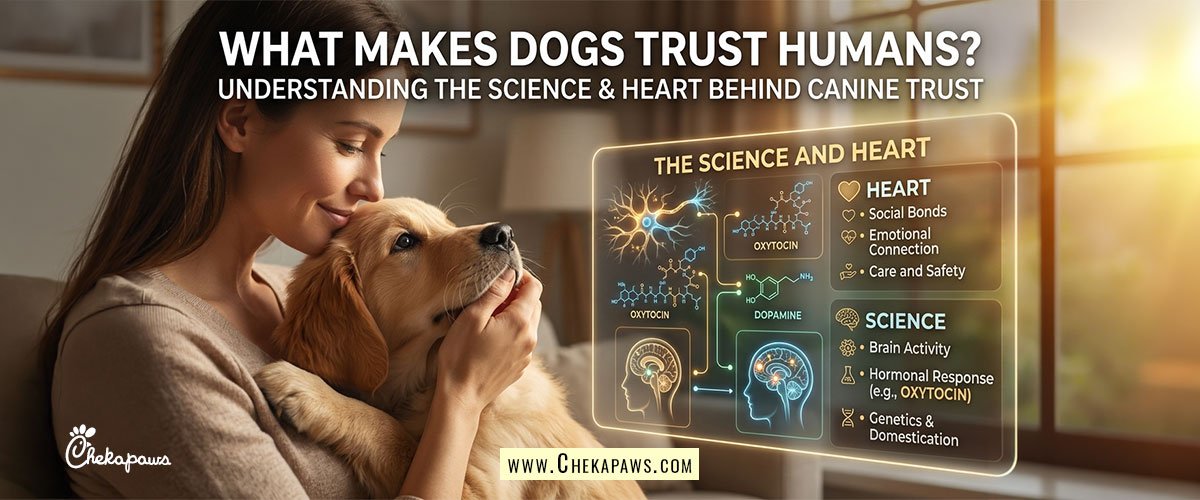
Oxytocin is one of the most interesting findings on the relationship between humans and dogs. Oxytocin is frequently referred to as the “love hormone” since it promotes social attachment and bonding.
Oxytocin levels rise in both people and canines when they make eye contact, according to studies.
This creates a positive feedback loop
- The dog looks at its owner.
- Oxytocin increases.
- Human feels affection.
- The dog is given positive attention.
- The bond gets stronger.
This biological connection helps explain why dogs and humans form such deep emotional relationships.
Why Some Dogs Trust Faster Than Others
Each dog has an own personality and background. How quickly a dog learns to trust depends on a number of factors.
Breed Characteristics – Compared to other breeds, some are inherently more outgoing and people-oriented. Individual personalities vary, although some breeds could be more social or cautious than others.
Early Socialization – Puppies who have positive experiences with people in their early years tend to grow up to be more self-assured adults. Dogs that are properly socialized perceive people as reliable and safe.
Previous Experiences – Dogs that have experienced trauma can need more patience. Rescue dogs that have been abused, neglected, or abandoned may require more time to regain their self-confidence.
Individual Temperament – Similar to people, some dogs are more reserved by nature, while others are sociable right away. Depending on personality, trust develops at different times.
Common Mistakes That Damage Trust
Trust can be unintentionally damaged by even dedicated pet owners.
Avoid these typical mistakes
Punishing Behaviour Based on Fear
A dog that is frightened isn’t being stubborn. Punishing growling, hiding, or nervous behavior can make fear worse and reduce trust.
Instead, you should identify the cause of their fear and gradually boost their confidence.
Neglecting Boundaries
Forcing interactions, especially with shy dogs, can create stress. Whenever possible, let dogs interact on their own terms.
Uncertain Rules
Dogs get confused if jumping on the couch is allowed one day and punished the another day. Dogs feel more comfortable when there are clear expectations.
Lack of Mental Stimulation
Dogs that are bored may experience anxiety and frustration. Mental enrichment improves human-dog relationships and improves self-esteem.
How to Build Trust With Your Dog
These easy steps can be helpful if you seek to strengthen your relationship.
Spend Time Together
Shared experiences establish trust.
Try
- Daily walks
- Play sessions that are interactive
- Training games
- Exploring new surroundings
- Relaxing together at home
Your bond gets stronger as you share more great experiences.
Learn Your Dog’s Preferences
Each dog is different. While a some dogs like fetch, others adore belly massages. Knowing what your dog likes to do shows respect for their individuality and builds trust.
Use Reward-Based Training
One of the finest ways to build trust is through training. Dogs that receive positive reinforcement are satisfied and communicate clearly.
Reward
- Desired behaviors
- Calm reactions
- New skills
- Proper choices
This encourages cooperation rather than fear.
Be Patient
It is impossible to rush trust. While some dogs build attachments fast, others take weeks or months to settle in. Patience is a sign of reliability and security.
Signs Your Dog Trusts You
Are you uncertain if your dog has trust in you?
Wondering if your dog trusts you?
Look for these signs
They Look for You – Even when they have other choices, a trusting dog chooses to spend time with you.
They Make Eye Contact – Comfort and connection are frequently indicated by soft, relaxed eye contact.
They Sleep Close to You – Sleeping leaves dogs vulnerable. Choosing to sleep close to you reflects a strong sense of security.
They Follow You Around – Many dogs naturally follow people they trust because they feel safest in their presence.
They Show Their Belly – Although it is a dangerous position, exposing one’s belly frequently indicates confidence and trust.
They Respond Happily to Your Presence – Positive indicators of trust and affection include a wagging tail, a relaxed body, and joy at returning home.
Building Trust With Rescue Dogs
Rescue dogs frequently need extra compassion.
To help a rescue dog trust
- Establish a predictable routine
- Allow them to set the pace
- Avoid stressful circumstances
- Make use of positive reinforcement
- Create secure areas
- Celebrate small achievements
Keep in mind that recovery takes time. Every good interaction results in the creation of a fresh foundation of trust.
The Lifelong Nature of Trust
Trust is something that must be earned and maintained over time. It needs constant focus, just like any other relationship.
Strong bonds are maintained by regular interactions, cordial communication, stability, and kindness.
Fortunately, every walk, workout, comforting hug, and journey you go on together offers a chance to deepen your bond.
Conclusion
In the end, dogs’ trust in people is based on one simple idea: feeling secure. Dogs have trust in those who regularly care for their needs, respect their limits, speak properly, and foster happy experiences.
Trust is developed one interaction at a time, whether you’re caring for a joyful puppy or helping a rescue dog in finding a new home. You build a lifelong friendship with your dog by being aware of their feelings and reacting to them with kindness and acceptance.
At Chekapaws, we think that the secret to happier, healthier pets is strong connections. Dogs and humans have one of the most lasting connections in the world of animals when trust grows.
FAQ: What Makes Dogs Trust Humans?
How long does it take a dog to establish human trust?
Each dog is different. While some dogs—especially rescue dogs—develop trust in a matter of days, others may require weeks or months.
Can a dog lose trust in its owner?
Indeed. Trust can be weakened by bad experiences, uneven treatment, severe punishment, or neglect. Fortunately, time and positive relationships can frequently assist in rebuilding trust.
Do dogs naturally trust humans?
Due to thousands of years of domestication, many dogs have a natural tendency to form bonds with people, but trust still grows by experience.
How can I determine whether my rescue dog has trust in me?
Signs include seeking your company, relaxed body language, taking treats comfortably, sleeping near you, and responding positively to your presence.
Does training have a role to build trust?
Of course. Positive reinforcement training improves communication, boosts self-esteem, and strengthens the relationship between dogs and their owners.