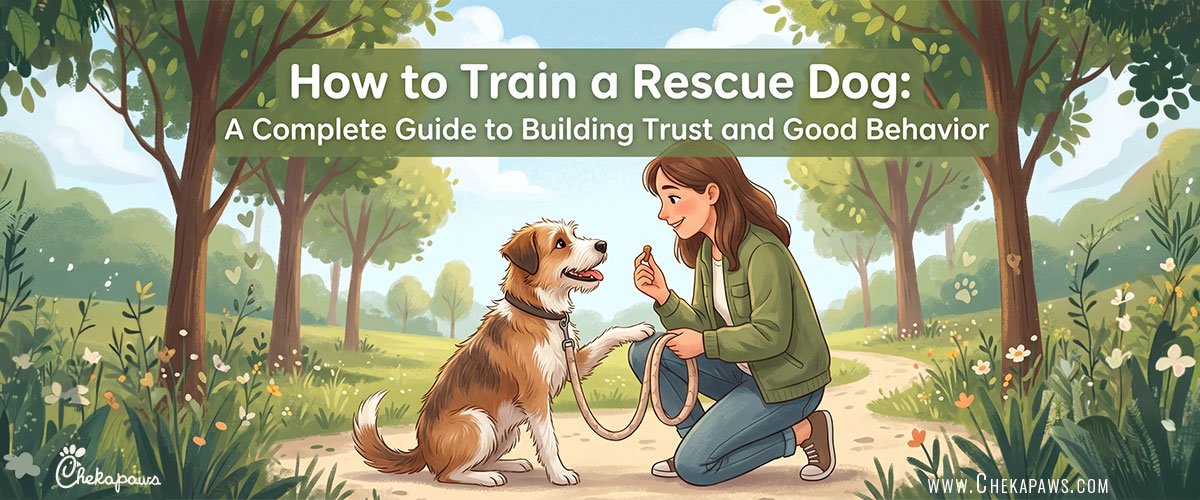
One of the most satisfying things a pet owner can do is adopt a rescue dog. Your new companion deserves a second opportunity at a fulfilling life, regardless of whether they came from a foster home, shelter, or rescue group. I personally rescued a dog, and she has been with us for the last two years.
However, a lot of rescue dogs come with unknown pasts, phobias, fears, or behavioral issues. Some might have been neglected, abandoned, or not properly trained. Therefore, it takes tolerance, understanding, and regular training to help them adapt to their new surroundings.
The good news is that most rescue dogs can regain their trust and develop into amazing family members with the correct training. We’ll look at useful methods for teaching a rescue dog while creating a solid and enduring relationship in this tutorial.
Table of Contents
Understanding Your Rescue Dog’s Background
It’s important to realize that your rescue dog could require some time to adapt before starting any training program.
Certain rescue dogs might
- Be scared of new people or environments
- Experience separation anxiety
- Lack basic obedience skills
- Be unfamiliar with household routines
- Act in a defensive or reactionary way
- Have been traumatized or received uneven treatment
It’s better to approach training with empathy rather than presumptions because you might not fully understand their past. Keep in mind that your dog’s behavior frequently reflects their comfort level and past experiences.
Give Your Dog Time to Decompress
Expecting a rescue dog to adjust to their new home right away is one of the biggest mistakes made by new adopters.
Many experts refer to the “3-3-3 Rule”:
Initial Three Days
Your dog can experience anxiety, overwhelm, or withdrawal.
Initial Three Weeks
They start picking up routines and growing more at ease.
Initial Three Months
Your dog begins to feel safe and express who they really are.
During this time of adjustment
- Keep expectations realistic
- Avoid overwhelming situations
- Maintain a calm environment
- Allow your dog to explore at their own pace
During this phase, patience establishes the groundwork for effective instruction.
Build Trust Before Focusing on Obedience
The foundation of rescue dog training is trust. Dogs are far more likely to learn and cooperate when they feel comfortable.
Ways to Build Trust
Establish a Routine
Dogs love consistency.
Create regular timetables for
- Feeding
- Walks
- Potty breaks
- Playtime
- Bedtime
Regularity lowers anxiety and gives your dog a sense of security.
Respect Their Boundaries
If your dog appears uneasy, try not to push interactions.
Allow them to
- Approach you willingly
- Decide when to engage
- Have access to a quiet retreat space
- Speak in a Calm Voice
Talk confidently and softly. Avoid harsh corrections, punishing, or yelling as these can undermine trust and create fear.
Use Positive Reinforcement Training
The most effective and compassionate method of training a rescue dog is through positive reinforcement.
This method rewards desirable behavior instead of punishing unwanted behavior.
Common Rewards
- Small treats
- Praise
- Toys
- Petting
- Play sessions
Reward your dog right away when they exhibit a positive trait.
Dog sits → reward
“Dog comes when called → reward
When people are around, the dog stays calm and is rewarded.
This makes it easier for your dog to link positive outcomes with good behavior.
Start with Basic Commands
Once your dog is at ease, focus on teaching them the basics of obedience.
Sit
“Sit” is frequently taught as the first command.
Method
- Keep a treat close to your dog’s nose.
- Slowly raise it.
- As their head follows the treat, their bottom naturally lowers.
- Say “Sit.”
- Reward right away.
Stay
Stay “Stay” conveys safety and self-control.
- Ask your dog to sit.
- Hold your hand our and say, “Stay.”
- Move back a step.
- Reward if they stay in place.
- Increase duration and distance gradually.
Come
In dangerous circumstances, a trustworthy recall order can keep your dog safe.
- Say the name of your dog.
- With a smile, say “Come.”
- Reward generously when they reach you.
- Practice frequently in low-distraction environments.
Leave It
By using this command, you can keep your dog from taking up dangerous objects.
Give your dog a treat if they ignore something after being told to “Leave It.”
House Training a Rescue Dog
It’s possible that even adult rescue dogs lack complete house training.
Establish a Potty Schedule
Take your dog outside
- Early in the morning
- After meals
- After naps
- Prior to going to bed
- Every few hours initially
Reward accomplishment
When your dog urinates outside, give them praise and a reward right away.
Avoid Punishment
If accidents take place
- Thoroughly clean
- Remain cool.
- Maintain supervision
Punishment can create fear and confusion.
Address Common Rescue Dog Behavior Challenges
Fear
Dogs that are afraid must be slowly introduced to new situations.
Practical Tips
- Reward composed behavior
- Allow observation from a safe distance
- Never force interactions
Over time, confidence develops.
Separation Anxiety
A lot of rescue dogs develop strong bonds with their new owners.
Signs consist of
- Excessive barking
- Destructive actions
- Pacing
- House soiling
Training Solutions
- Practice short departures.
- Make use of puzzle toys
- Create a comfortable resting area
- Avoid dramatic greetings and departures
Leash Pulling
A lot of rescue dogs have never been taught how to use a leash.
Method of Training
- When the pulling starts, stop walking.
- Resume only when the leash loosens
- Reward walking next to you
The key is to be consistent.
Excessive Barking
Determine the cause first.
Common triggers consist of
- Fear
- Boredom
- Alerting
- Anxiety
Give
- Mental stimulation
- Exercise
- Training in positive conduct
Socializing a Rescue Dog Safely
Socialization need to be positive and gradual. Don’t rush your dog into crowded areas.
Introduce New Experiences Gradually
Examples consist of
- New people
- Dogs that are friendly
- Rides in cars
- Various surfaces
- Household sounds
Throughout the process, reward composed and self-assured behavior.
Keep in mind that socialization is more than just exposing your dog to everything at once, it also involves creating pleasant experiences.
Mental Enrichment Matters
Training goes beyond following orders.
Boredom and unwanted habits can be reduced by mental stimulation.
Great Enrichment Activities
Food Puzzles – Support problem-solving while offering rewards.
Snuffle Mats – Give dogs the opportunity to use their natural sense of smell.
Training Games – Practice commands in fun and engaging ways.
Hide-and-Seek – Improves connection and memory.
Dogs who receive brain stimulation are frequently calmer and simpler to train.
Be Consistent with Rules
Rescue dogs learn expectations through consistency.
Confusion arises when one family member supports a practice while another opposes it.
Establish household guidelines for
- Access to furniture
- Feeding schedules
- Walking expectations
- Greeting visitors
Make sure everyone abides by the same rules.
Celebrate Small Wins
Training a rescue dog is rarely a straight line.
Progress could seem as
- Taking treats from your hand
- Walking confidently on a leash
- Relaxing in a new room
- Responding to their name
- Sleeping peacefully through the night
Honor every accomplishment, no matter how minor. These moments represent growing trust and confidence.
When to Seek Professional Help
If your dog displays any of the following, think about consulting a behaviorist or professional trainer
- Extreme fear
- Aggression
- Severe anxiety
- Resource guarding
- Persistent behavioral challenges
A trained expert can design a customized training program that benefits you and your dog.
Conclusion
Teaching commands is only one step of training a rescue dog, another is making the dog feel safe, loved, and understood. Every rescue dog has a different backstory, and some might require more time to recover and adapt.
You can assist your rescue dog in gaining self-assurance and forming strong, long-lasting habits by emphasizing trust, patience, consistency, and positive reinforcement. The reward is a close relationship with a thankful companion who at last feels at home, even though the journey may require dedication.
Never forget that every tiny progress counts as a success. Your rescue dog can grow and develop into the loyal friend you’ve always desired with kindness and dedication.