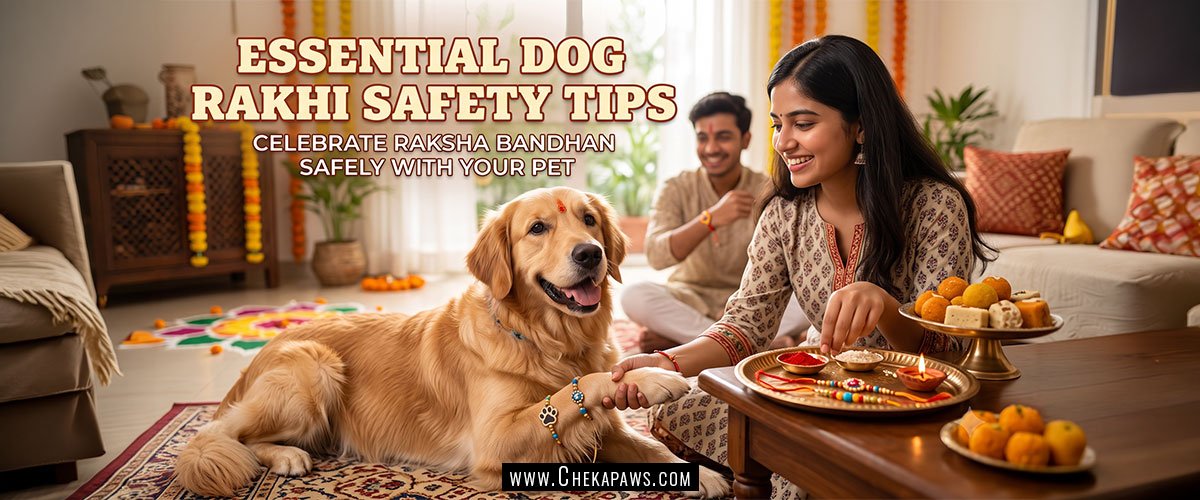
Dogs can safely take part in Raksha Bandhan if you use a lightweight, supervised rakhi, keep chocolate, xylitol and dry fruit out of reach, secure doors during guest arrivals and give your dog a quiet space to retreat to when things get overwhelming. The sections below explain exactly why each of these matters and what to do if something goes wrong.
Raksha Bandhan fills homes with sisters tying rakhis, brothers making promises, trays of mithai circulating from hand to hand and relatives arriving in waves throughout the day. For a dog who lives in that home, none of that context exists.
What your dog experiences is a sudden change in smell, sound and rhythm: unfamiliar people entering through a door that keeps opening and closing, new objects appearing on wrists and tables, food smells stronger and sweeter than usual and a household routine that’s been rearranged without explanation.
That gap between what the celebration means to you and what it actually feels like to your dog is where almost every Rakhi-related pet emergency begins. This guide goes beyond a basic list of do’s and don’ts.
It explains the actual mechanisms behind the season’s biggest risks — why a swallowed thread is a surgical emergency, why “just one piece” of chocolate can be dangerous, why your dog’s stress signals show up long before a growl — and gives you a practical, day-by-day plan for making the festival safe and genuinely enjoyable for your dog, not just survivable.
Table of Contents
Understanding the Hidden Risks: Why Festival Days Are Different for Dogs

A dog’s nose contains hundreds of millions of scent receptors, compared to roughly six million in a human nose and the part of a dog’s brain devoted to analysing smell is proportionally many times larger than ours.
Practically, that means a room that smells pleasantly festive to you — incense, perfume, warm ghee, sugar, marigolds — can register as an overwhelming wall of competing signals to your dog.
Layer on unfamiliar voices, children moving unpredictably, a doorbell ringing every few minutes and a break from the usual walk-and-meal schedule and you have a sensory and routine disruption most dogs have no way to opt out of.
None of this means you shouldn’t celebrate with your dog nearby. It means the celebration needs a small amount of planning built around how dogs actually experience the world, rather than how the day looks to the humans in the room.
The rest of this guide walks through each major risk category in depth, starting with the one that sends the most dogs to emergency surgery every festival season: thread and string ingestion.
The Silent Danger of the Rakhi Thread: What Every Pet Parent Must Know
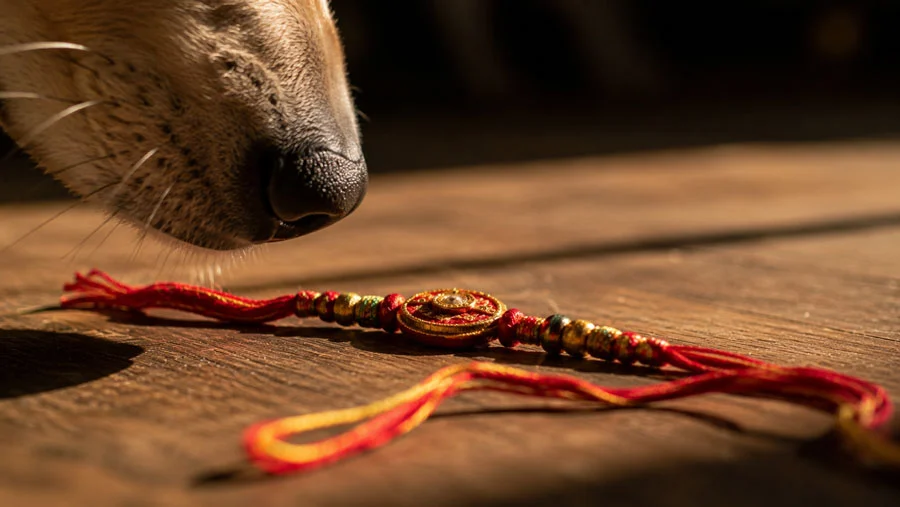
Rakhis look harmless: a bit of cotton or silk thread, sometimes with beads, tassels or a small charm. To a dog, a dangling thread is often irresistible to chew, tug or swallow — and unlike most hazards on this list, thread belongs to a category of foreign object that veterinarians treat as a genuine surgical emergency, not a wait-and-see situation.
Why a Swallowed Thread Is a Surgical Emergency, Not a Waiting Game
When a dog swallows a length of string or thread, one end can catch somewhere along the digestive tract — often at the base of the tongue or further down in the stomach — while the rest of the thread continues traveling through the intestine.
As the intestine contracts in its normal wave-like motion trying to move the thread along, the gut literally bunches up on itself around the anchored string, a process veterinarians call plication.
The taut thread can then saw through the delicate intestinal wall from the inside, a mechanism that can lead to perforation, peritonitis and life-threatening infection if it isn’t caught in time.
This is also why one of the most important pieces of advice in this entire guide is: if you ever see a thread hanging from your dog’s mouth or another opening, do not pull it.
If the far end is anchored internally, pulling can tear through the intestine and cause far more damage than leaving it alone until a veterinarian can assess the situation. Call your vet or an emergency animal hospital immediately and describe exactly what you’re seeing.
Watch for these signs in the hours and days after any suspected thread ingestion:
- Repeated vomiting or retching
- Loss of appetite
- Visible discomfort when the abdomen is touched
- Lethargy that doesn’t match the excitement of the day
- Straining without producing normal stool
Some dogs pass a swallowed thread without incident within a day or two. Others don’t — and because you can’t tell which outcome you’re dealing with from the outside, any known or suspected ingestion of rakhi thread, ribbon or decorative string warrants a same-day call to your vet, even if your dog seems completely fine.
Choosing and Using Rakhis Your Dog Can Wear Safely
If you’d like your dog to wear a rakhi for photos or the ceremony itself, the safest approach treats it the way you’d treat a costume accessory rather than everyday jewellery:
- Pick lightweight, low-embellishment designs. Skip loose beads, sequins, small charms, or anything glued rather than stitched.
- Use a breakaway or elastic base instead of a long, tightly knotted thread, so it can’t tighten under pressure or catch on furniture.
- Tie it onto a collar or harness strap, not directly around the neck skin, leg or tail, so there’s no risk to circulation or breathing.
- Treat it as supervised-only wear. Put it on for the ceremony and photos, then remove it — don’t leave it on your dog overnight or whenever they’re unsupervised.
- Do a two-finger check. You should be able to comfortably slide two fingers between the rakhi and your dog’s skin or fur; anything tighter risks irritation or restricted circulation.
If your dog tries repeatedly to chew, scratch at or remove the rakhi, that’s your dog telling you it’s uncomfortable — take it off rather than persisting for the sake of a photo.
The Science of Sweet Poisoning: Mithai, Chocolate and Hidden Toxins
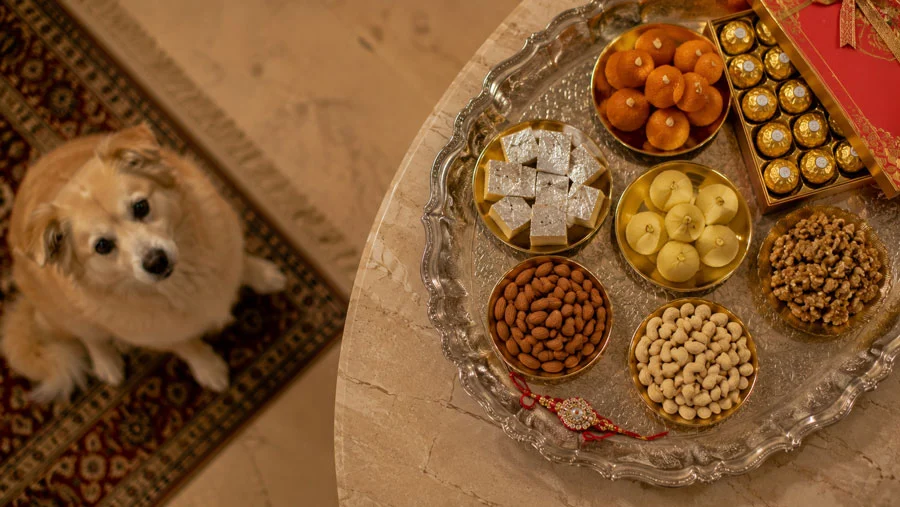
Raksha Bandhan runs on sweets — boxes of mithai passed between relatives, chocolate gifted alongside the rakhi, dry fruits tucked into festive hampers.
Several of the most common items on a Rakhi dessert table are genuinely dangerous for dogs and understanding why makes it much easier to stay vigilant when a plate is making the rounds.
Chocolate and Theobromine: Why “Just a Little Bite” Isn’t Harmless
Chocolate’s toxicity to dogs comes down to a compound called theobromine, along with a smaller amount of caffeine. Both belong to a class of stimulants that dogs metabolize far more slowly than humans do, which means theobromine builds up in a dog’s system rather than clearing quickly.
Depending on the type and amount consumed, effects can range from vomiting and diarrhea to a racing heart rate, tremors, seizures and in severe cases, death.
Not all chocolate is equally dangerous.
As a general rule, the darker and more concentrated the cocoa content, the more theobromine it contains — dry cocoa powder and unsweetened baking chocolate sit at the highest-risk end, followed by semisweet and dark chocolate, with milk chocolate containing comparatively less (though still enough to cause problems, especially in small dogs).
White chocolate contains only trace amounts of theobromine, but its high fat and sugar content can still trigger stomach upset or in some dogs, pancreatitis.
The practical takeaway: there’s no “safe” small amount to rely on, because toxicity depends on the type of chocolate, how much was eaten, and your dog’s body weight. A few grams of dark chocolate is a far bigger deal for a 4-kilogram dog than for a 30-kilogram one — but any chocolate ingestion in a dog of any size is worth a call to your vet.
Xylitol: The Fast, Silent Threat in “Sugar-Free” Treats
Xylitol is a sugar substitute increasingly common in sugar-free sweets, chewing gum, some peanut and nut butters, baked goods and even certain toothpastes and vitamins.
In humans, it’s essentially harmless. In dogs, it does something very different: it tricks the pancreas into releasing a rapid, large surge of insulin, which can cause blood sugar to crash to dangerously low levels in as little as thirty minutes.
At higher doses, xylitol can also cause acute liver failure, independent of the blood-sugar crash.
Because Rakhi gift hampers increasingly include “healthier” or sugar-free sweets aimed at health-conscious relatives, it’s worth actually reading labels before anything sugar-free goes anywhere near your dog — and keeping those items in a separate, closed container rather than the same open tray as everything else.
Signs of xylitol poisoning to watch for:
- Sudden weakness or wobbliness
- Vomiting
- Collapse or seizures
- Lethargy that comes on quickly
This is one of the fastest-moving toxins on this list. If you know or even strongly suspect your dog got into anything sugar-free, treat it as an emergency and call your vet immediately rather than waiting for symptoms.
Grapes, Raisins and the Mystery Toxin in Dry Fruits
Dry fruit is a Rakhi staple — in mithai, in gift hampers, in the small bowls relatives snack from during the visit. Raisins (and their fresh counterpart, grapes) sit in an unusual category of pet toxin: veterinary researchers still haven’t identified exactly which compound in grapes and raisins causes harm, only that it can trigger sudden, severe kidney injury in dogs, and that some dogs are affected by amounts that leave others completely unharmed.
That unpredictability is exactly why standard veterinary guidance treats any grape or raisin ingestion as a serious event, rather than trying to judge whether “this dog” or “this amount” is likely to be fine.
Given how unpredictable the reaction is, the safest policy is a simple one: keep raisins, currants, and any dish containing them (including several popular mithai varieties) somewhere your dog genuinely cannot reach, rather than relying on your dog’s past track record of tolerating them.
Building a Dog-Safe Treat Station for the Celebration
Rather than only playing defence, it helps to give your dog something to look forward to instead of what’s on the human dessert table. A few easy options:
- A frozen treat cup: plain, unsweetened dahi (curd) or mashed pumpkin frozen in a small cup or silicone mold, given as a slow, mess-contained treat during the busiest part of the gathering.
- A stuffed puzzle toy: a small amount of your dog’s regular food or a vet-approved treat packed into a food puzzle or Kong-style toy, keeping your dog occupied and rewarded without needing table scraps.
- Plain, dog-safe vegetables: small pieces of carrot, cucumber, or pumpkin, offered in a festive bowl of their own so your dog still feels included at “sweet time.”
- A dedicated small portion of their usual food, served with a bit more attention than usual — dogs generally register the extra attention, not the fanciness of the food itself.
Keep any new treat genuinely small and introduce only one new thing at a time; a sudden change in diet, even to something dog-safe, can upset a sensitive stomach.
Reading the Room: How to Recognize and Respond to Canine Stress
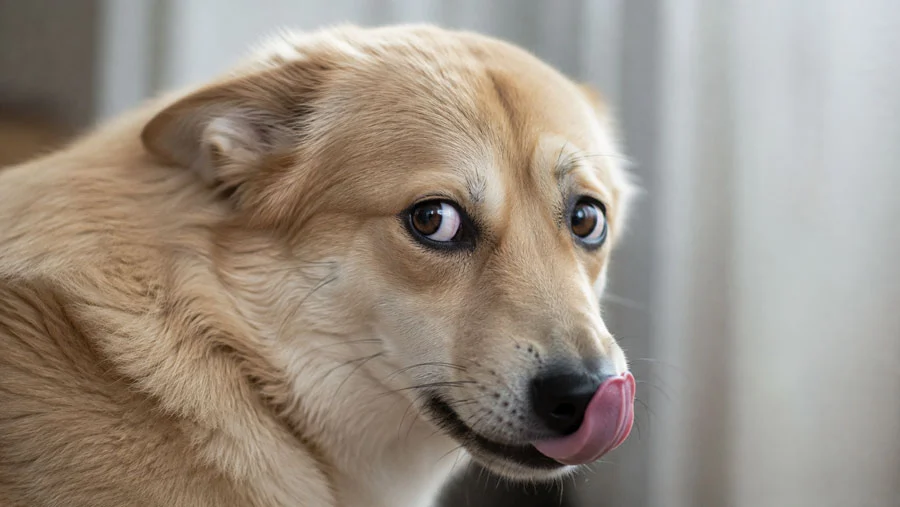
Dogs can’t tell you in words that a celebration has gotten to be too much. What they have instead is a set of subtle physical signals, sometimes called calming signals, first systematically documented by Norwegian dog trainer Turid Rugaas.
These signals form something like an early-warning system — and the dogs that end up growling, snapping, or bolting are almost always dogs whose earlier, quieter signals went unnoticed.
The Calming Signal Escalation Ladder
Canine stress tends to build in stages rather than appearing all at once. Recognizing the early rungs of the ladder gives you the chance to intervene long before things escalate:
- Early, subtle signals — a quick lip lick with no food nearby, a yawn when your dog isn’t tired, sniffing the ground for no obvious reason, or briefly turning the head away.
- Rising tension — panting when it isn’t warm out, pacing, a tucked tail, ears pinned back, or “whale eye” (the whites of the eyes showing as your dog turns its head away while keeping its gaze fixed on whatever is worrying it).
- Active avoidance — trying to leave the room, hiding behind furniture or a person, trembling, or refusing treats they’d normally take eagerly.
- Overt warning signals — a stiff, frozen body, a low growl, or a hard stare. By this point, your dog has already tried several quieter ways of asking for space.
A useful way to think about it: a dog that growls before snapping has typically already given several earlier signals that were missed. Learning to spot stage one and two means you rarely need to deal with stage four.
What To Do the Moment You Spot Stress
- Create distance, calmly. Walk your dog (don’t drag) to a quieter space rather than asking the room to quiet down first.
- Don’t punish or scold the signal. A growl or a retreat is communication, not disobedience — correcting it teaches a dog to stop warning you before they act, which is far more dangerous.
- Avoid reassurance that increases pressure, like picking a nervous dog up in front of a crowd or forcing continued interaction “so they get used to it.”
- Let your dog set the pace for re-engaging. Some dogs recover in minutes with a bit of quiet; others do better sitting out the rest of the gathering entirely, and that’s a completely reasonable outcome.
Designing a Dog-Safe Celebration Space Before Guests Arrive
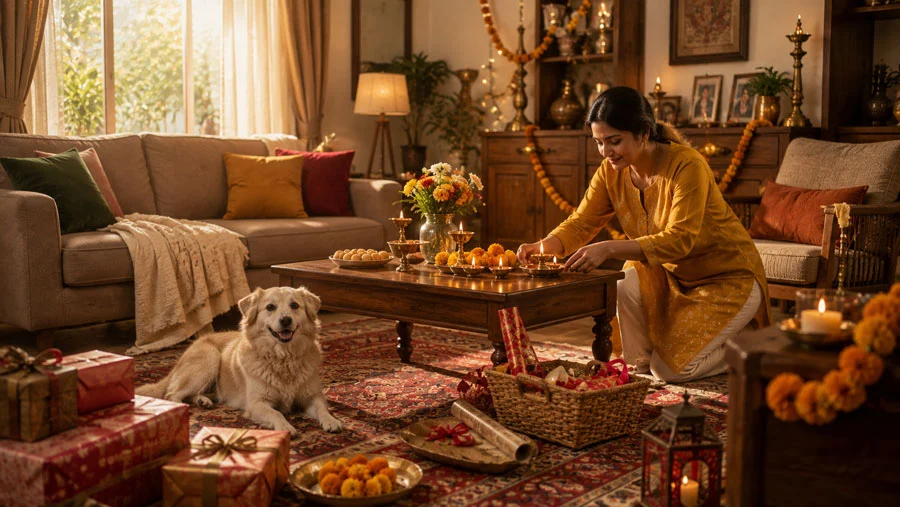
A half hour of setup before guests arrive prevents most of the accidents that happen during the celebration itself. Think of it as a quick safety pass through the rooms your dog will have access to.
The Escape-Proofing Checklist
Front doors open and close constantly during a Rakhi gathering, and a startled or overexcited dog bolting into traffic or a busy street is one of the most common festival-season emergencies.
- Check that gates, doors, and any garden boundaries are secure before guests start arriving.
- Confirm your dog’s collar tag and microchip details are current, in case they do get out.
- Consider keeping your dog in a separate, comfortable room during the highest-traffic arrival and departure windows.
- Ask family members to close the door behind them rather than leaving it propped open.
- Avoid letting your dog linger right next to the entryway, where the temptation to dart out is highest.
Fire, Fragrance and Small-Object Hazards
- Diyas and candles: place them on stable, elevated surfaces away from tails, paws, and curtains, and never leave an open flame unattended in a room with an excited dog. Flameless LED diyas remove the risk entirely if you want the look without the danger.
- Incense and strong fragrance: because a dog’s sense of smell is dramatically more sensitive than ours, incense or perfume that seems pleasant to you can be genuinely uncomfortable for your dog. If your dog starts sneezing, pawing at their nose, or trying to leave a room, that’s a request for better ventilation or distance, not stubbornness.
- Ribbons, tinsel-style decorations, and gift wrap: these fall into the same “linear foreign body” risk category discussed earlier, so treat loose ribbon and decorative thread with the same caution as a rakhi. Clear wrapping materials away promptly rather than leaving them on the floor after gifts are opened.
Managing Kids, Guests and Introductions With Confidence
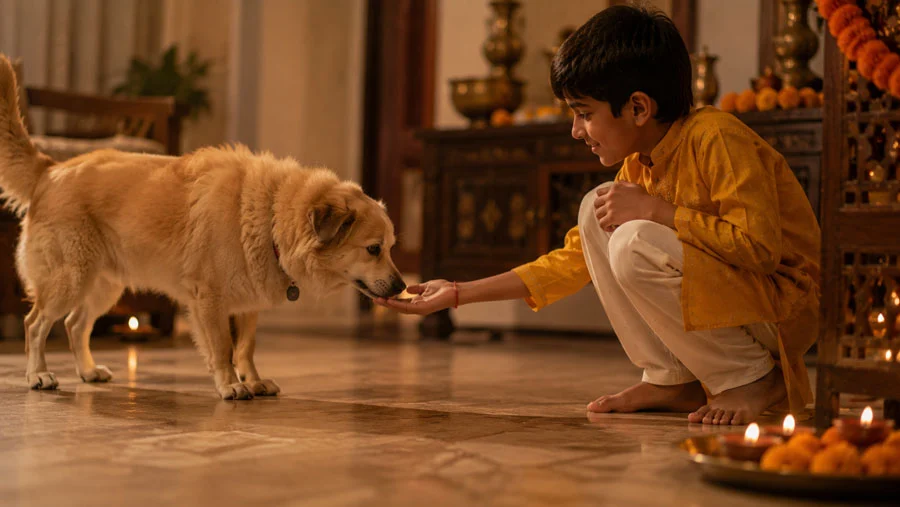
Rakhi is a family festival, which usually means children and relatives your dog doesn’t see often. Most bite incidents involving familiar family dogs happen not because the dog is aggressive, but because well-meaning people approach in ways dogs find overwhelming — sudden hugs, cornering, or reaching for a dog while it’s eating or resting.
A Script for Briefing Guests and Children
It helps enormously to set expectations before anyone walks in the door, rather than correcting behaviour in the moment. A quick, friendly version of this conversation works well:
“He’s a bit shy with new people at first — if you let him come sniff you instead of reaching for him, he’ll warm up much faster. Please don’t hug him, pull at his ears or tail, or bother him while he’s eating or sleeping — and if he walks away, that just means he needs a minute.”
For children specifically, keep the guidance simple and concrete: approach slowly, no pulling, no putting fingers near the mouth, and always ask before offering food. An adult should stay within arm’s reach any time young children and dogs are together, regardless of how well the dog usually behaves.
Special Considerations: Puppies, Seniors and Multi-Dog Homes
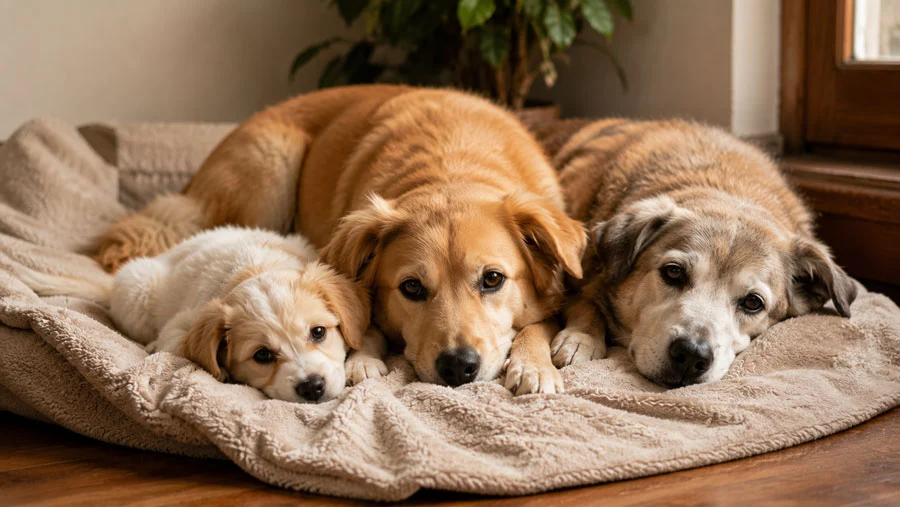
Not every dog experiences Rakhi season the same way and a one-size-fits-all safety plan misses some real risks.
Puppies are still learning what’s edible and what isn’t, and they explore almost everything mouth-first — which makes them especially prone to swallowing small decorations, rakhi charms or wrapping materials. Puppy-proof more aggressively than you would for an adult dog and expect to supervise more closely rather than less.
Senior dogs may have reduced hearing or vision, which can make sudden approaches from strangers or children more startling rather than less, even if the dog has always been mellow. Older dogs are also more likely to have joint pain that makes a sudden hug or a child climbing on them genuinely painful, not just unwelcome.
Multi-dog households add a layer of resource-guarding risk around new treats and excitement — two dogs who normally get along can occasionally scuffle over a dropped piece of mithai or a new toy in a high-arousal environment. If you’re distributing treats or a new rakhi-day toy, do it with the dogs in separate spaces rather than assuming they’ll share the way they usually do.
Your Rakhi-Week Prep Timeline: A Day-by-Day Countdown
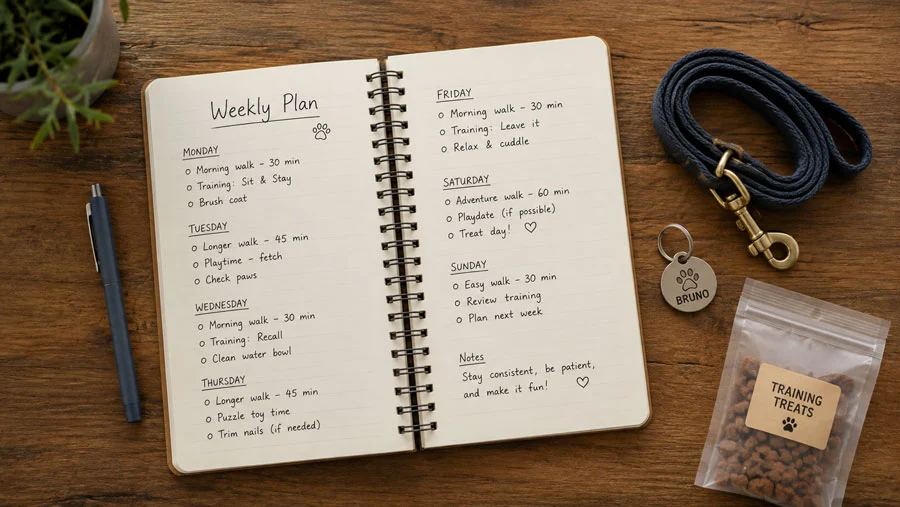
Spreading preparation across the week rather than scrambling on the day itself makes the actual celebration far less stressful for everyone.
- 5–7 days before: Confirm your dog’s ID tag and microchip information is current. Order or set aside a lightweight, breakaway rakhi if you plan to include your dog in photos.
- 2–3 days before: Walk through the rooms guests will use, noting anything within nose or paw reach that will need to move — decorations, low candles, sewing or gift-wrap supplies.
- The day before: Prep dog-safe treats in advance (frozen curd cups, a stuffed puzzle toy) so they’re ready to go rather than something you’re improvising mid-celebration.
- The morning of: Give your dog a proper walk and some exercise earlier in the day, especially if you’re expecting an evening full of guests — a dog who’s had their exercise needs met arrives at the busy part of the day calmer.
- Just before guests arrive: Set up the quiet retreat space with a familiar bed, water, and a favorite toy, and do a final door-and-gate check.
- During the celebration: Check in on your dog periodically rather than assuming no news is good news, especially if they’ve retreated to a separate room.
If the Worst Happens: A Step-by-Step Emergency Response Plan
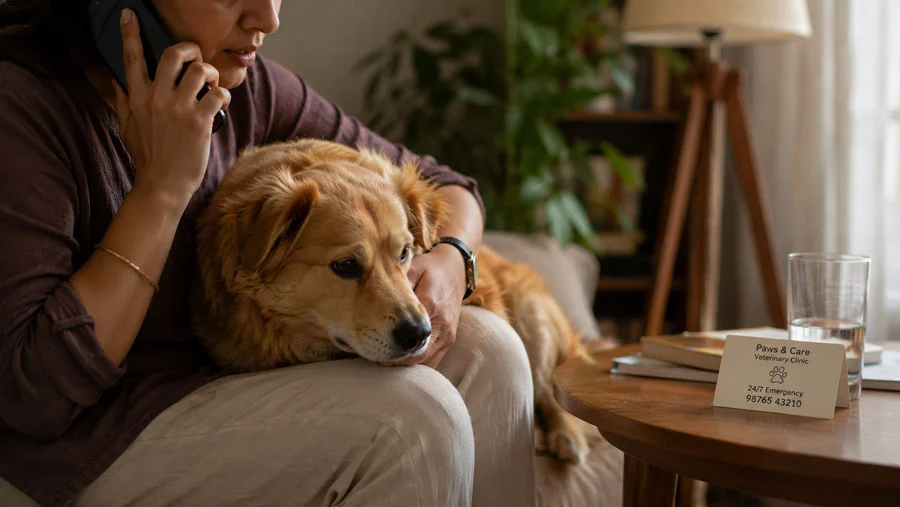
Even with careful planning, accidents happen — and how you respond in the first few minutes genuinely affects the outcome.
- Stay calm and act quickly. Don’t wait to see if symptoms develop before reaching out; early contact with a vet consistently leads to better outcomes than a wait-and-see approach.
- Call your vet or the nearest emergency animal hospital immediately, and have this information ready:
- What your dog ate or swallowed (bring the packaging if it’s food or a sweet)
- Roughly how much was consumed
- How long ago it happened
- Your dog’s approximate weight and age
- Any symptoms you’ve already noticed
- Never induce vomiting on your own. Some substances cause more damage coming back up than staying down, and timing matters — only do this if a veterinary professional explicitly instructs you to.
- Never pull on a visible thread or string. If you can see thread at your dog’s mouth or elsewhere, leave it exactly as it is and let a vet assess whether it’s anchored internally.
- Follow up even if your dog seems fine. Some reactions, particularly to xylitol or grape and raisin ingestion, can be delayed — seeming okay right now isn’t the same as being in the clear.
It’s worth saving your regular vet’s number and the nearest 24-hour emergency clinic’s contact details in your phone before the festival, not while you’re already worried.
Making Rakhi Genuinely Joyful for Your Dog (Not Just Survived)
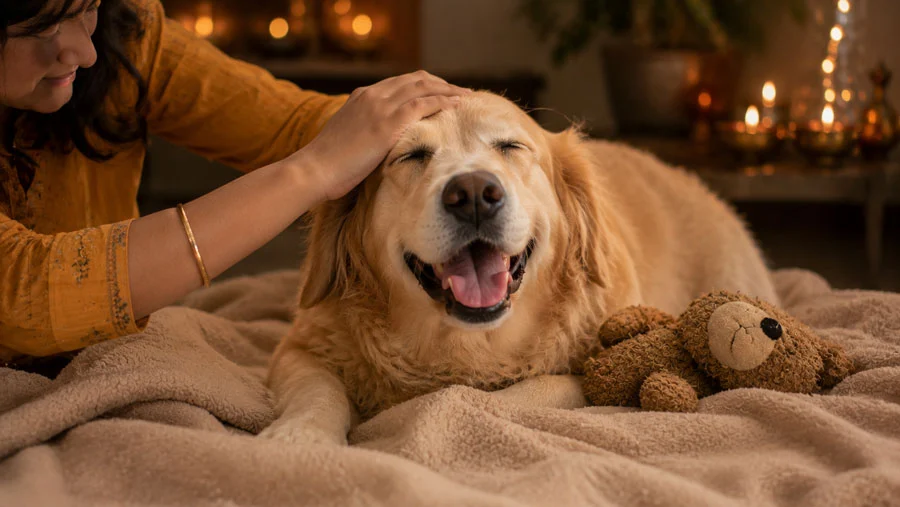
Safety doesn’t have to mean your dog sits out the celebration entirely. Some of the best Rakhi memories with a dog come from small, low-pressure moments rather than elaborate costumes or forced photo sessions:
- A relaxed family photo that includes your dog exactly as they are, without props they don’t tolerate well.
- A quiet walk together earlier or later in the day, away from the noise.
- A new, size-appropriate toy given as their own “rakhi gift.”
- A few minutes of calm, one-on-one attention tucked into an otherwise busy day.
- Letting them approach the celebration on their own terms, rather than being carried into the middle of it.
A dog who feels safe and unpressured tends to remember the day as a good one — which, ultimately, is the same thing the festival is about for the rest of the family.
Frequently Asked Questions About Dog Safety on Raksha Bandhan
Is it okay for my dog to wear a rakhi thread?
Yes, as long as it’s lightweight, free of loose beads or small charms, tied loosely enough to slip two fingers underneath, and worn only while you’re supervising. Remove it right after photos or the ceremony rather than leaving it on for the rest of the day.
How quickly do symptoms show up if my dog eats something dangerous?
It depends on the toxin. Xylitol can cause a dangerous blood-sugar crash within 30 minutes. Chocolate reactions often appear within a few hours. Grape and raisin toxicity can take longer to show up, which is exactly why it should be treated as an emergency the moment it happens rather than after symptoms appear.
My dog swallowed part of a rakhi or some ribbon — do I need to worry if they seem fine?
Yes. A dog can act completely normal for a day or two even with a thread lodged in the digestive tract. Call your vet the same day, describe what was swallowed, and follow their guidance rather than waiting to see if symptoms develop.
How do I stop my dog from bolting out the door with guests coming and going?
Keep your dog away from the entryway during high-traffic arrival and departure windows, ask guests to close the door behind them, and double-check that your dog’s ID tag and microchip details are current before the celebration starts.
My dog is hiding or won’t come out during the celebration — should I make them join in?
No. Hiding is a completely valid calming response, not bad behavior. Let your dog decide when to re-enter the room, and give them credit for managing their own stress well rather than pulling them back into the noise.
Is it safe to give my dog a taste of mithai?
It’s best to avoid it. Many mithai varieties contain ingredients dangerous to dogs — chocolate, nuts, raisins, or xylitol-based sweeteners in “sugar-free” versions — and it’s often hard to know the exact ingredients in something homemade or gifted. A dedicated dog-safe treat gives your dog the same sense of inclusion without the risk.
Key Takeaways: Your Quick-Reference Safety Checklist
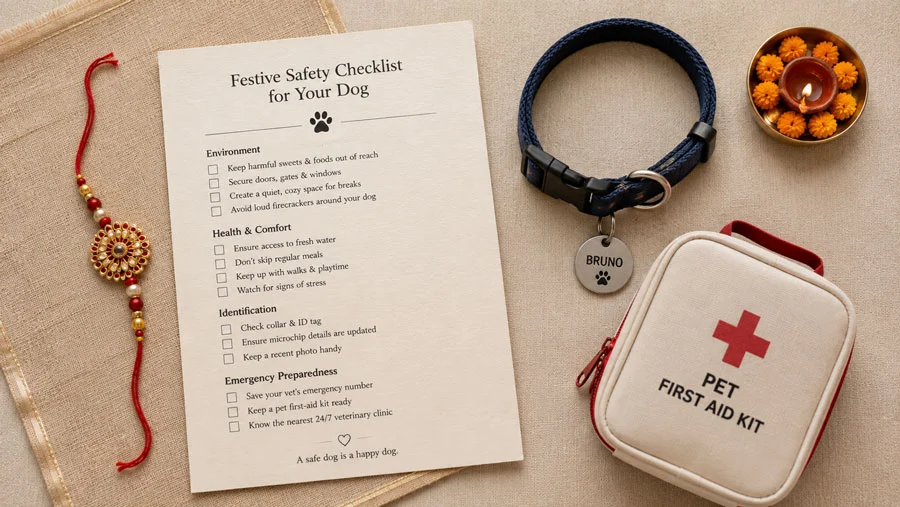
Before the celebration
- ID tag and microchip details are current
- Doors, gates, and boundaries are secure
- A quiet retreat space is set up and ready
- Dog-safe treats are prepped in advance
During the celebration
- Sweets, dry fruits, and sugar-free items stay well out of reach
- Rakhis and decorations are supervised, never left on unattended
- Guests and children know how to approach your dog
- You’re checking in on stress signals, not just assuming things are fine
If something goes wrong
- Call your vet immediately — don’t wait for symptoms
- Never induce vomiting without professional instruction
- Never pull on a visible thread or string
- Have your vet’s and the nearest emergency clinic’s numbers saved ahead of time
With a little preparation, Raksha Bandhan can be exactly what it’s meant to be for every member of the family, four-legged included: a day built on love, safety and genuine connection.