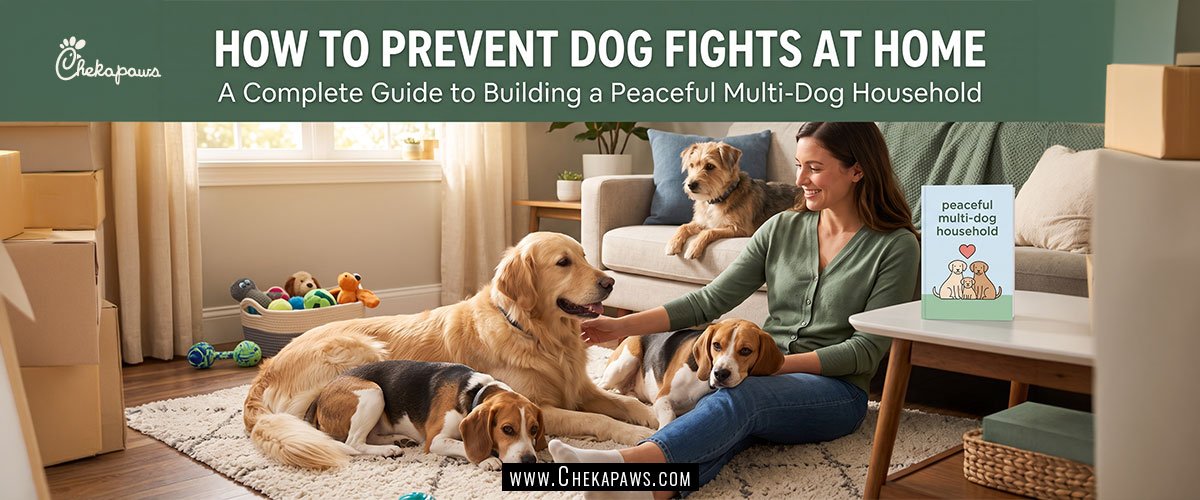
One of the biggest joys in life might be having many dogs. They provide unforgettable moments when you watch them play, cuddle, and develop together. However, if the underlying problems aren’t resolved, dog arguments can occasionally turn into violent altercations.
Dog fights are frequently misinterpreted as sporadic acts of aggressiveness, but in reality, they typically result from territorial behavior, stress, poor communication, fear, or competition for resources. The good news is that with appropriate management, training, and knowledge of canine behavior, the majority of dog fights may be avoided.
This tutorial will teach you why dogs fight, how to spot early warning signals, and how to keep your multi-dog household peaceful.
Table of Contents
Why Do Dogs Fight at Home?
The first step in avoiding future conflicts is to identify the underlying problem.
Safeguarding of Resources
Dogs can show possessiveness due to
- Food bowls
- Treats
- Toys
- Beds
- Favorite humans
- Sleeping spots
When important resources are at a risk, even dogs that often get along can fight.
Territorial Behaviour
Dogs naturally protect what they consider their territory.
Triggers include:
- Visitors entering the house
- Another dog approaching a favorite resting place
- Competition over doorways or windows
Fear or Anxiety
When a dog feels threatened, it may respond violently.
Common explanations consist of
- Loud sounds
- New pets
- Traumatic events in the past
- Unfamiliar guests
Lack of Proper Socialization
Dogs can misunderstand the intentions of another dog if they haven’t mastered proper canine communication. This may result in needless conflicts.
Hormonal Influences
In general, unneutered males are more likely to compete with each other. In the same way, heat cycles may make females irritable. For advice on whether to spay or neuter your dog, speak with your veterinarian.
Pain or Illness
A ill or injured dog might show unusual defensive behaviours. Make an appointment for a veterinary examination if your typically friendly dog suddenly exhibits aggressive behaviour.
Warning Signs Before a Dog Fight
Rarely do dogs get into fight without showing warning signs.
Be mindful of
- Stiff body posture
- Hard staring
- Raised hackles
- Lip curling
- Growling
- Snapping
- Blocking another dog’s movement
- Standing over another dog
- Tail held rigid
- Ears pinned backward
By identifying these indicators, you can take action before things get out of hand.
15 Effective Ways to Prevent Dog Fights at Home
Feed Dogs Separately
One of the main causes of fighting is food.
To prevent problems
- Dogs should be fed in different rooms.
- Remove bowls after meals.
- Food should never be left unsupervised.
- Keep an eye on the treat time.
Eliminate Competition Over Toys
Not every toy is meant to be shared.
Keep valuable objects like
- Bones
- Chews
- Stuffed toys
- Puzzle feeders
Available just during sessions under supervision or give one to every dog.
Give Every Dog Personal Space
Every dog ought to have its own
- Bed
- Crate
- Resting corner
- Feeding area
Respecting personal space reduces stress and competition.
Supervise Playtime
Healthy play includes
- Taking turns chasing
- Relaxed body language
- Frequent play breaks
- Role reversals
Stop the play if it turns into
- Too harsh
- One-sided
- Excessively intense
Learn Your Dogs’ Individual Triggers
Keep an eye out for circumstances that frequently cause conflict.
Examples consist of
- Ringing of the doorbell
- Guest arriving
- Meal preparation
- Favorite toys
- Together, walking on a leash
You can handle these circumstances proactively once they are recognized.
Train Basic Obedience Commands
Reliable directions help in refocusing attention prior to clashes.
Teach
- Sit
- Stay
- Leave it
- Come
- Place
- Drop it
Use positive reinforcement to practice every day.
Avoid Punishment
Dogs who are yelled at or physically corrected frequently become more fearful and aggressive.
Rather
- Redirect calmly.
- Reward desired behavior.
- Remove triggers.
- Create distance between dogs.
Long-term outcomes are improved by positive reinforcement.
Exercise Every Dog Daily
Irritability is frequently caused by pent-up energy.
Give
- Walks
- Fetch
- Scent games
- Training sessions
- Puzzle toys
At home, a dog that is both physically and intellectually content tends to be calmer.
Introduce New Dogs Slowly
Never try to engage someone right away.
Rather
- Allow scent exchanges.
- Meet on neutral ground.
- Leashes should be kept loose.
- Reward behavior that is calm.
- Increase supervised contacts gradually.
Long-term harmony is built on patience during introductions.
Maintain Consistent Household Rules
Confusion is avoided by consistency.
For instance
- No jumping on people.
- Wait before eating.
- Respect rest areas.
- No pushing through doors.
Every member of the family should abide by the same guidelines.
Manage High-Excitement Situations
Conflict can quickly develop from excitement.
Get ready for
- Guests
- Delivery staff
- Walks
- Rides in cars
- Returning home
If needed, use baby gates, leashes, or separate rooms.
Reward Calm Behaviour
Rewarding behaviors are repeated by dogs.
Give them praise when they
- Relax near one another
- Share space calmly
- Walk together peacefully
- Ignore potential triggers
Peaceful interactions are strengthened by positive reinforcement.
Monitor Health Regularly
Behavior can be drastically altered by pain.
Schedule routine veterinary examinations and keep an eye out for symptoms like
- Limping
- Reduced appetite
- Excessive sleeping
- Sensitivity to touch
Aggression may be lowered by treating medical conditions.
Avoid Crowded Spaces Indoors
Tension may rise in small rooms, hallways, and doors.
Give dogs plenty of room so they can move around easily and don’t trap each other.
Know When to Seek Professional Help
See a veterinarian behaviorist or certified dog trainer if
- Fights start to happen more often.
- There are injuries.
- The level of aggression increases.
- Dogs cannot safely coexist.
- One dog constantly bullies another.
More severe behavioral problems are frequently avoided with early intervention.
What NOT to Do During a Dog Fight
If a fight starts
- Avoid using your hands to grip collars.
- Do not place your face near the dogs.
- Don’t panic or yell.
- Afterward, do not punish any dog.
Rather
- Remain as calm as you can.
- If it’s safe, interrupt with a loud noise.
- If at all possible, put a chair, laundry basket, or big piece of cardboard between the dogs as a barrier.
- Once they are apart, keep them apart until everyone has calmed down.
- Check both dogs closely for injuries, and if necessary, take them to the doctor.
Helping Dogs Build Positive Relationships
It takes time to build strong relationships.
Encourage bonding through
- Walks in groups
- Calm training sessions
- Activities that are reward-based
- Play under supervision
- Individual attention to every dog
If one dog requires more personal space, do not force interactions.
Frequently Asked Questions (FAQs)
Is it normal for dogs living together to fight?
Minor disagreements can happen, but repeated or serious fights are not normal and should be addressed by identifying the cause and improving management or training.
Can neutering stop dog fights?
Neutering may reduce hormone-related aggression in some dogs, but it is not a guaranteed solution. Training and environmental management remain essential.
Should I let dogs “work it out”?
No. Allowing dogs to fight can lead to injuries and reinforce aggressive behavior. It is safer to interrupt tension early and manage the situation calmly.
How long does it take dogs to get along?
It varies. Some dogs adjust within days, while others may need weeks or even months of gradual introductions and consistent positive experiences.
Conclusion
Understanding the causes of conflicts and taking proactive measures to lessen tension, rivalry, and miscommunication are the first steps in preventing dog fights at home. You can establish a setting where your dogs feel safe and valued by giving them defined routines, personalized resources, frequent exercise, and positive reinforcement.
Keep in mind that each dog has an own personality. The secret to keeping a multi-dog family peaceful is patience, consistency, and early intervention. To protect the safety and wellbeing of all members of your family—human and canine—consult a trained specialist if aggression continues or becomes dangerous.