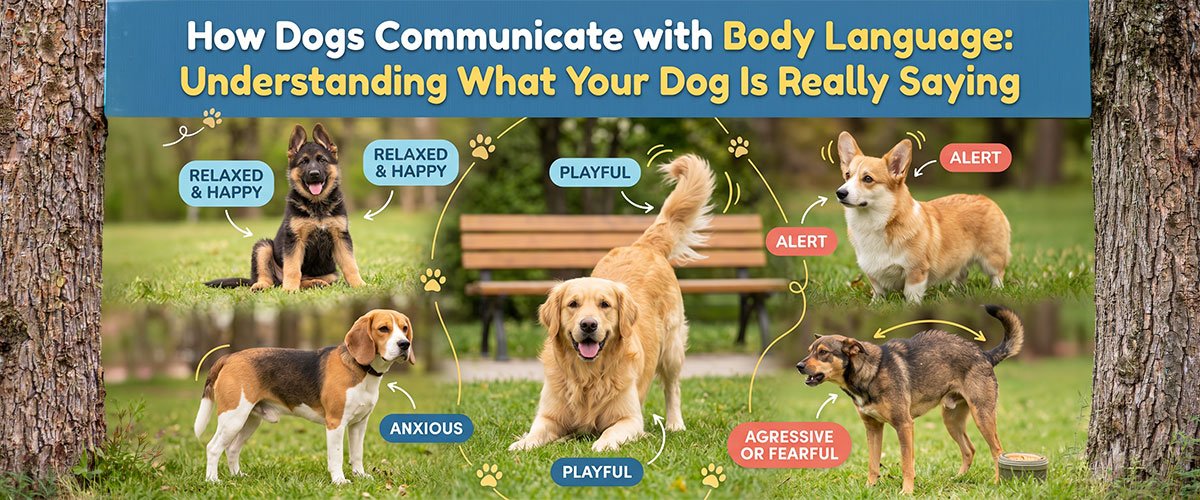
Dogs are always talking to us even if they don’t speak our language. Each tail wag, head tilt, ear movement, and posture change conveys a message. You will better understand your dog’s feelings, avoid confusion, and improve your bond by learning to interpret their body language.
Long before they bark or snarl, your dog’s body language communicates whether they are happy, anxious, playful, or uncomfortable. One of the most important abilities any pet owner can develop is the ability to recognize these cues.
We’ll look at how dogs use body language to communicate as well as the exact meanings of their different signals in this blog post.
Table of Contents
Why Understanding Dog Body Language Matters
Dogs communicate mostly through body language. Even though vocalizations like barking and whining are important, a dog’s emotional state can often be determined from their body language.
Understanding these signals can assist you
- Avoid possible behavioral problems
- Prevent mistakes and dog bites
- Minimize your pet’s stress
- Boost the effectiveness of training
- Boost communication and trust
- Meet your dog’s emotional needs more effectively
You can respond appropriately and create a safer, happier environment when you understand what your dog is trying to tell you.
The Basics of Canine Communication
Dogs use a variety of methods to communicate
Dogs communicate using a combination of:
- Tail movements
- Ear positions
- Eye expressions
- Facial cues
- Body posture
- Movement patterns
- Vocal sounds
Instead than concentrating on just one signal, it’s important to watch the entire body. For example, a dog may not always be joyful if its tail is wagging.
Let’s study the most common body language signals.
Understanding Tail Language
One of the most obvious ways that dogs communicate is through their tails.
Relaxing Tail
A dog that holds its tail securely and naturally is typically calm and at ease.
Signs consist of
- Gentle movement
- Neutral position
- Loose body posture
This usually indicates that your dog feels safe and at ease.
Fast Wagging Tail
Many people associate tail wagging with happiness, and often that’s true.
A quick, loose wag typically means
- Excitement
- Joyful Expectations
- Friendly intentions
When you come home or your dog sees a favorite toy, you might notice this.
High, Stiff Tail
A stiff tail lifted high can indicate
- Alertness
- Confidence
- Dominance
- Potential tension
This could sometimes mean that a dog is carefully examining a situation.
Low or Tucked Tail
A tail tucked between the legs typically signals
- Fear
- Anxiety
- Submission
- Uncertainty
In order to feel comfortable, dogs with this posture can require comfort and space.
What Ear Positions Can Tell You
A dog’s ears might reveal important information about how they are feeling.
Relaxed Ears
The dog is typically relaxed and composed when its ears are in their normal resting posture.
Ears Forward
Forward-facing ears frequently signify
- Curiosity
- Interest
- Alertness
It’s possible that your dog is focusing on something that has captured their interest.
Ears Pinned Back
Flattened ears could mean
- Fear
- Nervousness
- Submission
- Stress
Context is important, though, because some dogs also draw their ears back when they greet people with affection.
Reading Your Dog’s Eyes
Dogs’ eyes are often referred to as the “window to the soul,” and this is undoubtedly true.
Gentle Eyes
Eyes that are relaxed and blink normally indicate
- Comfort
- Trust
- Relaxation
When dogs are relaxing or spending time with family, this is frequently observed.
Wide Eyes
Tense, wide eyes could be a sign of
- Anxiety
- Fear
- Stress
The whites of the eyes may also start to show, this condition is known as “whale eye.”
Direct Staring
A long, intense look may indicate
- Challenge
- Guarding behavior
- Discomfort
Observing this warning sign and avoiding from pressuring someone to take part is important.
Slow Blinking
Slow blinking frequently signifies
- Trust
- Relaxation
- Comfort
When they are around individuals they feel comfortable around, many dogs use this simple interaction.
Understanding Facial Expressions
Many people are unaware of the level to which dogs communicate through their expressions.
Relaxed Mouth
A happy dog usually has a relaxed tongue and a slightly open mouth.
Lip Licking
Dogs may lick their mouths when
Stressed out
Uncertainty
Trying to calm themselves
This signal is referred to as soothing.
Yawning
Dogs yawn because they’re sleepy, but repeated yawning might also mean
- Anxiety
- Stress
- Overstimulation
Be mindful of your surroundings.
Showing Teeth
Not every tooth show is aggressive.
Dogs may flash their teeth when
Warning someone to leave
Sensing danger
Engaging in submissive smiling
The posture of the remainder of the body contributes to the actual meaning.
Body Posture and What It Means
The best way to understand a dog’s feelings is frequently to look at their overall body language.
Wiggly and loose body
This position usually indicates
- Happiness
- Friendliness
- Comfort
The dog seems to move with ease and fluidity.
Play Bow
The play bow is one of the simplest signs to identify
Characteristics consist of
Front legs lowered
Rear end raised
Tail wagging
This means:
“Let’s play!”
Dogs often take this position when they interact with people and other dogs.
Crouched Body
A lowered body position could be a sign of
- Fear
- Uncertainty
- Submission
In this condition, dogs can be attempting to avoid confrontation.
Frozen Posture
A dog may be communicating if it suddenly stops moving
- Discomfort
- Concern
- A warning
Before snapping or growling, many dogs freeze. Unwanted events can be avoided by identifying this signal.
Calming Signals Dogs Use
Dogs frequently employ subtle body language to calm down stress and prevent confrontation.
Typical signs of relaxation include
- Turning their head away
- Looking away
- Sniffing the ground
- Lip licking
- Yawning
- Moving slowly
- Sitting down
Dogs can express their peaceful intentions through these behaviors. Your dog may be feeling overwhelmed if they use these signals frequently.
Signs That Your Dog Is Stressed
Stress can take many different forms.
Be mindful of
- Excessive panting
- Lip licking
- Yawning
- Trembling
- Pacing
- Whale eye
- Tucked tail
- Pinned ears
- Avoidance behavior
Early stress detection enables you to take your dog out of difficult situations before anxiety gets worse.
Signs of a Happy and Confident Dog
A happy dog often displays:
- Relaxed muscles
- Soft eyes
- Loose tail wagging
- Natural ear position
- Playful behavior
- Curiosity
- Willingness to engage
These signs indicate emotional well-being and confidence.
Common Dog Body Language Misunderstandings
Myth 1: A Wagging Tail Always Means Happiness
Not always.
Simply said, tail wagging is a sign of emotional stimulation. Wagging can be a sign of excitement, anxiety, frustration, or alertness.
Myth 2: A dog expressing an urge for a belly rub
Occasionally, but not always.
Rolling over may be a sign of:
Conflict avoidance, stress, submission, and trust
Before you reach for a belly rub, take into account the dog’s general body language.
Myth 3: Growling Is Bad Behavior
It indicates that a dog is unsure and requires room. Important warning signs can be suppressed by punishing roaring.
How to Improve Communication with Your Dog
It’s not enough to simply understand body language. In addition, you may improve communication by
Prior to reacting, observe
Prior to analyzing behavior, pay attention to your dog’s entire body position.
Pay attention to Their Signals
Give your dog room instead of pressuring them to interact if they show signs of discomfort.
Make Use of Positive Reinforcement
Play, praise, and treats are ways to reward desired actions.
Stay Consistent
Dogs who receive consistent replies are better able to understand demands and feel safe.
Spend Quality Time Together
It gets easier to identify your dog’s distinct communication style the more time you spend observing them.
Conclusion
Dogs use their body language to communicate all the time. Every indication, from posture and facial expressions to ear locations and tail motions, offers important information about how they are feeling.
Your relationship with your dog can be transformed by learning to read these indications. You’ll be more capable of identifying joy, tension, anxiety, excitement, and discomfort before issues occur. Above all, being aware of canine body language enables you to react empathetically, build trust, and develop a closer relationship with your animal friend.
Remember that your dog is communicating with you the next time they wag their tail, lower themselves into a play bow, or turn away during a tense moment. Your relationship will grow stronger as you become more natural in their language.