Although it’s never pleasant to find a puddle of urine or a pile of poop on your floor, indoor accidents are typical when owning a dog, particularly whether you have a puppy, a recently rescued rescue, or an elderly senior dog. Even though it can be challenging, the best way to help your pet learn and avoid repeat accidents is to respond patiently and compassionately.
The good news is that with proper cleaning techniques, regular training, and determining the source of the problem, the majority of indoor incidents can be properly controlled.
In This blog will explain why dogs have accidents indoors, what to do right away, how to clean up correctly, and useful advice on how to avoid it in the future.
Table of Contents
Why Do Dogs Have Accidents Indoors?
Knowing why your dog could be urinating inside the house is important before taking any action.
Puppy Potty Training
Young puppies have little control over their poop motions and small bladders. In the initial stages of house training, frequent accidents are perfectly normal.
Incomplete House Training
Some dogs may not have learned where they’re supposed to relieve themselves, especially rescue dogs or dogs that have recently changed homes.
Medical Conditions
Unexpected indoor accidents could be a sign of a health problem, like
- UTIs, or urinary tract infections
- Stones in the bladder
- Kidney disease
- Diabetes
- Digestive disorders
- Incontinence
See your veterinarian if accidents start off suddenly or start happening more frequently.
Stress or Anxiety
Dogs may urinate or defecate indoors due to habit changes, relocating to a new house, loud noises, or separation anxiety.
Problems with Senior Dogs
Older dogs may have cognitive impairment, arthritis that makes it difficult to go outside quickly, or reduced bladder control.
Marking Behaviour
Urinating on furniture, walls, or corners is one way that some dogs—especially unneutered males—mark their territory.
What to Do Immediately After an Indoor Accident
Stay Calm
Avoid lecturing, yelling, or punishing your dog, even though it can be annoying. Dogs may experience anxiety or fear as a result of harsh reactions, and they may not correlate punishment after the fact with the event.
Instead
- Clean up the mess right away.
- Concentrate on avoiding accidents in the future.
Move Your Dog to a Safe Area
If at all possible, put your dog outside or in a different room while you clean the affected area. This keeps them from getting interested in the cleaning supplies or stepping in the mess.
How to Clean Dog Urine Properly
Dogs are likely to return to spots where they can still smell urine, therefore complete cleaning is important.
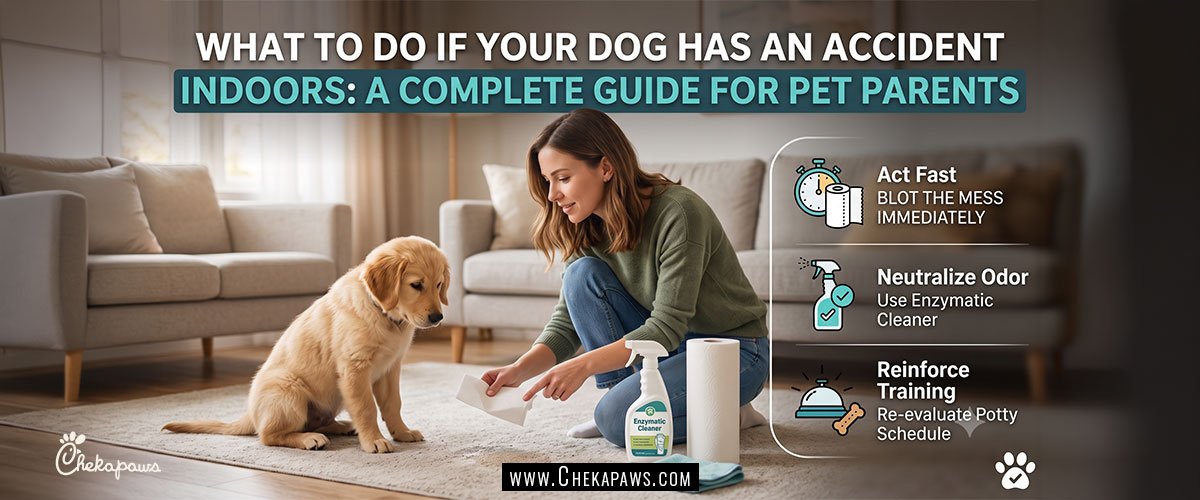
Blot the Area
To absorb as much pee as you can, use paper towels or a fresh cloth.
Avoid from rubbing, since this may cause the stain to move further into upholstery or carpets.
Use an Enzyme-Based Cleaner
The proteins in urine that leave behind odors are broken down by enzymatic cleansers.
Because they remove odor triggers that promote repeated accidents, these cleaners are significantly more effective than conventional household cleaners.
Avoid Ammonia-Based Products
Many cleaning products contain ammonia, which smells similar to urine and may encourage your dog to mark the area again.
Instead, go for enzyme-based, pet-safe solutions.
Allow the Area to Dry Completely
Before letting pets back into the space, let the cleaner finish according to instructions by the manufacturer.
How to Clean Dog Poop Indoors
In the event that your dog has a bowel accident
- Put on disposable gloves.
- Carefully remove solid waste.
- Blot any residue with paper towels.
- Use a pet-safe disinfectant and warm water to clean the area.
- Use an enzyme cleaner to get rid of any lingering smells.
Afterward, always give your hands a thorough wash.
Never Punish Your Dog
Punishment can
- Boost anxiety
- Delay house training
- Cause your dog to hide when they need to eliminate
- Weaken your pet’s faith in you
Rather, give your dog enthusiastic rewards when they use the restroom outside. Punishment is far less effective than positive reinforcement.
How to Prevent Future Indoor Accidents
Create a Regular Bathroom Schedule
Take your dog outside
- First thing in the morning
- After meals
- After naps
- Before bedtime, after playing
Dogs learn when and where to urinate when you are consistent.
Reward Outdoor Toilet Success
When your dog urinates outside, give them playtime, verbal praise, or treats right away.
The expected behavior is strengthened as a result.
Supervise Your Dog Indoors
Keep an eye out for signs that your dog needs to go outside, such as
- Sniffing the ground
- Circling around
- Whining
- Scratching at the door
- Abruptly becoming restless
As soon as you see these signs, take them outside.
Limit Access During Training
When your dog is still learning, you can prevent unrestricted to the entire house by using baby gates or closing doors.
Increase Bathroom Breaks
Depending on their age, health, and degree of activity, adult dogs often need breaks every four to six hours, but young puppies might need to go outside every one to two hours.
Address Anxiety
If it seems that stress is the reason
- Keep their routine consistent.
- Provide plenty of exercise.
- Provide toys for enrichment.
- Make a peaceful place to relax.
Seek professional advice if anxiety persists.
When Should You Visit the Veterinarian?
Speak with your veterinarian if your dog
- Suddenly starts having accidents
- consumes a lot more water than normal
- Strains while urinating
- Has blood in the urine
- Has vomiting or diarrhea
- Shows indications of pain
- Despite receiving effective house training, he frequently has accidents.
Before assuming that the issue is behavioral, medical problems should always be ruled out.
Common Mistakes to Avoid
Avoid these common errors
- Punishing your dog after the accident
- Using cleansers with an ammonia or bleach basis
- Ignoring recurring accidents
- Waiting too long before taking your dog outside
- Expecting puppies to have adult bladder control
- Not rewarding outside toilet trips that are successful
Frequently Asked Questions (FAQs)
Why does my fully house-trained dog suddenly have accidents indoors?
A sudden change may indicate stress, changes in routine, aging, or an underlying medical condition. Schedule a veterinary examination if the behavior is unusual.
How long does potty training usually take?
Most puppies begin to understand house training within 4–6 months, although complete reliability can take longer depending on the dog’s age, breed, and consistency of training.
Should I rub my dog’s nose in the accident?
No. This outdated method is ineffective and can cause fear, anxiety, and confusion. Positive reinforcement is the recommended approach.
What is the best cleaner for dog urine?
Enzyme-based pet stain and odor removers are the most effective because they break down odor-causing compounds instead of simply masking the smell.
Conclusion
You shouldn’t be upset or frustrated by indoor accidents because they are a common occurrence in dog ownership and care. The secret to success is patience and consistency, whether you’re training a playful puppy, assisting a rescue dog in finding a new home, or providing care for an elderly friend.
By cleaning accidents completely, rewarding outside bathroom practices, maintaining a regular routine, and addressing any medical or behavioral concerns early, you may help your dog develop consistent house-training skills while keeping your home clean and odor-free.
Remember that every accident is a chance to learn, not just for your dog but also for you as a pet owner. Together, you and your dog will have a cleaner, cozier home and a happier, healthier connection with understanding, encouragement, and a little perseverance.