Diwali is a festival of lights, sweets, and family. For dogs and cats, though, it can be one of the hardest nights of the year. Firecrackers explode without warning, flashes light up the windows, strangers come and go, and the home smells and sounds different from usual.
Table of Contents
Introduction
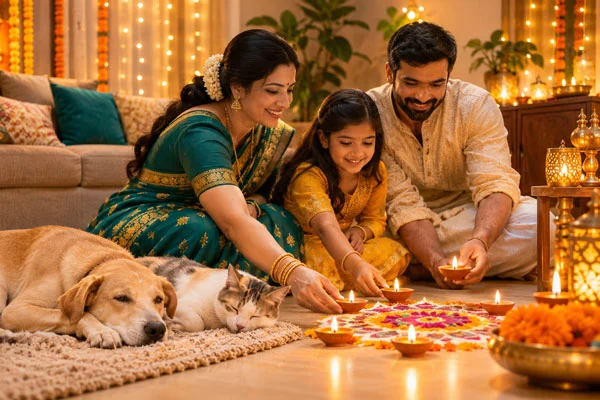
Keeping pets safe during Diwali is about more than avoiding burns. It also means protecting their emotional comfort so the festival doesn’t leave them frightened or hiding for days.
This guide covers 12 practical tips, how to read your pet’s stress signals, how to prepare in the week before, special cases like puppies, seniors and pets with health conditions, and what to do if your pet panics.
At Chekapaws, we believe a happy Diwali is one your whole family enjoys, four-legged members included.
Why Diwali Is Stressful for Dogs and Cats
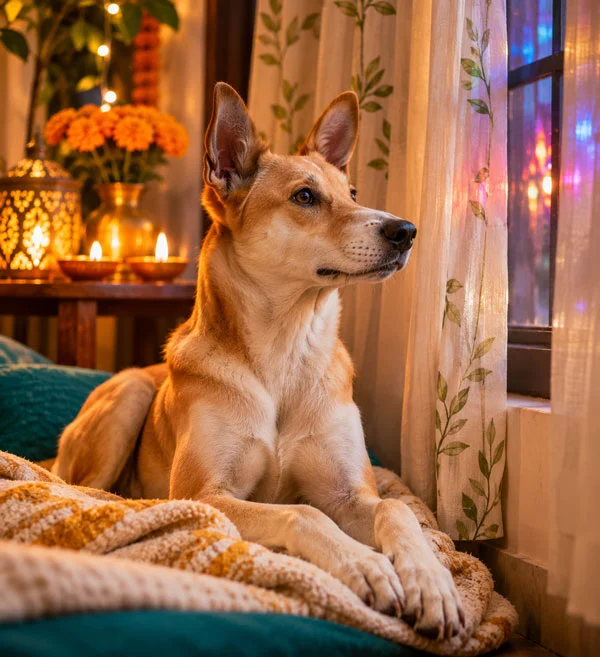
Pets experience sound and surroundings very differently from people. Their hearing is more sensitive, and they can’t understand that the bangs are part of a celebration. Without that context, unpredictable noise can feel like a real threat.
What Makes Diwali Hard
- Sudden, loud noise: Firecrackers come without warning, which can trigger fear in many pets.
- Flashes and movement: Bright lights and shadows outside windows and balconies add to the stress.
- Routine changes: More visitors, open doors, and late nights disturb a pet’s normal rhythm.
- Escape risk: A frightened dog may bolt through a door or slip a lead, and a cat may squeeze through a window or balcony.
- Physical effects: Fear can cause trembling, rapid breathing, restlessness, a lower appetite, or digestive upset.
Remember that fearful behaviour isn’t naughtiness. It’s a stress response, and it deserves patience.
How Dogs and Cats Often Show Fear Differently
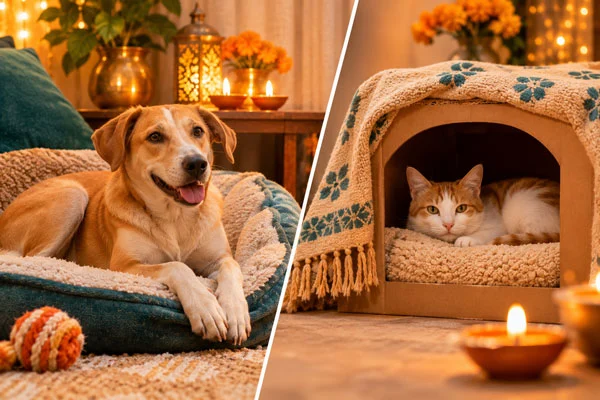
| Dogs | Cats | |
|---|---|---|
| Typical signs | Panting, trembling, pacing, whining, drooling, clinging, trying to escape | Hiding, crouching, flattened ears, dilated pupils, freezing, hissing |
| Sneaky signs | Refusing treats, destructive behavior | Going very quiet, over-grooming, litter-box changes |
| Main risk | Bolting, injuring themselves, getting lost | Hiding in unsafe spots, escaping via windows or balconies |
| Best setup | A quiet room with a bed and a chew | A closed room with a hiding spot, litter tray, and water |
12 Essential Diwali Pet Safety Tips

1. Keep Pets Indoors During Fireworks
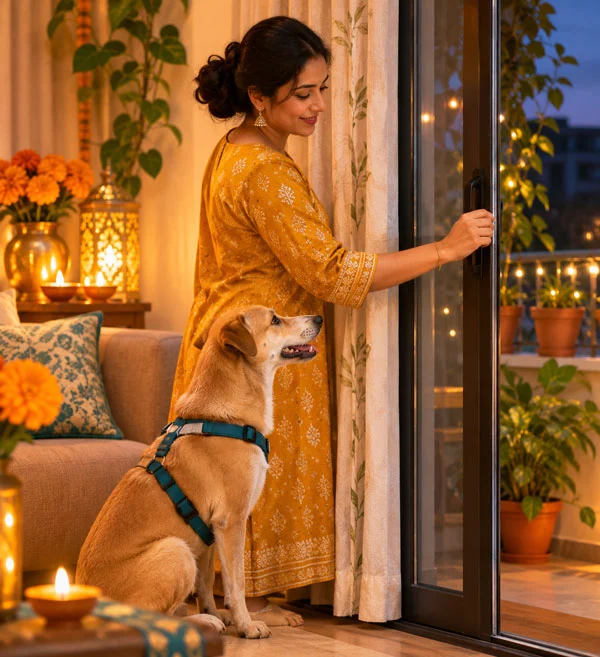
Even pets that love the outdoors may panic when crackers start. Bring outdoor pets inside before the noise begins and take dogs for walks earlier in the day, when it is quieter. Use a secure leash and a well-fitted harness, and never tie a pet outside or leave it alone on a balcony.
- Check gates, windows, balcony doors, and pet flaps.
- Avoid walks during peak cracker hours.
- Keep cats strictly indoors through the festival week.
2. Create a Quiet, Comfortable Safe Space
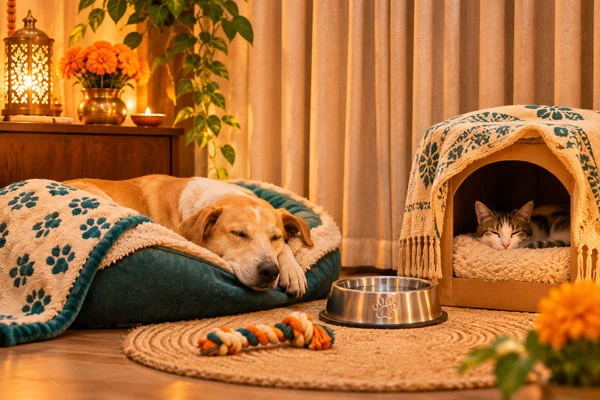
Pick a room away from street-facing windows and give your pet a place to retreat to.
- Favorite bed or blanket
- Familiar toys and comfort items
- Fresh water, and a litter tray for cats
- A crate, carrier, or covered hiding spot if your pet already finds it comforting
- Curtains drawn to reduce flashes, with the room still well ventilated
Let your pet choose where it feels safest, and don’t drag a frightened animal out of a hiding place.
3. Reduce Noise Inside Your Home
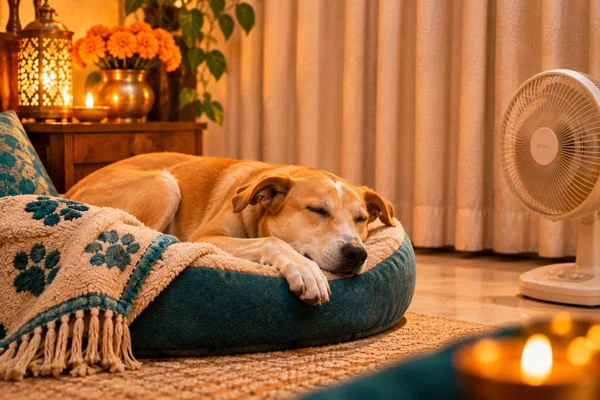
You can’t stop the noise outside, but you can soften it indoors.
- Close windows and external doors and draw the curtains.
- Turn on a fan, television, or gentle music at a comfortable volume.
- Keep your pet away from rooms with thin windows or direct exposure.
- Avoid sudden loud sounds inside the house.
Background sound may mask some noise, but it won’t guarantee calm, so watch how your pet responds.
4. Learn the Signs of Noise Anxiety in Dogs
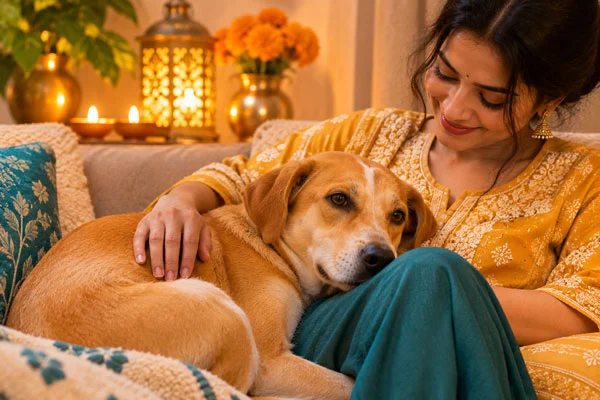
Recognizing the signs lets you help early. Watch for:
- Trembling or shaking
- Heavy panting or drooling
- Pacing or restlessness
- Whining, barking, or howling
- Hiding or scratching at doors
- A tucked tail
- Refusing food or treats
- Clinging unusually close to you
Never punish a scared dog. If the fear is severe or worsens every year, talk to your veterinarian about a management plan.
5. Spot Anxiety in Cats
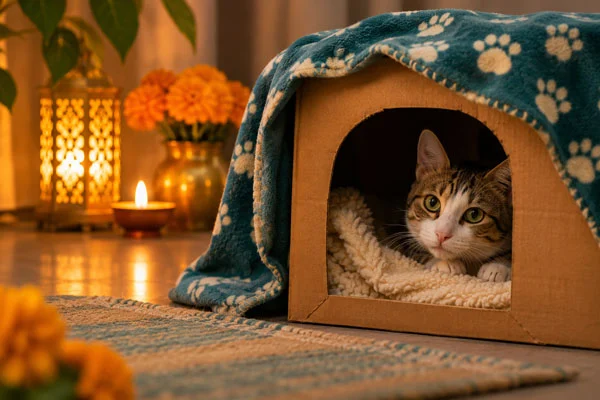
Cats often hide their stress. Look for:
- Long periods of hiding
- Flattened ears, a low crouch, and dilated pupils
- Excessive grooming
- Hissing or growling
- Reduced appetite
- Restlessness or attempts to escape
- Changes in litter-box habits
Keep a hiding spot, litter tray, food, and water in a quiet area. A silent cat isn’t necessarily a comfortable one. If your cat stops eating or struggles to urinate, contact a veterinarian promptly.
6. Comfort Your Pet Without Forcing Interaction
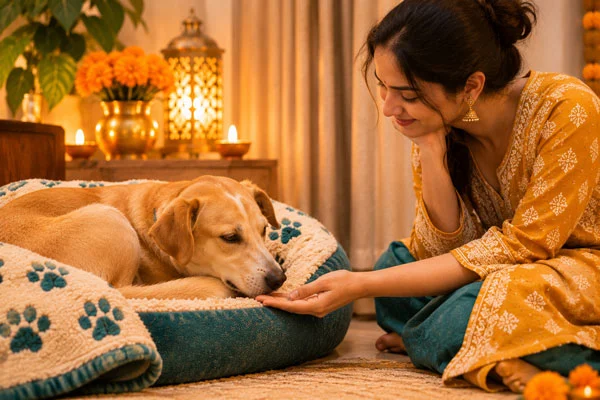
You don’t need to ignore a frightened pet. Offer calm reassurance while respecting what your pet wants.
- Keep your voice soft and your movements slow.
- Sit nearby if your pet seeks you out.
- Give gentle petting if your pet enjoys it.
- Let your pet move away when it wants to.
- Skip forced cuddles and unnecessary handling.
Every animal is different, so follow your pet’s body language.
7. Update ID Tags and Microchip Details
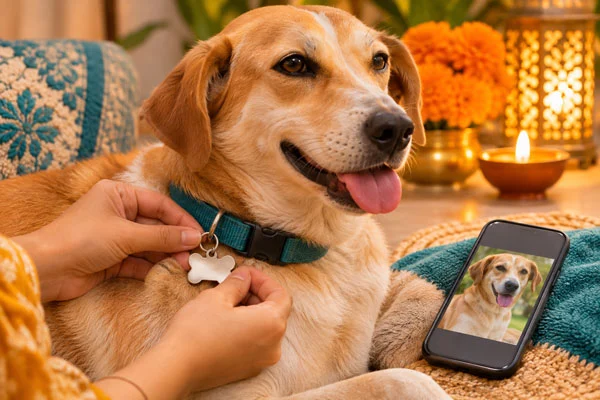
Even careful households can have escapes. Before Diwali:
- Check that the collar tag has your current phone number.
- Make sure cats have appropriate identification.
- Update microchip registration if your pet is microchipped.
- Keep a recent photo of your pet.
- Check gates, screens, and doors for gaps.
If your pet does go missing, contact local shelters and rescue groups and share the photo with your contact details.
8. Be Careful With Diyas, Candles and Decorations
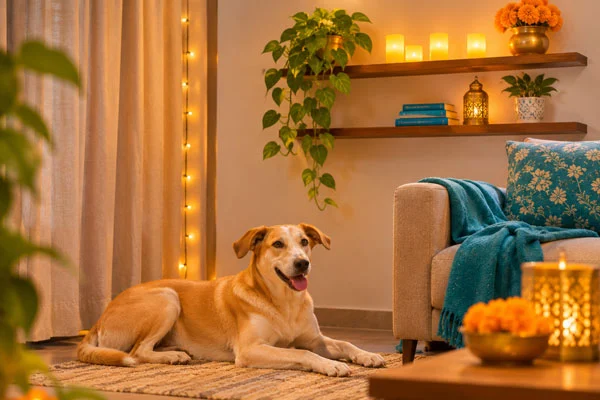
A wagging tail can knock over a diya, and a cat may jump on a table to investigate a flame.
- Keep diyas and candles well out of reach and never leave a flame unattended.
- Consider flameless LED diyas where pets can reach decorations.
- Secure electrical wires and string lights.
- Keep hot oil, wax, and electrical connections away from pets.
- Keep pet beds away from curtains and decorations.
- Keep colored rangoli powders and decorative items out of reach, since chewing or licking them can irritate the skin or stomach.
A frightened pet may dash through the house, so keep pathways clear of fragile or hazardous items.
9. Keep Sweets and Toxic Foods Away
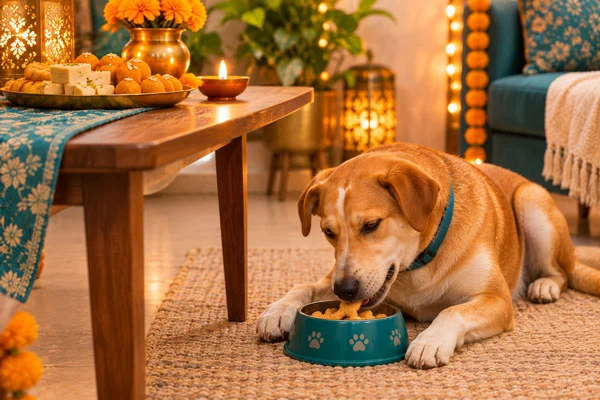
Diwali brings plates of sweets, chocolates, dry fruits, and rich dishes. Many aren’t suitable for pets.
| Keep away from pets | Why it’s a concern |
|---|---|
| Chocolate and cocoa | Toxic to dogs and can harm cats |
| Grapes and raisins | Can cause kidney problems in dogs |
| Sugar-free sweets with xylitol | Can be dangerous for dogs |
| Alcohol | Can cause serious poisoning |
| Onion and garlic | Can damage red blood cells |
| Very oily, salty, or spicy food | Can upset the stomach |
| Bones that may splinter | Can cause injury |
Stick to your pet’s regular food and suitable treats, and ask guests not to feed pets without permission. If you suspect your pet has eaten something toxic, call a vet right away.
10. Never Give Human Medicines or Sedatives Without Vet Advice
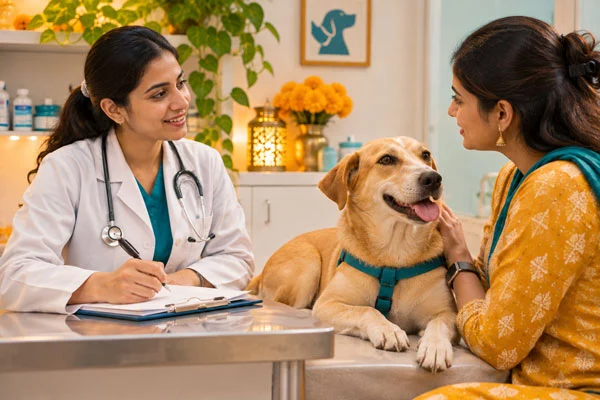
When a pet is panicking, it’s tempting to reach for a quick fix. Human sleeping pills, anti-anxiety tablets, and old prescriptions can be dangerous for animals.
If your pet has a history of severe fireworks anxiety, speak to your veterinarian well before Diwali. Depending on your pet’s health and symptoms, they can recommend a suitable plan. Don’t wait until your pet is in extreme distress.
11. Keep Routines Steady and Offer Positive Distractions
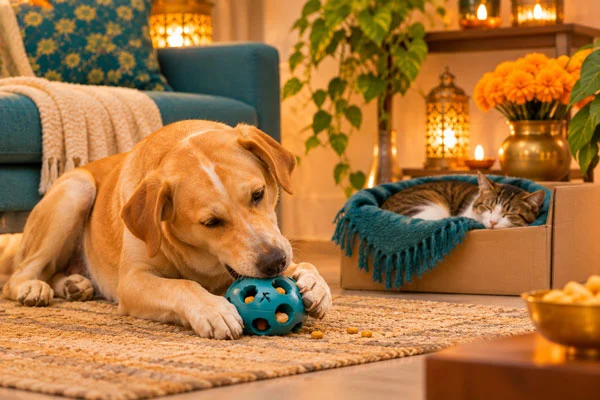
Routine changes add to festival stress. Try to keep meals, bathroom breaks, play, and bedtime as regular as you can.
- For dogs: a familiar chew toy, a food puzzle, gentle indoor play, or reward-based games.
- For cats: familiar toys, a hiding box, gentle play if interested, and safe resting spots.
Don’t force food or play if your pet is too frightened. For pets with recurring fireworks anxiety, ask a veterinarian or qualified behavior professional about gradual desensitization well before the next festive season. Never expose a frightened pet to loud fireworks to get it used to them.
12. Plan Ahead for Guests and Emergencies
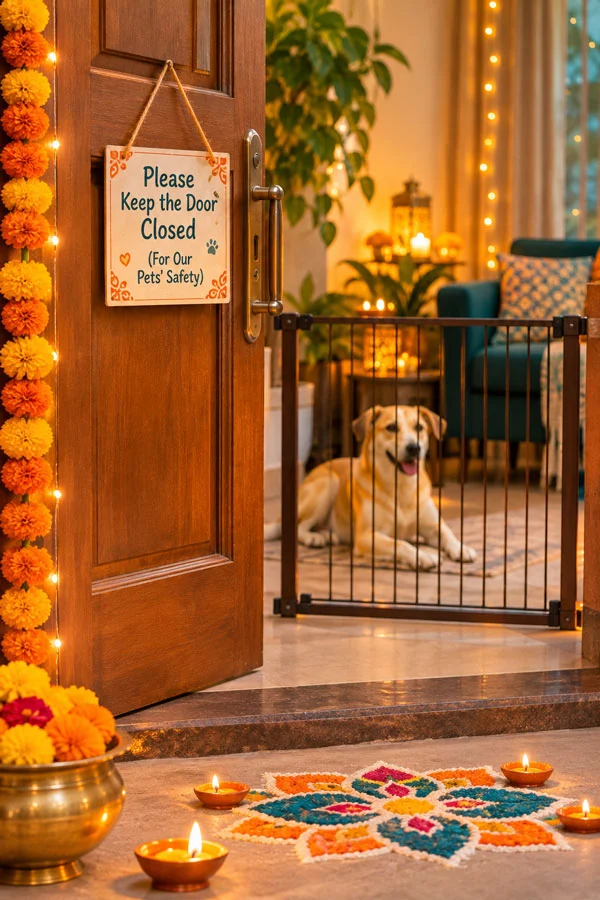
Diwali gatherings mean open doors, unfamiliar people, and extra activity.
- Tell guests your pet may be nervous.
- Ask them not to feed or approach your pet without permission.
- Keep your pet in a secure, comfortable room if needed.
- Put a reminder on the door so no one leaves it open.
- Keep your vet’s number handy and note a local emergency clinic.
- If your pet has severe anxiety, agree a plan with your vet in advance.
Special Cases: Puppies, Kittens, Seniors and Pets With Health Conditions
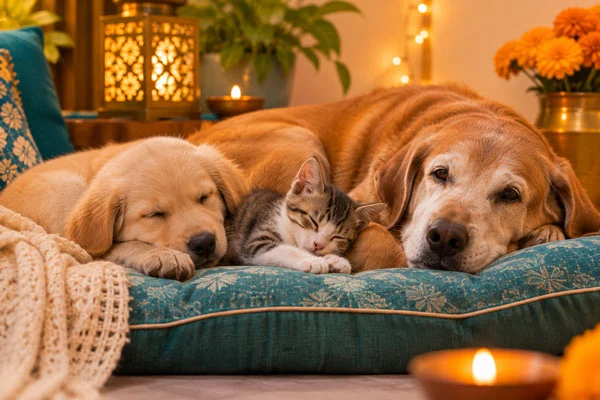
Some pets need extra attention during Diwali.
Puppies and Kittens
Young animals are still learning about the world, and frightening experiences can leave a strong impression. Keep them in a quiet, secure space, supervise closely, and avoid exposing them to noisy celebrations.
Senior Pets
Older pets may have reduced hearing or vision, joint pain, or less tolerance for stress. Offer soft bedding in an easy-to-reach quiet spot and keep their routine as steady as possible.
Pets With Health Conditions
Pets with heart, respiratory, or other health conditions may find stress harder to handle. Talk to your veterinarian before Diwali about how to keep them comfortable.
Pets With a History of Severe Fear
If your pet has panicked in the past, don’t wait until the night itself. Talk to your veterinarian well in advance about a plan.
Your Diwali Pet Prep Timeline
One Week Before
- Check ID tags and microchip details.
- Set up your pet’s quiet room and let your pet get used to it.
- Save your vet’s number and a nearby emergency clinic.
- Talk to your vet if your pet has a history of severe anxiety.
On Diwali Day
- Give a good walk or play session earlier in the day.
- Keep meals and water on schedule.
- Move your pet into its safe space before the noise starts.
- Close windows and doors, and put diyas and sweets out of reach.
During the Evening
- Check on your pet regularly without fuss.
- Offer comfort if your pet seeks it.
- Keep the door area clear and closed.
The Day After
- Check your pet’s behavior, appetite, and litter habits.
- Inspect your yard or balcony for firecracker debris before letting pets out.
- Look at paws for small cuts or irritation after walks.
Why Loud Noise Causes Anxiety in Dogs and Cats
Fireworks are especially hard on pets because the sounds are sudden, intense, and unpredictable. Pets can’t anticipate the next bang or understand the reason behind it.
How Dogs React
A frightening noise can trigger a stress response in dogs, including alertness, a faster heart rate, panting, trembling, and an urge to escape. Some seek their owners while others hide or run. A dog that has had a frightening fireworks experience may become more sensitive to similar sounds later.
How Cats React
Cats may freeze, hide, crouch, or look for a secure spot. Their instinct to hide can make anxiety harder to notice. They may also eat less, groom excessively, or avoid usual areas.
Can Noise Anxiety Get Worse?
For some animals, repeated frightening experiences increase sensitivity, while others stay about the same each year. Age, temperament, past experiences, health, and noise level all play a part. If your pet is extremely distressed every Diwali, talk to your veterinarian rather than relying only on home remedies.
Home Ways to Help Your Pet Stay Calm
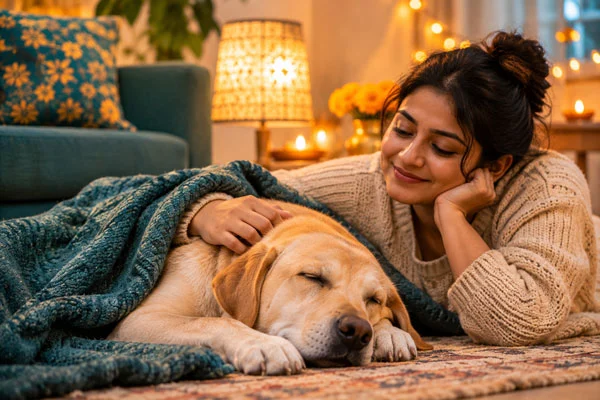
No home method guarantees calm, but a few steps can reduce stress.
- Familiar surroundings: Use your pet’s usual bedding, toys, and hiding spots.
- Gentle reassurance: Stay calm, speak softly, and let your pet approach you.
- Background sound: A fan, television, or soft music may soften external noise at a comfortable volume.
- Safe enrichment: Offer a favorite toy, puzzle, or chew only if your pet is interested.
- Veterinary-approved support: Ask your vet about behavior modification, calming products, or prescription options for your individual pet.
Avoid essential oils, herbal remedies, and supplements unless your vet confirms they are safe. Some products that seem natural can harm pets, especially cats.
What to Do If Your Pet Panics
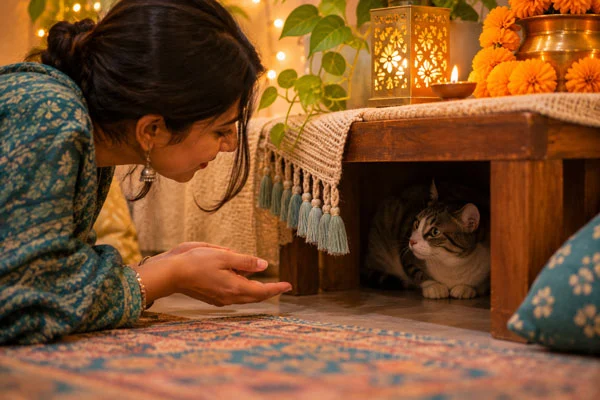
If your dog or cat becomes extremely frightened, take these steps.
- Move to a secure, quiet space. If it’s safe, guide your pet indoors, away from the noise, and keep doors and windows shut.
- Stay calm. Speak gently and move slowly. Avoid shouting, scolding, or sudden movements.
- Let your pet hide if it wants to. Don’t drag it out, and make sure its hiding spot is safe.
- Watch for serious symptoms. Seek urgent veterinary help if your pet has trouble breathing, collapses, has a seizure, is burned or injured, or seems severely unwell.
- Call your vet if distress continues. If your pet stays intensely distressed or can’t settle, ask for advice.
Traveling or Boarding Your Pet During Diwali
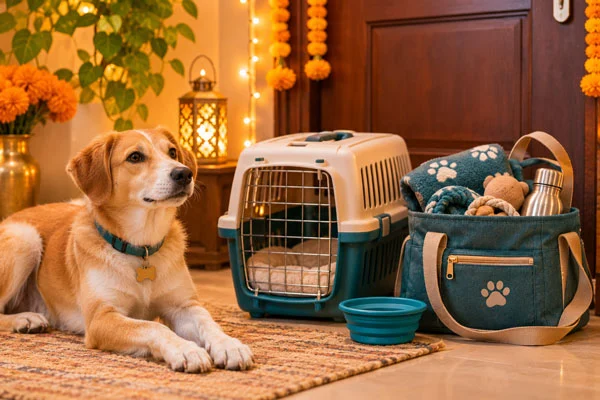
If you’re leaving town for the festival, plan carefully.
- Choose a quiet, trusted sitter or boarding facility, and ask how they handle fireworks.
- Send familiar bedding, toys, and your pet’s usual food.
- Share your vet’s details, your pet’s health information, and your contact number.
- Confirm ID tags and microchip details before you go.
- Avoid leaving a pet with severe anxiety alone during peak firecracker hours.
Quick Diwali Pet Safety Checklist
- Pets kept indoors during fireworks
- Quiet safe space prepared
- Windows, doors, balconies, and gates secured
- ID tag and microchip details updated
- Diyas, candles, and wires placed out of reach
- Sweets and toxic foods stored away
- Routine, water, and litter tray maintained
- Guests informed and the front door kept closed
- Vet and emergency clinic details saved
- No human medicines or sedatives given without vet advice
Frequently Asked Questions
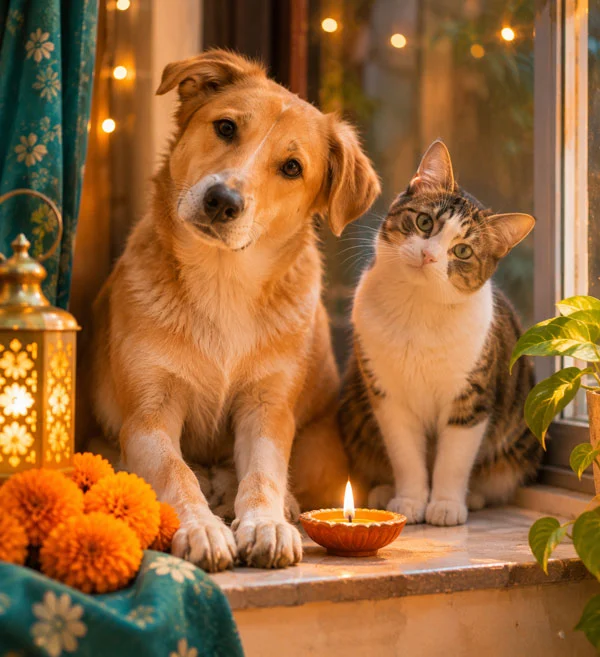
How can I keep my dog safe during Diwali?
Keep your dog indoors during fireworks, set up a quiet safe space, close windows and doors, update ID details, and avoid walks during peak firecracker hours. Talk to your vet if the fear is severe.
How can I calm my dog during firecrackers?
Prepare a quiet room, soften outside noise, offer familiar toys, and give calm reassurance if your dog seeks it. Never punish or force interaction with a scared dog.
Why is my cat hiding during Diwali?
Hiding is a normal response to fear. Give your cat a secure hiding place with access to food, water, and a litter tray.
Are firecrackers harmful to pets?
They can cause fear, stress, burns, and escape-related accidents. Loud, unpredictable noise can be especially hard on noise-sensitive pets.
Should I leave my pet alone during Diwali?
If your pet has severe noise anxiety, try to avoid leaving it alone during peak fireworks hours. Ask a trusted person to stay with it, and make sure it has a secure space, fresh water, and up-to-date ID.
Can I give my dog medicine to calm it?
Only use medication prescribed or recommended by a veterinarian for your dog. Never use human sedatives or sleeping pills.
Do cats need special care during Diwali?
Yes. Keep cats indoors, secure windows and balconies, provide hiding spots and a litter tray, and keep flames, sweets, and wires out of reach.
When should I see a vet about fireworks anxiety?
Talk to your vet if fear is intense or recurring, if your pet tries to escape, becomes destructive, stops eating, or struggles to recover afterwards. Seek urgent care for breathing problems, collapse, seizures, burns, or other serious symptoms.
Final Thoughts: Let Diwali Be a Celebration of Kindness
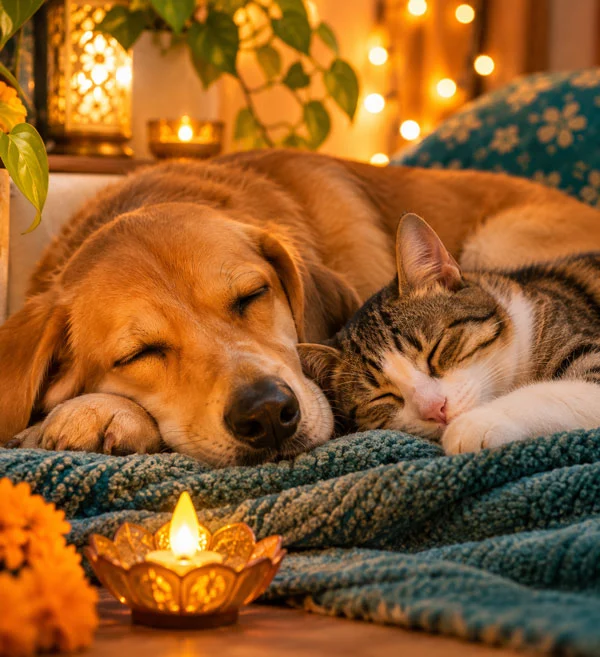
Diwali should be a time of joy and togetherness, not fear for the pets who share our homes. A quiet space, a closed door, a steady routine, and a little patience can change how your pet experiences the festival. Every pet is different, so watch how yours reacts, and don’t hesitate to ask your vet for help if the anxiety is severe.
At Chekapaws, we believe every pet deserves love, protection, and a peaceful home. Let’s make this Diwali safer for our four-legged family members. If you also look out for the dogs outside your door, read our guide on how to help stray dogs during Diwali.
Happy Diwali from Chekapaws! 🐾🪔
Images in this article are AI-generated for illustration.
Disclaimer: This article is for general information and isn’t veterinary advice. If your pet seems unwell, injured, or severely distressed, contact your veterinarian.