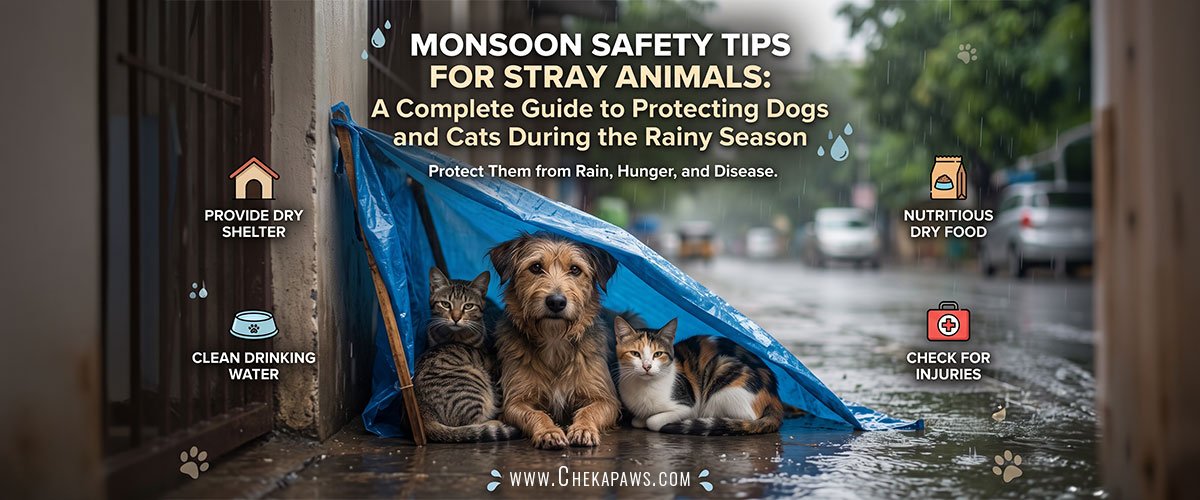
Although the monsoon season offers much-needed relief from the summer heat, stray dogs and cats face significant difficulties during this time. For animals living on the streets, life is considerably more difficult due to heavy rainfall, flooding, waterborne illnesses, lack of shelter and food shortages.
Because they have nowhere safe to go, innumerable stray animals suffer from accidents, diseases, injuries, and thirst each year. Fortunately, little deeds of kindness from people and groups can have a big impact.
We’ll look at useful monsoon safety advice for stray animals in this guide, as well as how everyone can help keep street dogs and cats safe throughout the wet season.
Table of Contents
Why the Monsoon Is Dangerous for Street Animals
Stray animals lack access to regular meals, dry shelter, and medical care, in comparison to pets. They run a number of risks when it rains a lot.
Among them are:
- Open sewers and flooded streets
- Hypothermia brought induced by prolonged wetness
- Damp fur-related skin infections
- Drinking water that is contaminated
- Decreased access to food
- Ticks, fleas, and mosquitoes
- Poor visibility leading to traffic accidents
- Slipping injuries on damp surfaces
Knowing these risks enables us to support them in a meaningful way.
Provide Temporary Shelter
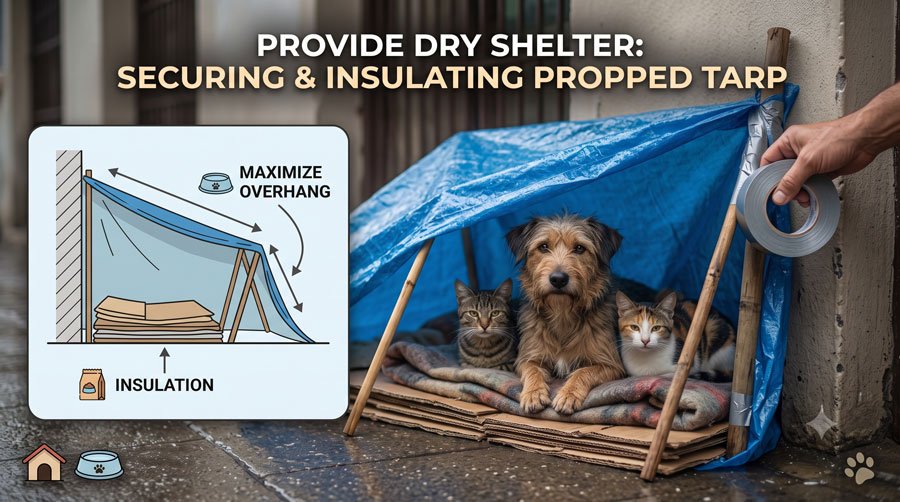
Finding a dry spot to rest is one of the biggest problems for stray animals during the monsoon.
Simple shelter suggestions include
- Plastic sheets are placed into cardboard boxes.
- Wooden crates with waterproof covers
- Dog houses made of plastic
- Tarpaulin-covered corners
- elevated platforms to prevent flooding
Select places that are
- Away from traffic
- Guarded against flooding
- Well-ventilated
- Protected from Storms
Ensure Access to Clean Drinking Water
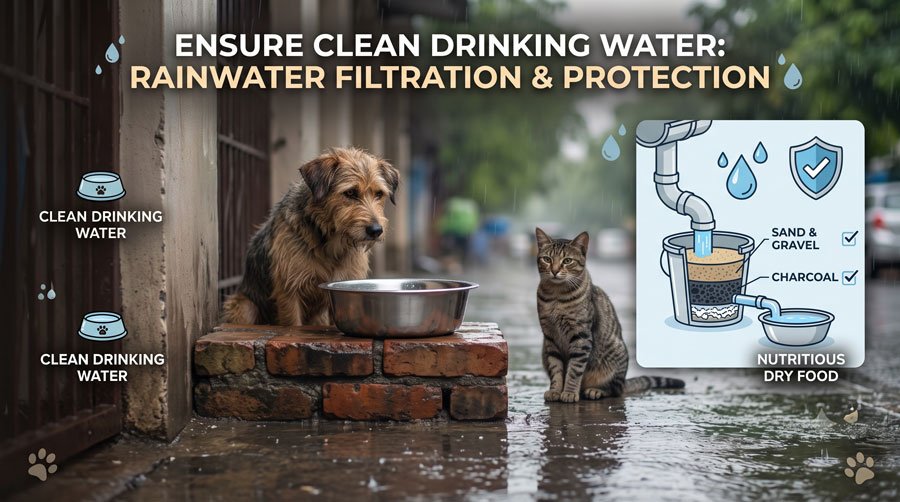
Rainwater isn’t always secure.
Frequently, floodwater includes
- Chemicals
- Sewage
- Oil residues
- Bacteria
- Parasites
To avoid contamination, put bowls of clean drinking water in safe places and clean them every day.
Feed Nutritious Food
Long-term rains make it harder to get food.
Helping with consistent feeding boosts their health and immune system.
Suitable foods include
- Vegetables and cooked rice
- Eggs that are boiled
- Khichdi made at home (without a lot of spices)
- High-quality food for dogs or cats
- Clean drinking water
Avoid
- Chocolate
- Onions
- Garlic
- Salty snacks
- Spoiled leftovers
- Fried foods
Consistent feeding can be lifesaving during bad weather.
Keep Feeding Areas Dry
Wet food attracts insects and degrades quickly.
Advice
- Feed in covered spaces.
- Take out any leftovers right away.
- After each meal, wash the bowls.
- Avoid feeding near stagnant water.
Keeping things clean contributes to the prevention of illness outbreaks.
Watch for Signs of Illness
Until they are very sick, stray animals often hide their pain.
Keep an eye out for warning indicators like:
- Continuous shivering
- Loss of appetite
- Difficulty walking
- Persistent coughing
- Skin sores
- Hair loss
- Swollen paws
- Eye discharge
- Vomiting or diarrhea
As quickly as possible, get in touch with a local veterinarian or animal rescue group if an animal seems seriously ill.
Keep Their Paws Safe
When animals walk on damp roadways, they are exposed to
- Broken glass
- Sharp stones
- Chemicals in Mud
- Oil
- Floodwater contaminants
When caring for community animals on a regular basis, look for cuts, swelling, or infections on their paws.
Prevent Mosquitoes, Fleas and Ticks
These pests can be extremely uncomfortable and spread diseases.
You may assist by
- Maintaining clean feeding areas
- Avoiding stagnant water near shelters
- Consulting animal welfare groups about safe parasite prevention for community animals
Animals should never be treated with insect repellents used by humans.
Drive Carefully During Heavy Rain
Accidents are more likely when there is poor visibility. Many stray dogs and cats rest under parked cars or near warm vehicle engines during rain.
Prior to operating a vehicle
- Check the area beneath your car.
- Gently tap the hood.
- In residential neighborhoods, drive slowly.
These easy practices have the power to save lives.
Help Injured Animals Safely
If you come across a stray animal that is hurt
Act
- Keep other people at a distance.
- If the animal is alert, provide water.
- Make contact with an animal rescue organization.
- Only when it is absolutely necessary and safe to move the animal should you use a blanket.
Don’t
- Avoid giving an unconscious animal food or drink.
- Treat scared animals carelessly.
- Don’t try to attempt medical procedures on your own.
Support Local Animal Welfare Efforts
Helping stray animals is easier when communities work together.
You are able to
- Participate in volunteer work with rescue groups.
- Give blankets or food.
- Sponsor medical care.
- Build basic rain shelters.
- Spread the word about animals in need of assistance.
- Urge your neighbors to take part.
The effects of collective action are long-lasting.
Essential Monsoon Safety Checklist for Stray Animals
✔ Provide waterproof shelter
✔ Offer fresh food daily
✔ Keep clean drinking water available
✔ Watch for injuries and illness
✔ Keep feeding areas hygienic
✔ Prevent mosquito breeding nearby
✔ Drive slowly during rain
✔ Contact rescue organizations for emergencies
✔ Support local animal welfare initiatives
Common Mistakes to Avoid
Many well-meaning people unintentionally cause issues.
Avoid these mistakes
- Offering rotten meals
- Bowls left in floodwater
- Using unsafe medications
- Disturbing nursing mother dogs or cats
- Constructing shelters in places vulnerable to flooding
- Ignoring symptoms of a serious disease
Careful attention works better than quick attempts.
How Children Can Help Safely
Educating kids about animal compassion creates responsible societies.
Among the safe methods to assist are
- Water bowl refilling under adult supervision
- Donating used blankets
- Assisting with food preparation
- Learning about animal welfare
- Reporting injured animals to adults
Children should always be reminded not to approach scared or hurt animals unsupervised.
Frequently Asked Questions
Is rainwater safe for stray animals to drink?
Not always. Rainwater mixed with sewage, chemicals, or stagnant water can carry harmful bacteria and parasites. Providing fresh, clean water is the safest option.
What should I feed stray dogs during monsoon?
Simple, nutritious foods such as cooked rice with chicken, boiled eggs, or balanced dog food are good choices. Avoid spicy, salty, or spoiled food.
How can I help stray cats during heavy rain?
Place food and clean water in covered areas, provide a dry shelter if possible, and contact a rescue organization if a cat appears injured or ill.
Should I rescue every stray animal I see?
Not necessarily. Healthy stray animals often know their territory. Focus on providing food, water, shelter, and assistance if they are injured, trapped, or in immediate danger.
Conclusion
Even tiny acts of compassion can make a big difference, even though the monsoon is one of the hardest times of year for stray dogs and cats. These fragile animals can remain healthier and safer during the wet months if they have access to shelter, clean water, wholesome food, and prompt aid.
Every animal needs compassion and care, in our opinion at Chekapaws. We can all help make the rainy season a little safer for the strays who live in our neighborhoods by supporting local animals and promoting appropriate behavior.
Your efforts count, whether you construct a basic shelter, replenish a water bowl, or get in touch with a rescue group for a wounded animal. Even on the worst monsoon days, we can work together to create a more compassionate environment that gives stray animals a greater chance of surviving.