Veterinary Care Note: This guide provides practical home-care advice for healthy cats and is not a substitute for veterinary diagnosis. If your cat is trembling persistently, unusually weak, or showing signs of hypothermia, contact a registered veterinarian immediately.
Whether it is a sunlit windowsill, a freshly folded duvet, or your exact spot on the sofa, cats have an uncanny radar for warmth. When winter settles in and nighttime temperatures drop, it is natural to wonder whether that thick fur coat is actually enough to keep your cat comfortable while you sleep.
Yes—cats can get cold at night, even indoors. While a cat’s fur provides natural insulation, it does not make them immune to chilly drafts, freezing tile or marble floors, or sudden overnight temperature drops. Kittens, senior cats, short-haired or hairless breeds, and underweight or recovering cats feel the chill far sooner than healthy adult cats.
Below, you will find the exact indoor temperature ranges cats prefer, 12 behavioural signs your cat is cold (sorted from harmless warmth-seeking to medical emergencies), and safe, vet-aligned ways to keep your feline cozy all winter long.
Table of Contents
Do Cats Feel Cold at Night?
A healthy domestic cat maintains a higher normal resting body temperature than humans—roughly 38.1°C to 39.2°C (100.5°F to 102.5°F), according to the Cornell Feline Health Center. Because their internal thermostat runs warmer than ours, a bedroom that feels pleasantly cool to you under a heavy quilt can feel genuinely chilly to a cat sleeping on an uninsulated floor.
How well your cat handles cold nights depends on six core factors:
- Age and overall health: Very young kittens and aging seniors regulate body heat less efficiently.
- Coat length and density: Double-coated breeds retain heat much better than sleek short-haired or hairless cats.
- Body weight and muscle mass: Thin or underweight cats have less insulating fat and generate less resting warmth.
- Evening activity level: Sleeping cats generate less metabolic heat than active ones.
- Flooring and room insulation: Marble, granite, and ceramic tiles common in Indian homes draw body heat away rapidly at night.
- Access to enclosed resting spots: A sheltered, draft-free bed makes a dramatic difference even in an unheated room.
What Temperature Is Too Cold for Cats at Night?
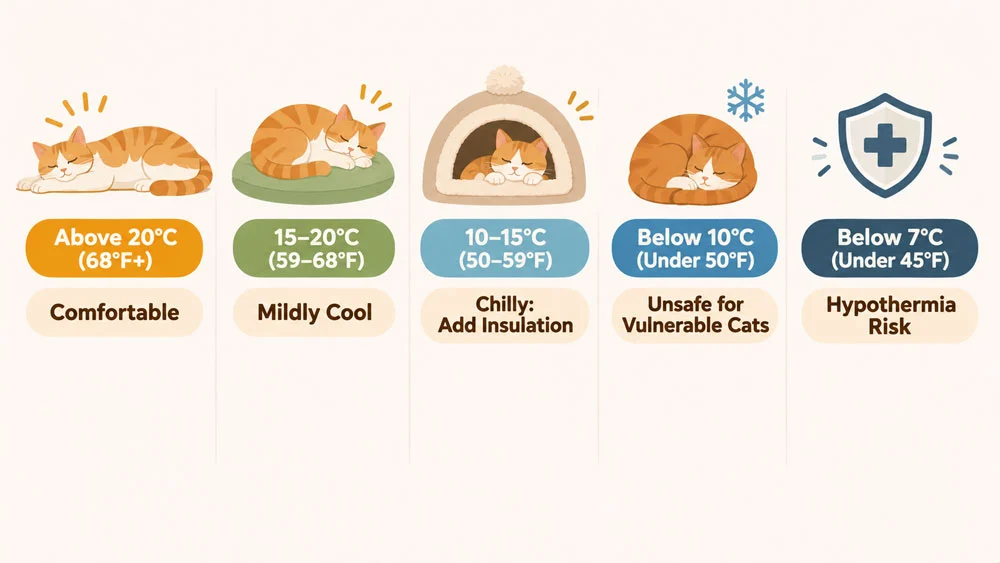
There is no single rigid temperature cutoff that fits every cat, because a healthy 3-year-old long-haired cat and a 12-year-old thin short-haired cat experience the same bedroom very differently. Use the comfort zones below as practical guidance alongside your cat’s actual behavior:
| Nighttime Room Temperature | Comfort Level for Most Indoor Cats | Recommended Action |
| Above 20°C (68°F+) | Comfortable for most healthy adult cats | Standard soft bedding is usually enough; keep kittens and hairless breeds out of cold drafts. |
| 15°C to 20°C (59°F to 68°F) | Mildly cool; warmth-seeking begins | Provide a fleece blanket or bolstered bed elevated off cold tile or marble floors. |
| 10°C to 15°C (50°F to 59°F) | Chilly for most indoor cats | Use an insulated cave bed or self-warming mat, block window drafts, and monitor seniors or kittens closely. |
| Below 10°C (Under 50°F) | Uncomfortable to unsafe for vulnerable cats | Actively warm the sleeping area safely; never leave cats outdoors overnight. |
| Below 7°C (Under 45°F) | High cold-stress and hypothermia risk | Keep all cats indoors in a temperature-controlled, dry room and watch closely for lethargy or shivering. |
Across India, winter nights swing sharply by region—coastal cities rarely dip into danger zones, while North Indian homes routinely drop into the 5°C to 12°C range between December and January without central heating. Rather than watching the thermostat alone, let your cat’s nighttime body language guide your setup.
12 Signs Your Cat Feels Cold at Night (From Cozy Habits to Emergencies)
Cats rarely vocalize when they are chilly. Instead, they adjust their posture, sleeping locations, and energy levels. Grouping these 12 signs by urgency helps you tell normal cozy habits apart from genuine health warnings.
Tier 1: Normal Warmth-Seeking Habits (Mild Chill)
These six behaviors are your cat’s built-in heat-conservation strategies. On their own, they simply mean your cat appreciates extra insulation.
1. Curling Up Tightly Into a Ball
Pulling their paws beneath their body, tucking their nose against their chest, and wrapping their tail tightly around their face shrinks exposed surface area to trap warmth. Keep in mind that relaxed cats also curl up out of habit—look for a cluster of signs before assuming they are uncomfortably cold.
2. Tucking Their Paws Into a “Cat Loaf”
Sitting upright with all four paws folded neatly underneath their chest—the classic cat loaf—protects sensitive paw pads from cool floors while conserving core heat. Like curling up, loafing is normal resting behavior unless paired with other chill signals.
3. Constantly Searching for Warm Spots
If your cat suddenly abandons their usual sleeping perch to camp out on sunny windowsills, warm laptops, thick cushions, or next to room heaters, they are actively hunting ambient heat.
4. Seeking Extra Physical Contact With You
Becoming noticeably clingier during winter—sleeping right beside your pillow, insisting on your lap, or burrowing under your quilt—is often as much about shared body heat as affection. Enjoy the cuddles, and make sure they also have a warm independent bed for daytime naps.
5. Hiding Under Blankets or Inside Tight Spaces
Enclosed spaces trap body heat efficiently. On cold nights, you may find your cat retreating beneath beds, inside open wardrobes, behind sofa cushions, or tucked inside cardboard boxes.
6. Avoiding Bare Marble or Tile Floors
Hard stone and ceramic floors turn icy overnight. If your cat begins hopping from rug to rug, staying exclusively on cushioned furniture, or choosing elevated shelves over the floor, adding soft floor rugs and raised bedding will make an immediate difference.
Tier 2: Moderate Signs of Winter Discomfort
If you notice these shifts lasting more than a few chilly evenings, upgrade your cat’s sleeping setup—and rule out underlying discomfort if the behavior seems sudden.
7. Sleeping More Than Usual
Cats already sleep 12 to 16 hours a day, and cooler weather can nudge them to conserve energy by snoozing longer beneath covers. A gentle seasonal slowdown is common, whereas sudden heavy drowsiness or reluctance to wake for meals warrants a vet check.
8. Reduced Activity During Cold Evenings
Some cats skip their usual late-night zoomies or hesitate to jump onto cool perches when temperatures dip. Short, gentle indoor play sessions followed by a warm resting spot keep joints limber—just remember that sudden stiffness or reluctance to jump can also signal arthritis flare-ups, especially in older cats.
9. Cold Ears and Paw Pads
Because ears and paw pads have thinner insulation and sit furthest from the body’s core, they often feel cool to the touch. Cool extremities alone are not a reliable way to judge your cat’s internal temperature—take them seriously only when combined with hunching, lethargy, or shivering.
10. Dry or Flaky Winter Skin
Cold air paired with low indoor humidity—especially in rooms running electric heaters—can trigger flaky dandruff, dry patches, extra scratching, or a duller coat. If flaking persists or comes with hair loss or scabs, consult your vet to rule out parasites, allergies, or skin infections.
Tier 3: Urgent Warning Signs (Take Immediate Action)
11. Shivering or Trembling
Visible, involuntary muscle tremors while resting indicate that your cat is struggling to maintain body heat. However, shivering is not caused solely by cold—it can also signal pain, fever, stress, low blood sugar, or poisoning. Move your cat into a warm, draft-free room right away; if the trembling does not stop quickly, call your veterinarian.
12. Unusual Weakness, Extreme Lethargy, or Hypothermia
Hypothermia (a dangerously low core body temperature) is a life-threatening emergency. Watch for these red flags:
- Pale, white, or bluish gums
- Severe weakness, stumbling, or collapse
- Slowed breathing or reduced responsiveness
- Shivering that suddenly stops despite ongoing cold exposure
Emergency First Aid for Suspected Hypothermia: Contact your veterinarian or nearest 24-hour emergency clinic immediately. While preparing to transport your cat, gently wrap them in a dry, pre-warmed towel or fleece blanket to warm them gradually. Never place a hypothermic cat directly onto a hot heater, blow-dryer, or scalding water bottle—and do not vigorously rub their body, as rapid surface warming can worsen shock and cause burns.
Quick-Scan Symptom Triage Guide
| What You Observe | Likely Meaning | Smart Next Step |
| Tight curling, loafing, burrowing under quilts | Normal heat conservation | Add a fleece blanket or covered bed away from drafts. |
| Avoiding floors, extra naps, dry coat | Mild winter discomfort | Elevate bedding off tile/marble floors; check indoor humidity and hydration. |
| Persistent shivering, pale gums, weakness, confusion | Possible hypothermia or illness | Warm gently with a dry blanket and seek immediate veterinary care. |
Which Cats Need Extra Warmth in Winter?
While a healthy, well-fed adult cat adapts fairly well indoors, five groups lose body heat much faster and need proactive winter planning:
| Cat Group | Why They Are Vulnerable | Priority Care Tip |
| Young Kittens | Newborn and young kittens cannot regulate their own body temperature reliably during their first weeks of life. | Maintain a warm, draft-free nest with vet-approved safe warming pads wrapped in soft towels. |
| Senior Cats | Lower muscle mass, thinner skin, slower circulation, and stiffer joints make cold nights painful and exhausting. | Place plush, orthopedic or bolstered beds at low, easy-to-step-into heights (no high jumps needed). |
| Hairless Breeds (e.g., Sphynx) | Virtually zero coat insulation means rapid heat loss even in mild 18°C–20°C rooms. | Keep indoor temperatures steady, provide thermal cave beds, and use soft, breathable fitted shirts if tolerated. |
| Short-Haired & Sleek Breeds | Thin, single-layer coats trap far less warm air than plush double coats. | Offer burrowing blankets and enclosed igloo-style cat beds overnight. |
| Sick or Underweight Cats | Low fat reserves and energy spent fighting illness reduce natural heat generation. | Follow your veterinarian’s exact recovery temperature guidelines and monitor appetite daily. |
8 Safe Ways to Keep Your Cat Warm at Night
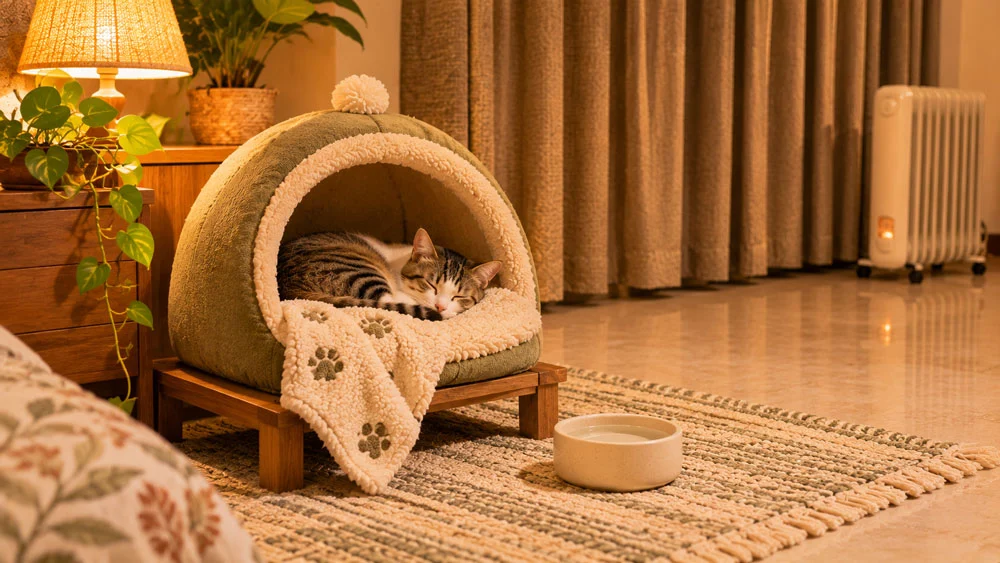
You do not need expensive gadgets to create a winter-ready sleeping setup. Eight straightforward adjustments keep most indoor cats warm and safe all night:
- Set Up an Insulated, Raised Bed: Choose a soft, washable bed with high bolstered sides or a hooded “cave” design that traps your cat’s own body heat. Place it on a rug, low sofa, or sturdy platform rather than directly on cold marble or tiled flooring.
- Layer Breathable Soft Blankets: Drape a lightweight fleece blanket inside your cat’s bed or across their favorite sofa corner. Some cats love resting on top while others prefer burrowing underneath—always choose breathable, washable fabrics without loose strings, buttons, or tassels that could be swallowed. Never force a cat to stay under a cover if they walk away.
- Block Nighttime Cold Drafts: Close balcony doors and windows snugly after dusk, draw heavy curtains to insulate glass panes, and slide beds away from exterior doorways—while still keeping normal room ventilation intact.
- Try a Self-Warming Thermal Cat Bed: Unlike electric pads, self-warming cat mats use a silent Mylar thermal layer inside plush fabric to reflect your cat’s natural body heat back to them—with zero cords, plugs, or burn risk. (Great everyday upgrade for chilly bedrooms—check sizes so your cat can curl up comfortably.)
- Keep Indoor Temperatures Steady (and Heater-Safe): Avoid sharp overnight temperature plunges, especially for kittens and seniors. If you run an oil-filled radiator or room heater, position it where a curious cat cannot touch the hot surface or knock the unit over, and leave the door cracked slightly so your cat can move to a cooler spot if they get too warm.
- Keep Sleeping Areas Completely Dry: Dampness strips warmth from fur fast. Wash and thoroughly tumble- or sun-dry bedding regularly, and never place cat beds near damp bathroom walls or condensation-prone windows.
- Encourage Winter Hydration: Many cats drink less when tap water turns icy. Offer fresh, room-temperature water in clean bowls placed near their favorite resting spots, and include balanced wet cat food if it is already part of their regular diet. (For more everyday feline routines, explore our Cat Care Hub and Balancing Work and Pet Care Guide.)
- Stick to a Balanced Feeding Routine: Good nutrition fuels natural heat production, but winter does not automatically mean your indoor cat needs larger food portions. Indoor cats often burn fewer calories in winter because they sleep more—only adjust calories with your veterinarian’s advice if your cat is underweight, growing, or spends significant time outdoors. Check our Complete Guide to Pet Food Safety to keep winter snacks safe.
5 Winter Safety Mistakes Cat Parents Should Avoid
Well-meaning attempts to warm up a pet can occasionally create bigger hazards. Avoid these five common winter slip-ups highlighted by veterinary safety bodies like the AVMA Cold Weather Pet Safety Guidelines and ASPCA Cold Weather Tips:
- Placing Beds Right Against Heaters or Radiators: Direct radiant heat can cause slow thermal burns, dry out nasal passages, or trigger overheating—especially if a senior cat falls deeply asleep beside a blower heater. Keep at least 3 to 4 feet of clearance.
- Leaving Human Electric Blankets or Heating Pads Unsupervised: Human heating pads run hotter than feline skin can safely tolerate and pose electrocution risks if chewed. If you use heated bedding, choose a low-voltage, pet-specific pressure-activated mat, inspect the cord regularly, and ensure your cat can easily step off it.
- Forcing Winter Sweaters on Every Cat: Most indoor cats with healthy fur do not need clothing. Sweaters can restrict natural grooming, snag on furniture, or cause intense stress. Reserve soft, properly fitted knitwear strictly for hairless or medically vulnerable cats that visibly tolerate wearing it.
- Blaming Every Behavioral Change on the Weather: Winter cold should never become an excuse to overlook warning signs. Persistent shivering, sudden hiding, appetite loss, or joint stiffness deserve a veterinary exam—and having financial protection in place helps you act without hesitation (see our Pet Insurance in India 2026 Guide).
- Leaving Cats Outdoors on Freezing Nights: Outdoor and semi-feral cats face real risks from wind chill, cold rain, and seeking warmth inside parked car engines (always tap your car hood before starting it on winter mornings!). Bring pet cats inside after dark, and if you care for neighborhood community cats, set up a dry, windproof insulated shelter box elevated off damp ground.
Frequently Asked Questions About Cats Feeling Cold at Night
How do I know if my cat is cold while sleeping?
Look at the full picture rather than one habit alone. Tight curling, paw-tucking, burrowing under blankets, avoiding bare tile floors, and constantly moving toward warm spots signal mild chill, whereas shivering, lethargy, or cool extremities paired with weakness require immediate warming and veterinary advice.
Should I cover my cat with a blanket at night?
Leave a lightweight, breathable fleece blanket draped neatly in their bed or on your sofa so they can choose whether to sleep on top or burrow underneath. Never tuck a cat tightly under a heavy quilt or force them to stay covered.
Can cats sleep in air-conditioned or heated rooms during winter?
Yes, provided the room stays within a steady, comfortable range (roughly 20°C to 24°C) and airflow never blows directly onto your cat’s bed. Always keep a cozy, sheltered bed available and allow your cat to walk into a cooler hallway if a heater makes the room too stuffy.
Do indoor cats really feel cold in winter?
Yes. Even inside closed apartments, overnight drafts around windows, unheated bedrooms, and freezing marble or tile flooring pull warmth out of a sleeping cat—especially kittens, seniors, and short-haired cats.
Do cats need sweaters during winter?
Most healthy indoor cats with normal coats do not need sweaters and find clothing stressful or restrictive. Only consider a soft, well-fitted sweater for hairless breeds (like Sphynx cats) or vet-advised sensitive cats that move comfortably in one.
Why does my cat sleep under blankets during winter?
Burrowing satisfies two feline instincts at once: trapping body heat in a small air pocket and feeling hidden and secure from their surroundings.
Can a cat get hypothermia indoors?
It is rare in heated homes, but yes—indoor hypothermia can happen during severe cold snaps in unheated rooms, if a cat becomes wet and cannot dry off, or if an elderly, newborn, or sick cat has an underlying condition affecting circulation and temperature regulation.
How can I keep a young kitten warm at night?
Place kittens in a draft-free, enclosed nest lined with clean, dry fleece blankets and use a vet-recommended safe heat source (such as a covered warm-water bottle wrapped in thick towels with cool space beside it so kittens can crawl away if too warm). Because very young kittens lose heat rapidly, always confirm age-specific warming advice with your veterinarian.
A few thoughtful changes—lifting your cat’s bed off icy floors, layering a breathable fleece throw, sealing overnight drafts, and watching for subtle shifts in energy—are all it takes to keep most cats snug through the coldest months. Listen to their body language, keep room heaters safely out of paw’s reach, and never hesitate to call your vet if shivering or lethargy looks out of character.