Every dog owner has wondered what happens on a walk when we’re not paying attention. Where does your dog stop? What do they pull toward? What makes them hesitate at the same corner every single time?
Table of Contents
Introduction
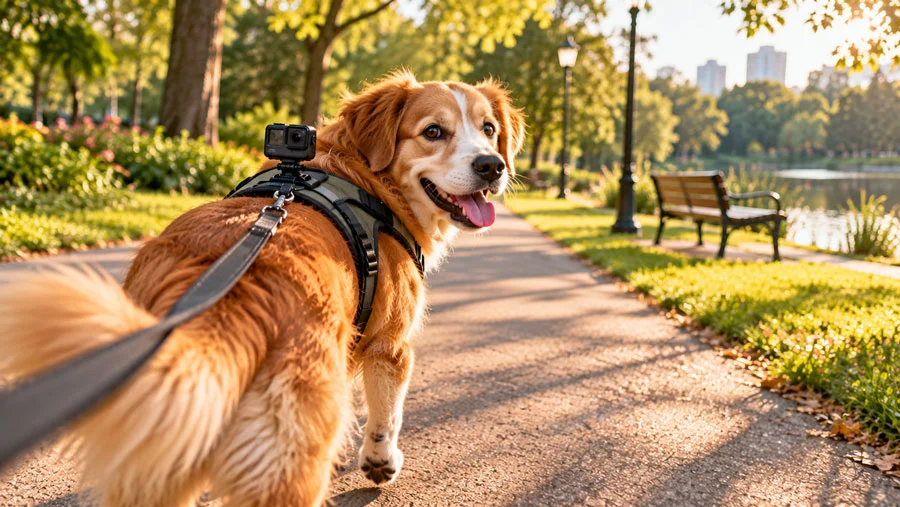
A dog POV camera, often sold as a dog collar camera or dog camera harness, is a small wearable camera that records video from roughly your dog’s height and direction of travel. I tried them with Chester, Bhuri and Buffy.
Chester was 7-year-old Labrador, Bhuri was a 9-year-old Indie Breed and Buffy was 3-year-old Indie Breed at that time. Their footage taught me more than I expected.
In this guide, I’ll share what happened when I filmed them, then cover how to use a camera safely, whether to choose a collar or harness mount, creative ways to use the footage, the privacy side most people forget and how to decide if one is worth buying.
My Experience Filming Chester
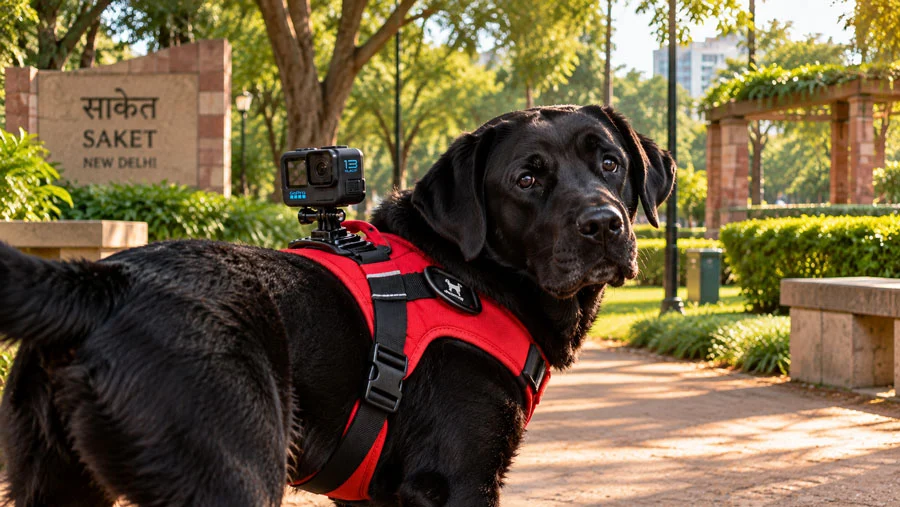
Meet Chester
Chester was a 7-year-old Labrador who weighs about 40Kg. He’s curious, easily distracted by smells and never nervous around loud vehicles or sound. I chose to try a camera because I wanted to document his weekend activities.
The First Attempt
I used a ‘GoPro HERO13‘ attached to Chester’s ‘SKEIDO Hound Dog Fetch Harness‘ in Saket, Delhi, India. His first reaction, “He sniffed it, ignored it for ten minutes, then scratched at it twice before settling.
What I Changed
I moved the camera from the collar to a harness because the footage kept spinning and I shortened the first sessions to about five minutes.
What the Footage Showed Me
I realized how much of his walk is spent at the base of fences and hedges. The footage showed him hesitating every time a bike passed. This was shocking as normally with us, he’s never nervous of loud sound and vechiles.
What I’d Do Differently
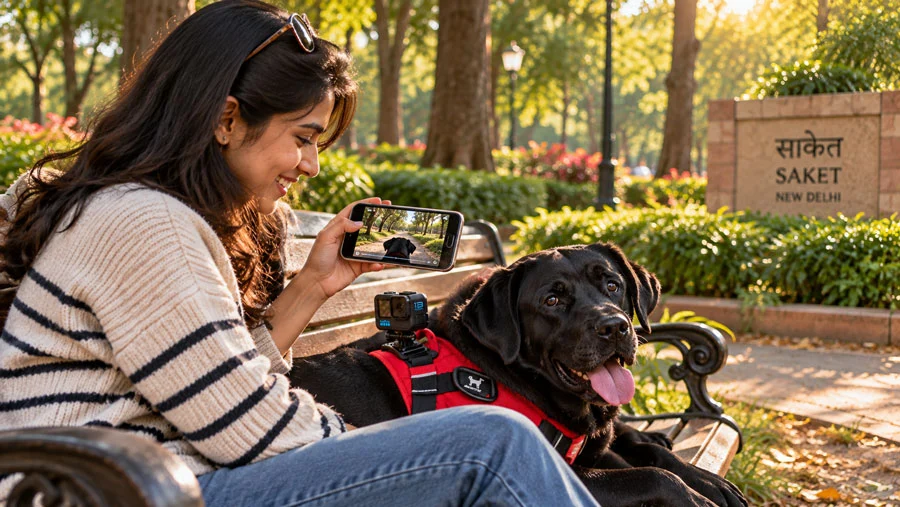
I’d introduce the camera at home first while they are on their comfort zone.
What Is a Dog POV Camera?
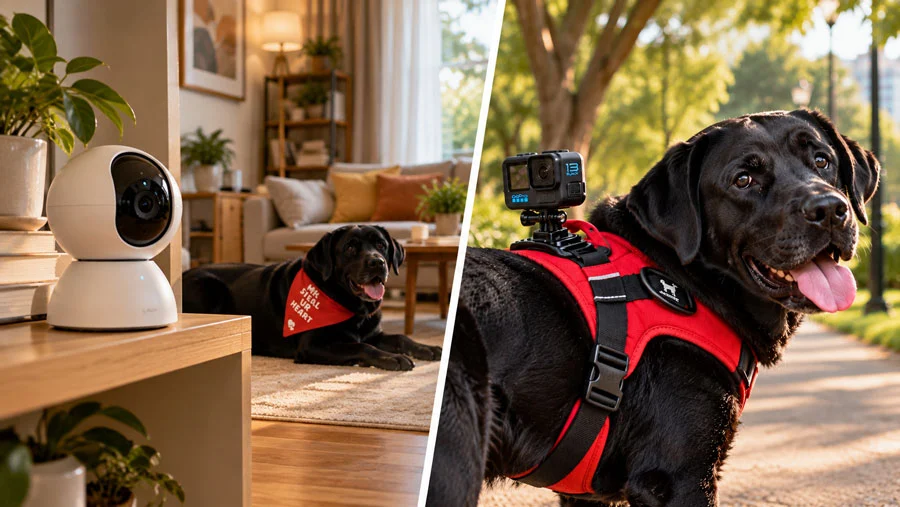
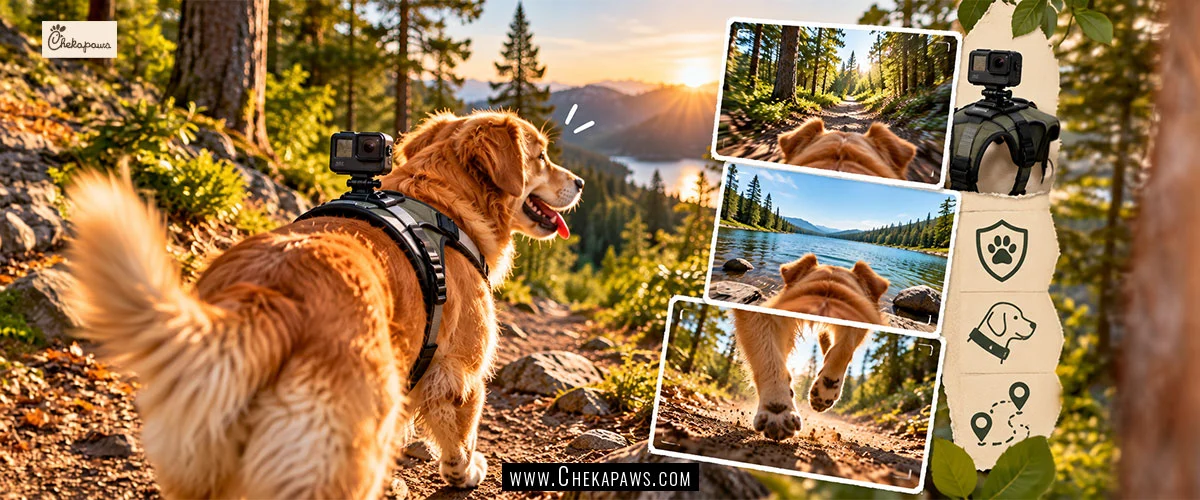
A dog POV camera is a compact camera attached to a collar, harness, or another suitable mount, recording video from close to the dog’s physical position. The footage is low to the ground, full of movement and shows the world at a very different scale from the one we see standing up.
It’s not the same as an indoor pet camera. An indoor camera stays on a shelf and watches the home. A POV camera travels with your dog and records their outdoor experiences.
Common Mounting Options
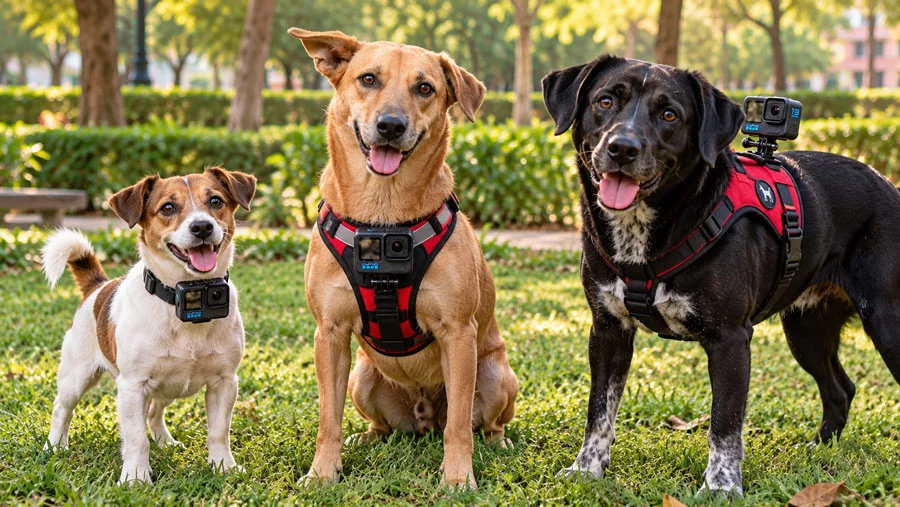
- Collar mount: Quick to set up, but it adds weight around the neck.
- Harness or chest mount: Usually steadier, and it spreads weight across the body.
- Back mount: Gives a wider, higher view but may bounce more when your dog runs.
The right choice depends on your dog’s size, build, coat and activity level.
Do Dog POV Cameras Show What Dogs Really See?
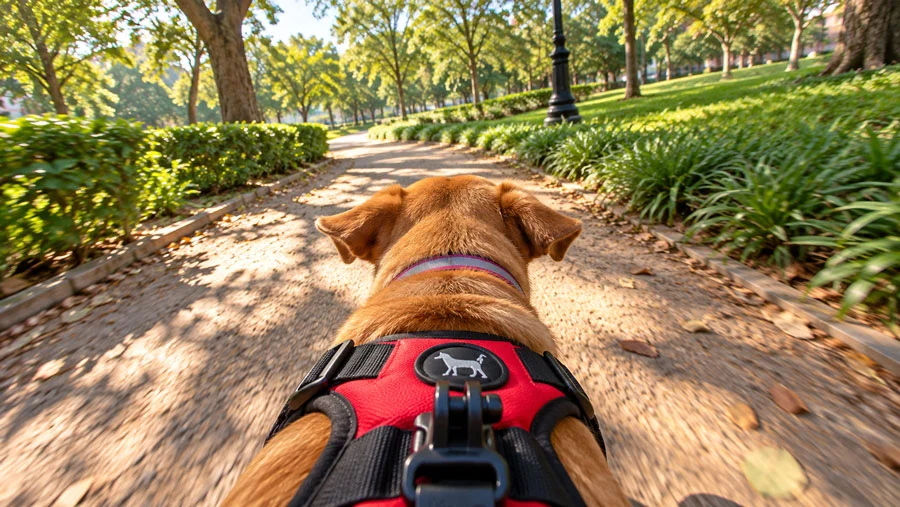
Not exactly. A POV camera records the view from your dog’s approximate position, but it doesn’t reproduce canine vision. Your dog’s experience of a walk is shaped heavily by scent, along with hearing and sensitivity to movement and none of that appears on screen.
A better way to think about the footage is this: it shows the world from your dog’s height and in the direction of their attention, not through their eyes. That’s still fascinating. It reveals what they head toward, what they linger over and what makes them pause.
How to Safely Use a Camera on Your Dog
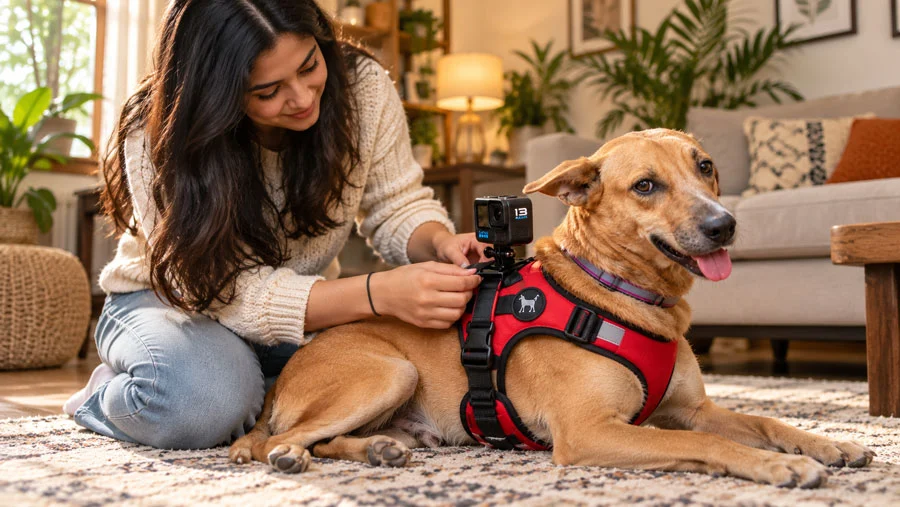
Safety comes before a great video. A few clips are never worth a stressed or uncomfortable dog.
Start Slowly
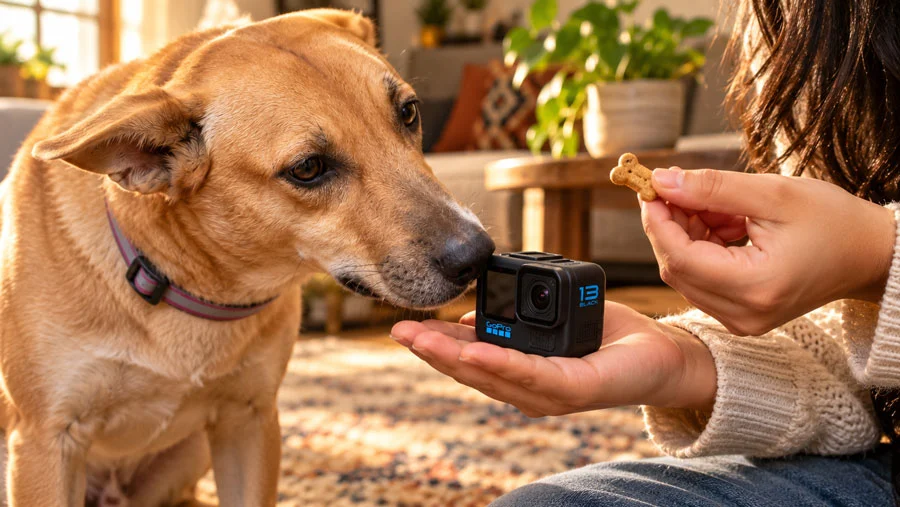
Don’t attach the camera and head out on a two-hour hike. Build up in stages:
- Let your dog sniff the camera while it’s switched off.
- Reward calm, curious behavior with treats or praise.
- Attach it at home for a few minutes during something pleasant, like a meal or play.
- Move to short, easy walks before trying longer adventures.
Check the Fit
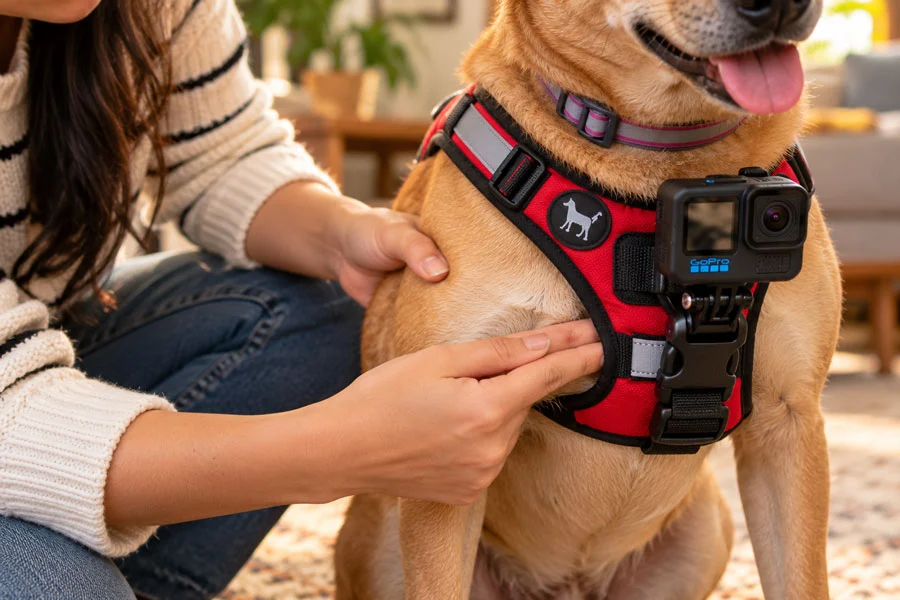
The collar or harness shouldn’t be too tight or too loose. Make sure the camera doesn’t swing, rub, or get in the way of your dog’s stride. Watch your dog walk and trot before you leave the house. If their movement looks even slightly different, adjust the setup or remove the camera.
Watch for Signs of Discomfort
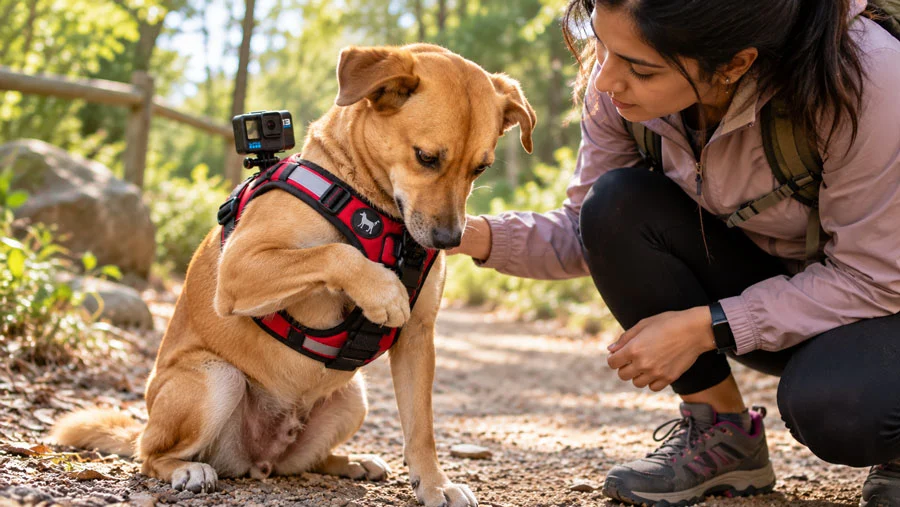
Stop and remove the camera if your dog:
- Keeps scratching or pawing at it
- Repeatedly tries to shake it off or rub against objects
- Becomes unusually restless or tense
- Shows signs of stress, such as pacing, avoidance, or panting when it isn’t hot
- Has difficulty moving normally
Keep Wear Time Reasonable
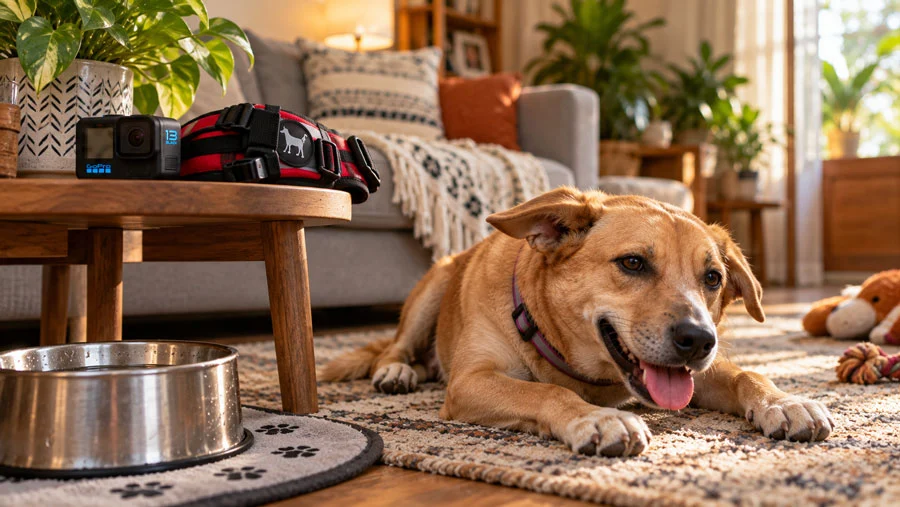
Your dog doesn’t need to wear a camera all day. For most dogs, occasional use on walks and special outings is plenty. Take it off afterward so the harness or collar goes back to normal.
Collar Camera vs. Harness Camera: Which Is Better?
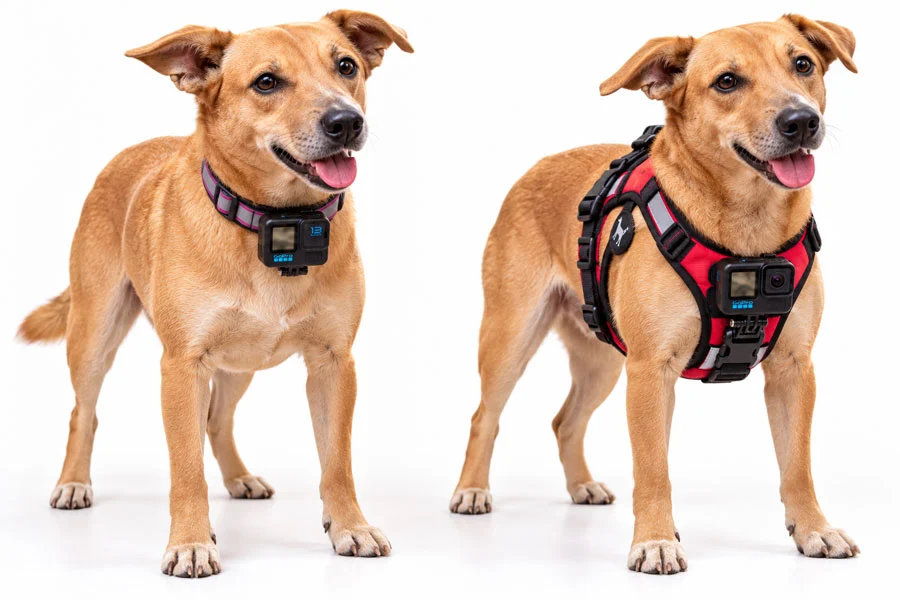
A collar camera can work well if it’s lightweight, secure, comfortable, and appropriate for your dog’s size and activity. But the collar isn’t the best mount for every dog.
For active dogs, a well-fitted harness often sits more steadily and keeps extra weight off the neck. That matters most for small dogs, dogs with sensitive necks and dogs that run hard or pull.
| Factor | Collar Mount | Harness Mount |
|---|---|---|
| Stability while running | Can bounce or rotate | Usually steadier |
| Weight on the neck | Yes | Spread across the body |
| Setup speed | Very fast | Slightly longer |
| Best for | Calm walks, very light cameras | Active dogs, hikes, longer outings |
Whichever you choose, comfort, a secure attachment and a camera that’s light for your dog matter more than the mount type.
Fun Ways to Use a Dog POV Camera
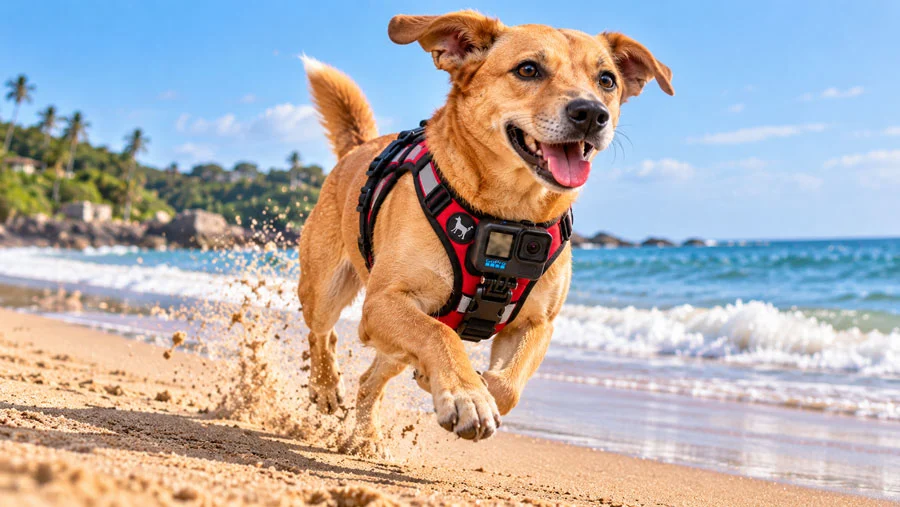
A POV camera isn’t only about monitoring. It’s also a creative tool.
Create a “Day in My Life” Video
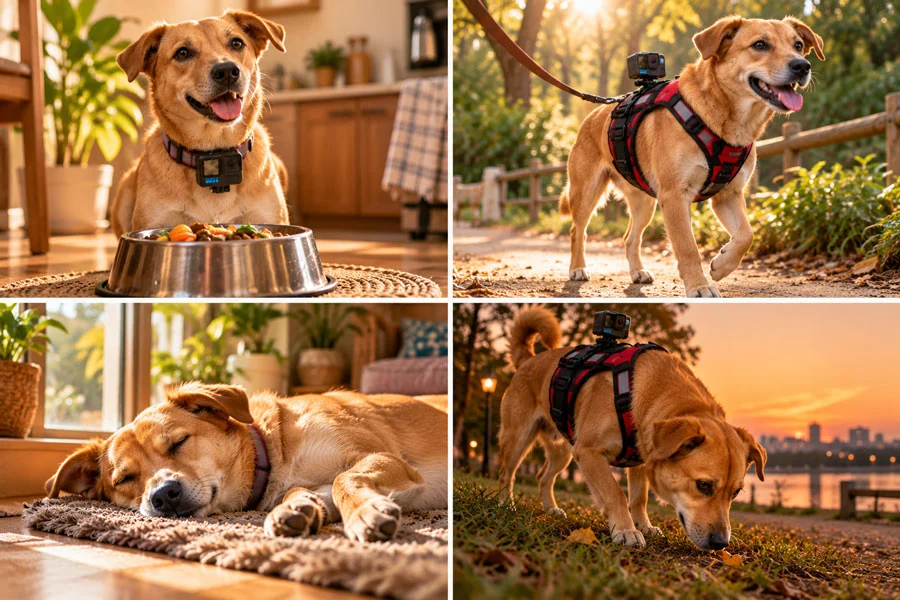
Record a typical day from your dog’s side: morning walk, breakfast, playtime, nap, evening adventure. Short clips stitched together make a charming story and even ordinary routines look different from a dog’s eye level.
Record Your Dog’s Favourite Adventures
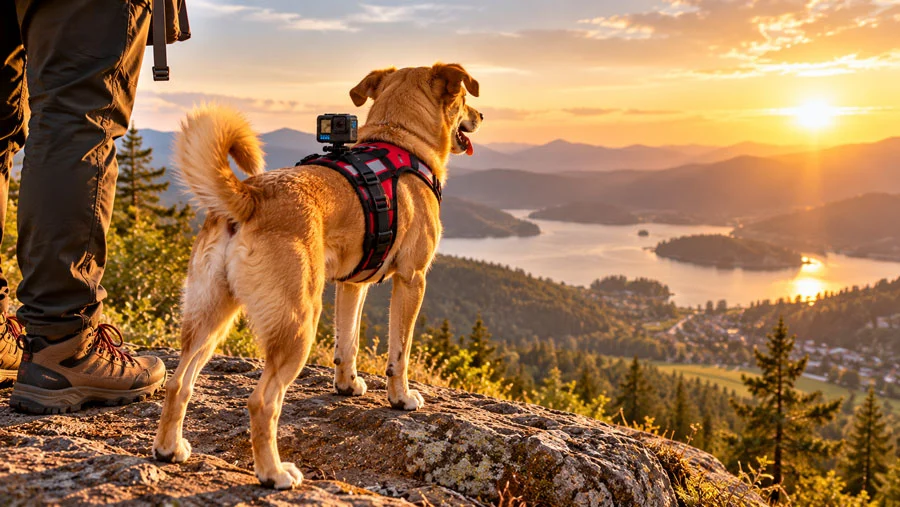
Consider taking the camera on:
- Hiking trips
- Beach walks
- Park visits
- Camping trips
- Road trips
- Dog-friendly cafés and outings
Check that the environment and equipment suit your dog first. Rough terrain, water, and extreme weather all call for extra care.
Build a Memory Collection
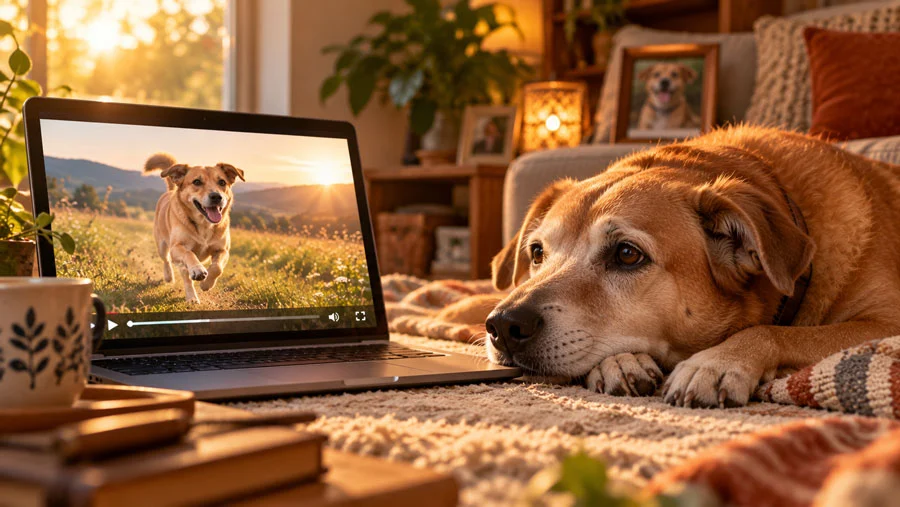
Over time, your clips become a personal archive of how your dog actually moved through the world. Many owners find these recordings mean the most as their dogs get older.
Tips for Better Footage
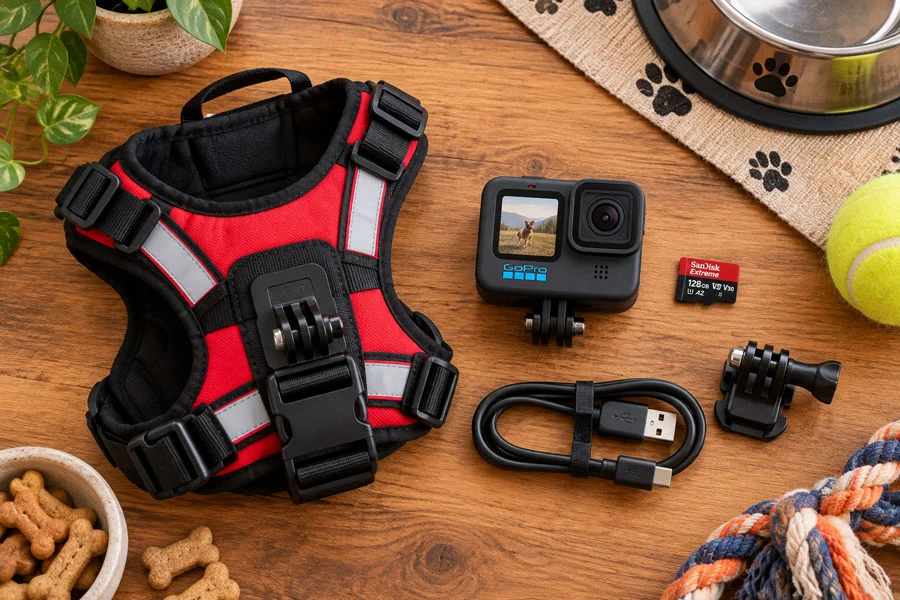
- Charge the camera and clear the memory card before leaving.
- Choose a wide-angle or stabilized setting if your camera offers one.
- Record short bursts rather than continuous footage, which makes editing easier.
- Mount the camera as level as possible to avoid a tilted horizon.
- In my Personal Experience, filming in the morning when the light is soft and fewer people are around.
Are Dog POV Cameras Worth It?
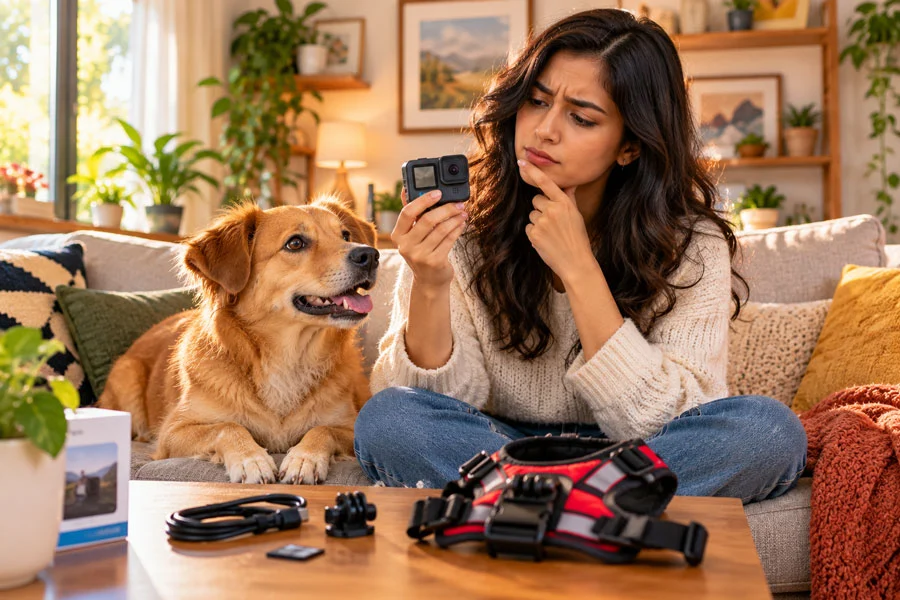
It depends on what you want from one.
It may be a good fit if you:
- Enjoy recording your dog’s adventures
- Like experimenting with pet technology
- Want to see the outdoor environment your dog explores
- Create pet videos or social media content
- Want lasting memories of your dog’s life
It may not be necessary if you:
- Mainly want to check on your dog at home
- Don’t enjoy recording or editing video
- Have a dog that dislikes wearing accessories
- Want a camera mainly for home security
If home monitoring is your main goal, a traditional indoor pet camera is usually more practical.
For me, it was worth it, because the clips became some of my favourite memories of Chester, after he’s gone.
Privacy Considerations You Shouldn’t Ignore
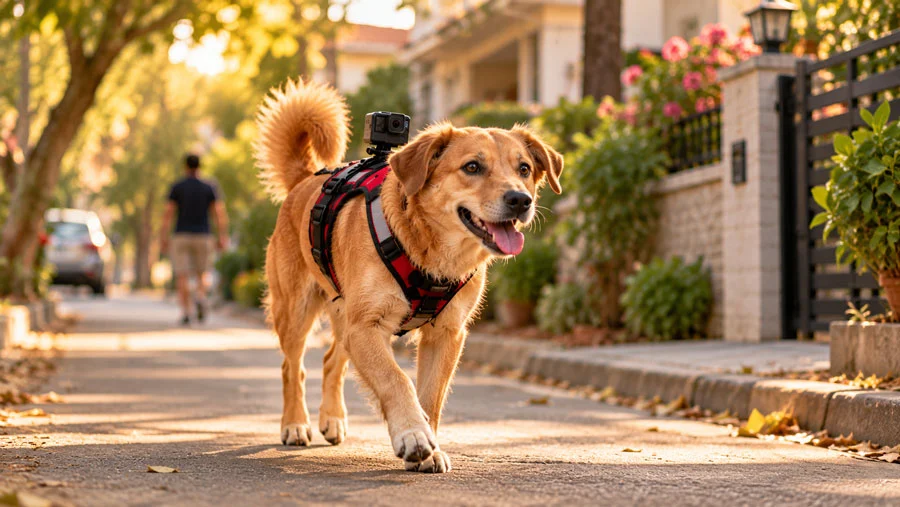
A wearable camera records far more than your dog. It can pick up:
- Strangers
- Neighbors
- Children
- Private homes and yards
- Vehicles and license plates
- Other people’s pets
Be mindful when you record in public or residential areas, and avoid intentionally filming people or entering private spaces without permission. Before sharing footage online, check each clip for identifiable faces, house numbers, license plates and other personal details, and consider blurring or trimming them.
Some parks, beaches and venues also have their own rules about recording, so check before you go.
Can a Dog Camera Help With Behaviour?
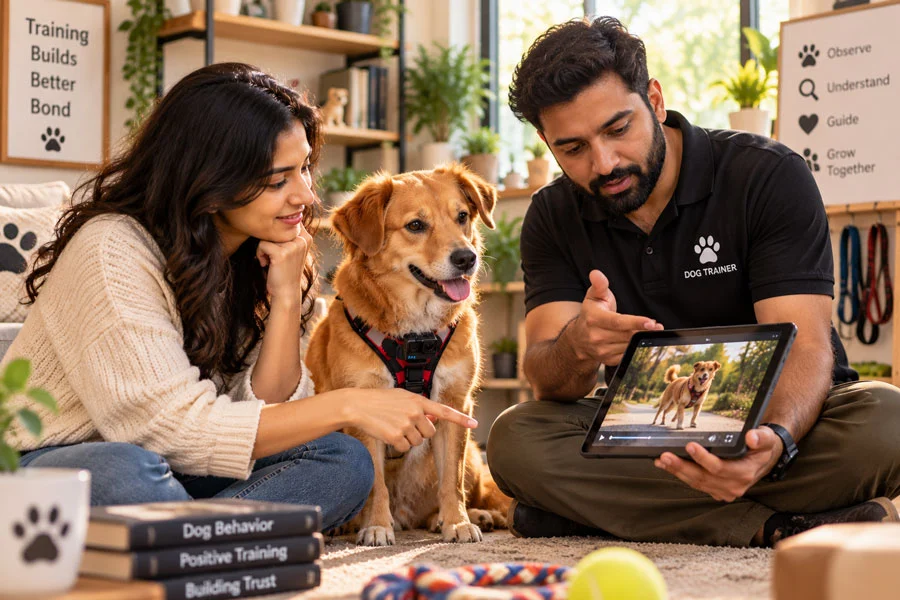
Footage can help you notice patterns you’d otherwise miss: what triggers hesitation, which spots your dog avoids or how they react to certain noises or crowds. Reviewing clips can give you a clearer description to share with a trainer or veterinarian.
But video is observation, not diagnosis. It shouldn’t replace a professional veterinary or behavioral assessment if you’re concerned about your dog’s health or behavior.
The Future of Pet Technology
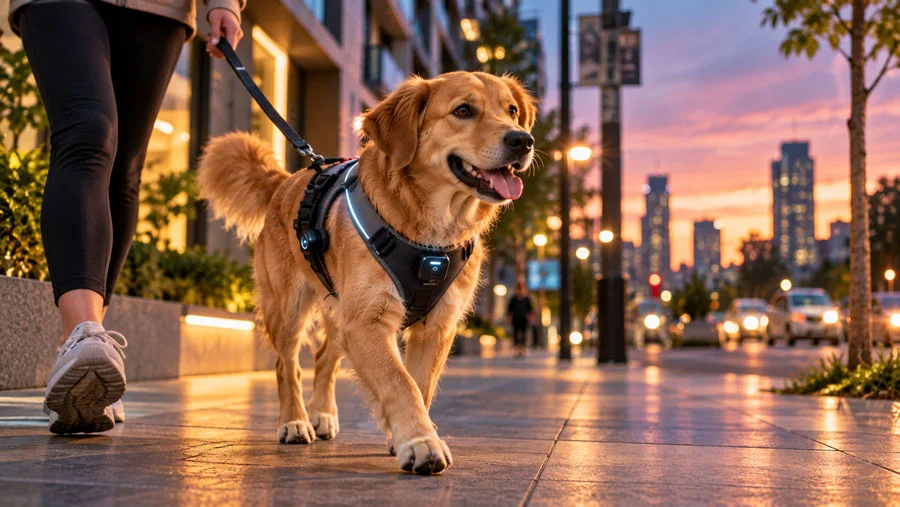
Wearable pet technology is developing quickly. Future devices may pair cameras with sensors that track:
- Activity levels
- Location
- Movement patterns
- Sleep
- Environmental conditions
Together these could give owners a fuller picture of their dog’s daily life. Still, technology should complement time spent with your pet, never replace it.
Quick Safety Checklist
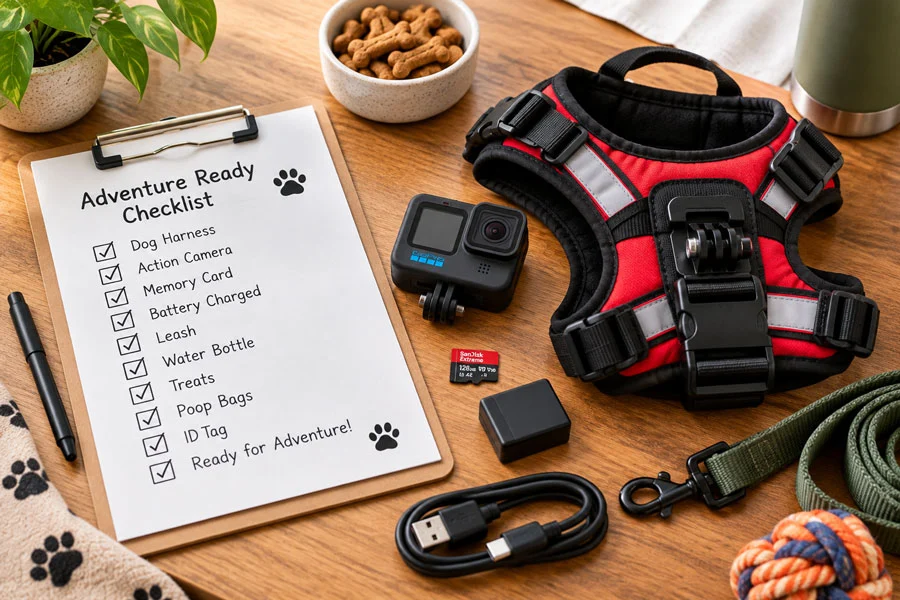
- The camera is lightweight for your dog’s size
- The harness or collar fits properly
- Your dog has been introduced to the camera gradually
- You’ve watched your dog’s movement before heading out
- Battery and storage are ready
- Weather and terrain are suitable
- You’ll stop if your dog shows discomfort
Frequently Asked Questions
What is a dog POV camera?
It’s a small wearable camera attached to a dog’s collar, harness, or other suitable mount that records video from roughly the dog’s perspective.
Are dog collar cameras safe?
They can be, if the camera is lightweight, securely attached, and comfortable for your individual dog. Monitor your dog and stop if you see signs of discomfort.
Can a camera show exactly what my dog sees?
No. It records from your dog’s approximate position but can’t reproduce canine vision or the scent, hearing, and motion cues that shape their experience.
Is a collar or harness better for a dog camera?
It depends on the dog and the camera. A suitable harness often gives steadier footage and less neck strain for active dogs, but comfort, secure fit and low weight matter most.
Can I use a dog POV camera on every walk?
You can if your dog is comfortable and the setup suits the activity, but there’s no need for constant wear.
Can it help me understand my dog’s behavior?
It can help you spot environmental triggers and patterns, but it doesn’t replace a professional assessment.
Final Thoughts: See the Walk From Your Dog’s Side
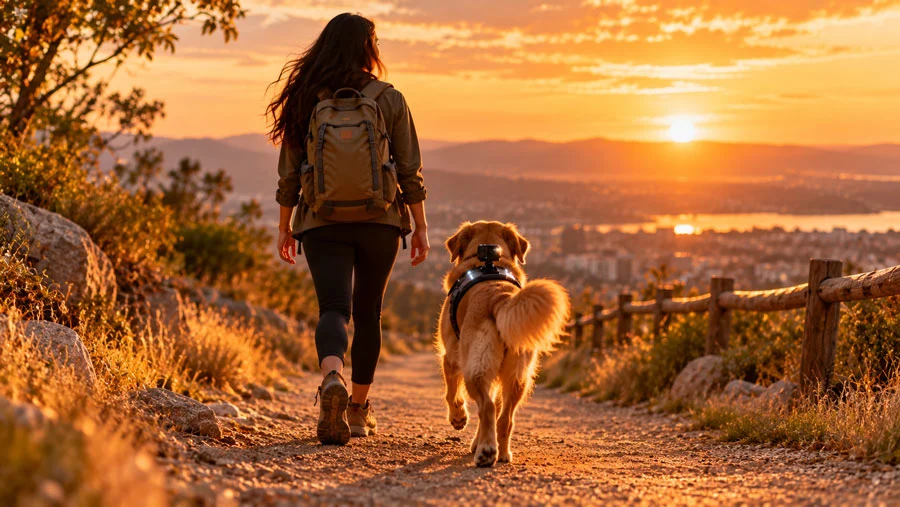
Dog POV cameras offer something an indoor pet camera can’t: a glimpse of your dog’s adventures from their level. They can show where your dog’s attention goes and the small moments you’d otherwise miss.
Filming Chester taught me that the best part of a walk isn’t the destination, it’s everything he stops to investigate along the way. Your dog doesn’t need a camera to enjoy a walk, but if a safe, comfortable one helps you keep those moments, you may start seeing their world a little differently.
Disclaimer: This article is for general information and isn’t veterinary advice. If your dog has a health condition or shows signs of discomfort, talk to your veterinarian.