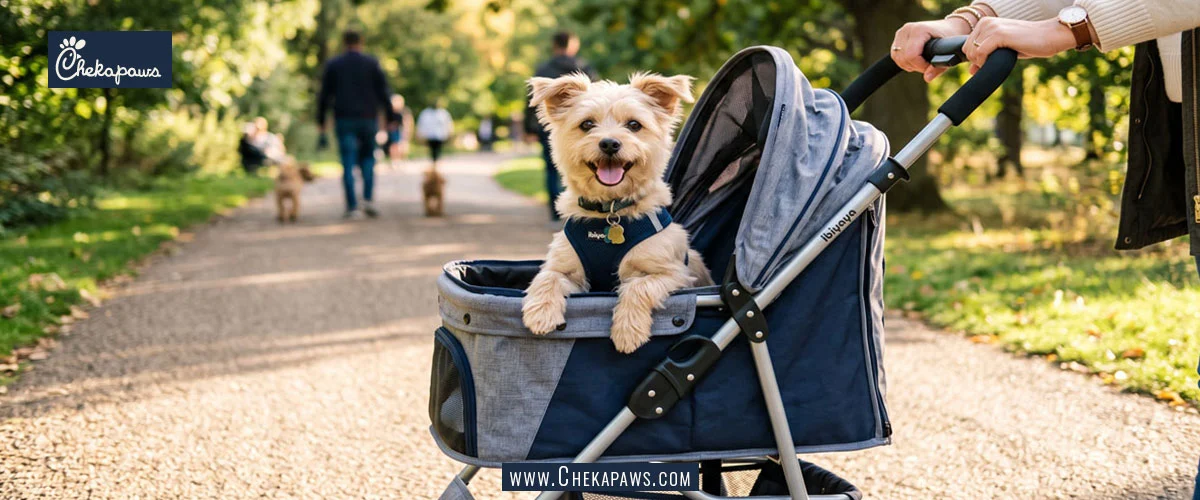
Dog strollers have moved from a niche novelty to a mainstream pet accessory and for good reason. Whether your dog is aging, recovering from an injury or simply too small to keep pace on long outings, a well-chosen stroller can open up the world again — safely.
This guide walks through everything you need to know: picking the right model, getting your dog comfortable with it, staying safe on outings and understanding when a stroller genuinely helps versus when a regular walk is still the better choice.
Table of Contents
Why Are Dog Strollers Becoming So Popular?
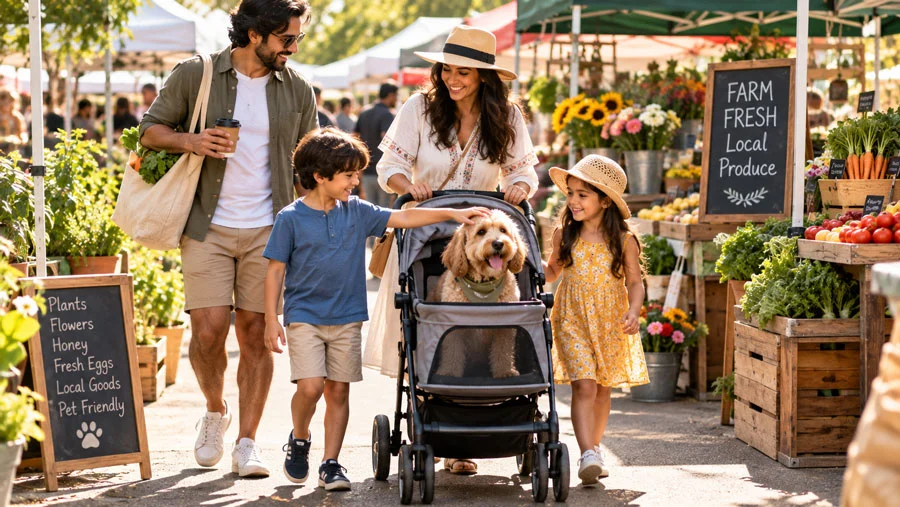
Pets are increasingly treated as family members rather than just animals in the backyard — they travel with us, shop with us and join outdoor events.
Strollers give owners a way to include senior dogs, small breeds, dogs with disabilities or pets with temporary mobility issues in those everyday activities without leaving them behind.
How to Choose the Right Dog Stroller
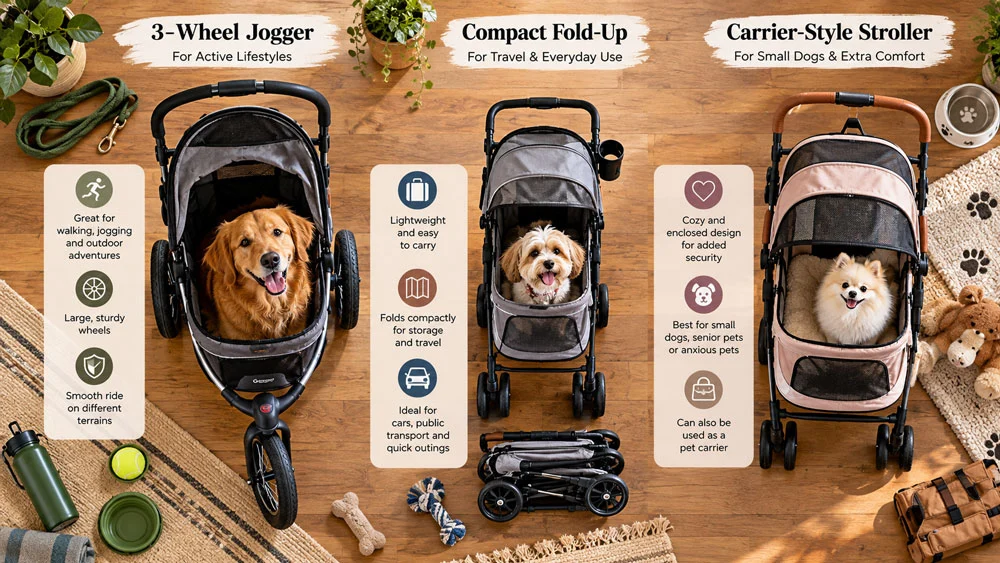
Not every stroller suits every dog. Here’s what actually matters when comparing models.
Weight Capacity
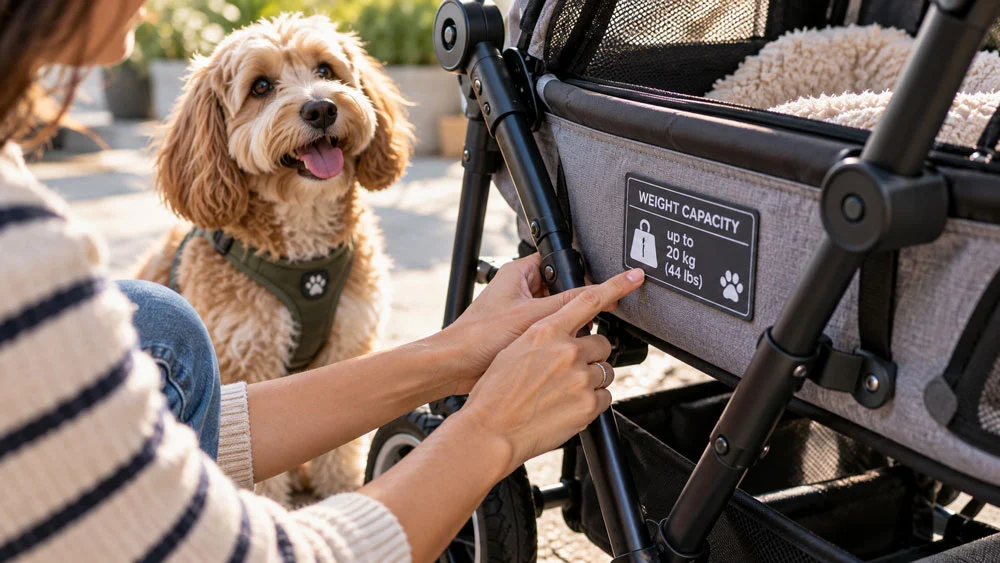
Always check the manufacturer’s stated weight limit rather than judging by size alone. A stroller that looks big enough may still be underbuilt for your dog’s actual weight which can affect both comfort and structural safety.
Size and Comfort
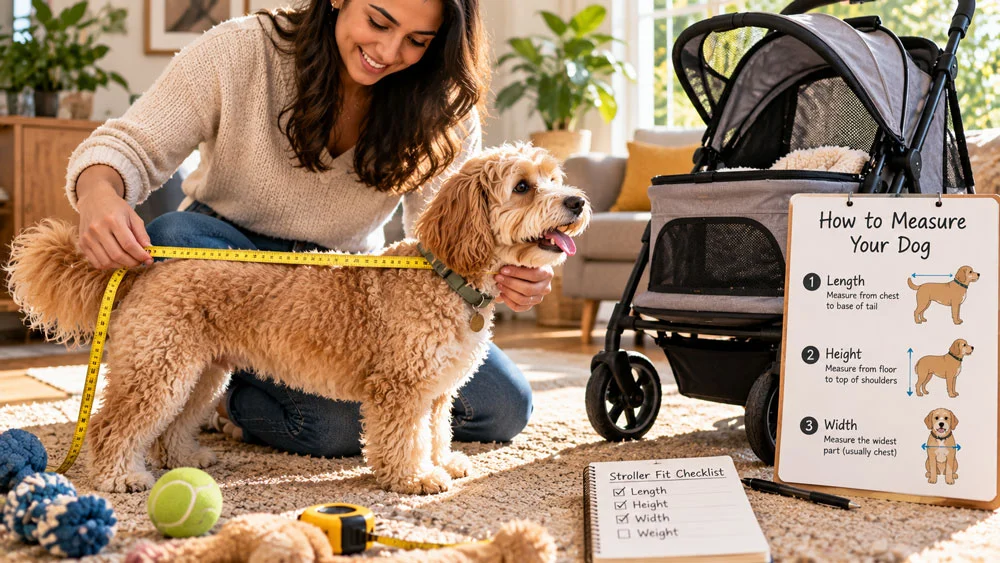
Your dog should be able to sit, stand, turn and lie down inside without feeling cramped. Measure your dog’s length and height beforehand instead of guessing from the product photos.
Ventilation
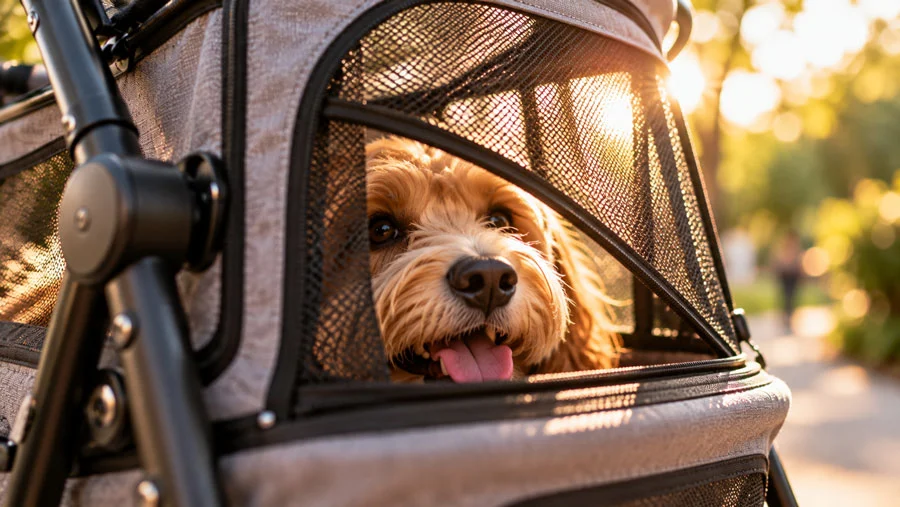
Mesh panels that allow airflow are essential, particularly for warmer climates or summer outings. Poor ventilation can make even a short trip uncomfortable for your dog.
Safety Features
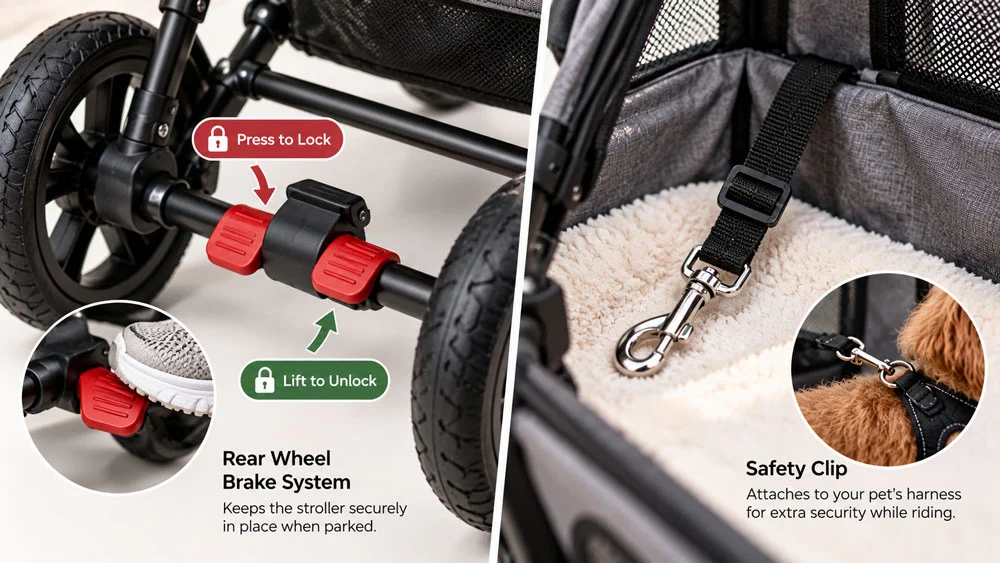
Look for secure zippers, safety clips or tethers, dependable brakes, sturdy wheels and a solid frame. These details matter more on bumpy terrain or in crowded areas.
Terrain and Wheels
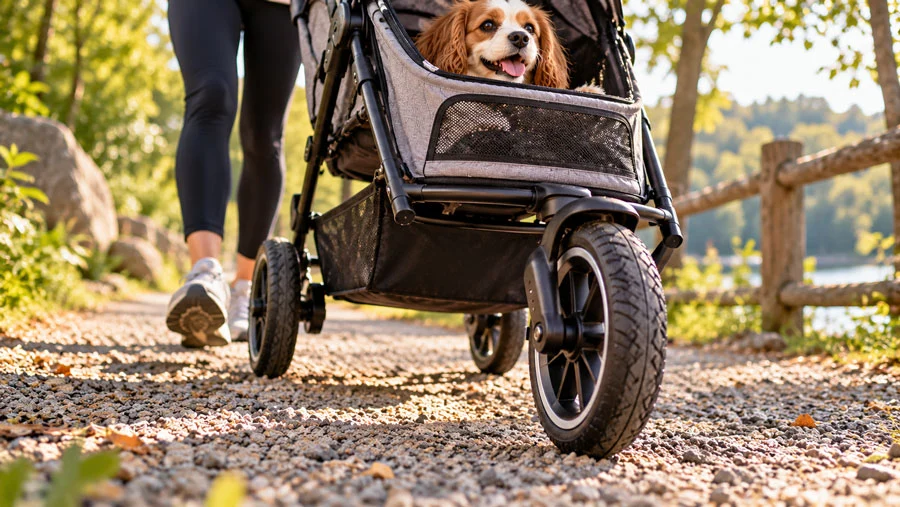
If you’ll mostly stick to smooth sidewalks, a lighter wheel set is fine. For parks, trails or uneven ground, choose a stroller built with sturdier, all-terrain wheels.
Storage and Portability
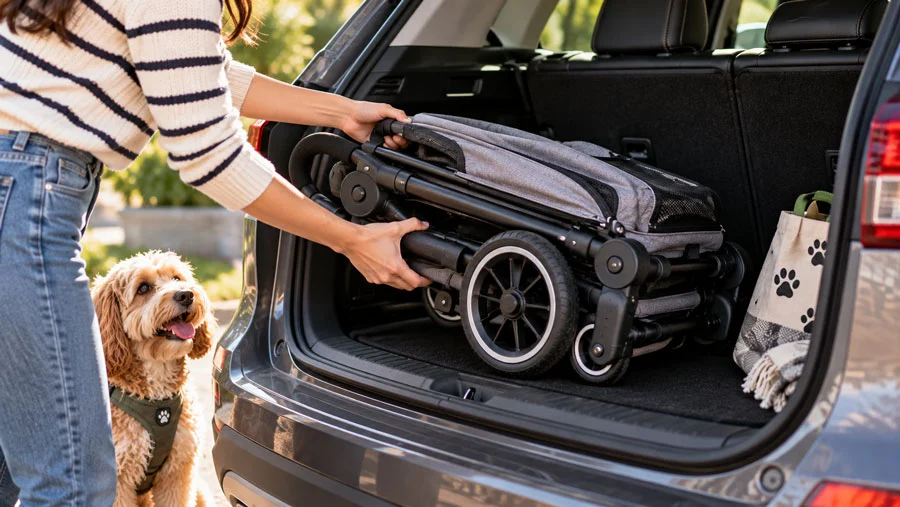
If you travel often or have limited storage at home, a stroller that folds down compactly will save a lot of hassle.
Introducing Your Dog to a Stroller
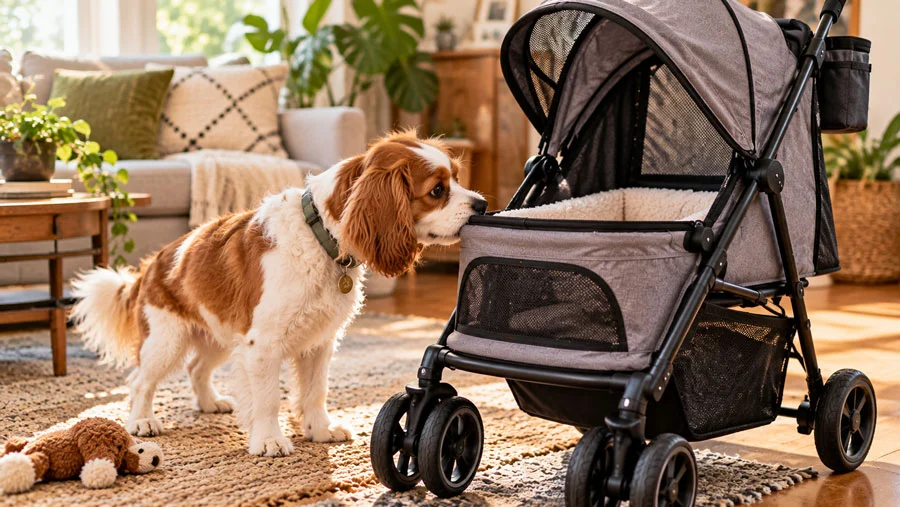
Forcing a dog into a stroller and heading straight outdoors often backfires. A gradual introduction builds trust and makes future outings far smoother.
- Let your dog explore it first. Leave the stroller in a familiar space and let curiosity take over.
- Build positive associations. Pair the stroller with treats, praise, or a favorite toy.
- Encourage them to climb in on their own. Avoid lifting or pushing your dog inside.
- Keep the first sessions brief. A few minutes at a time is enough at the start.
- Practice indoors before going out. Push the stroller slowly around the house so your dog gets used to the motion.
- Take short outdoor trips first. Start in a quiet, low-stimulation area and extend the duration gradually.
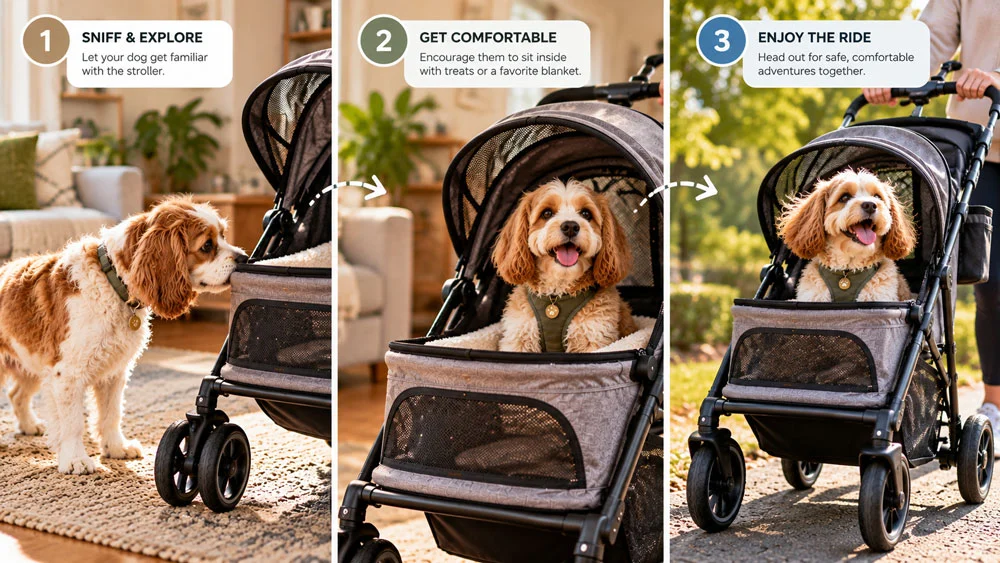
Every dog adjusts at a different pace — some settle in within a day, others need a couple of weeks of patient practice.
Safety Tips for Stroller Outings
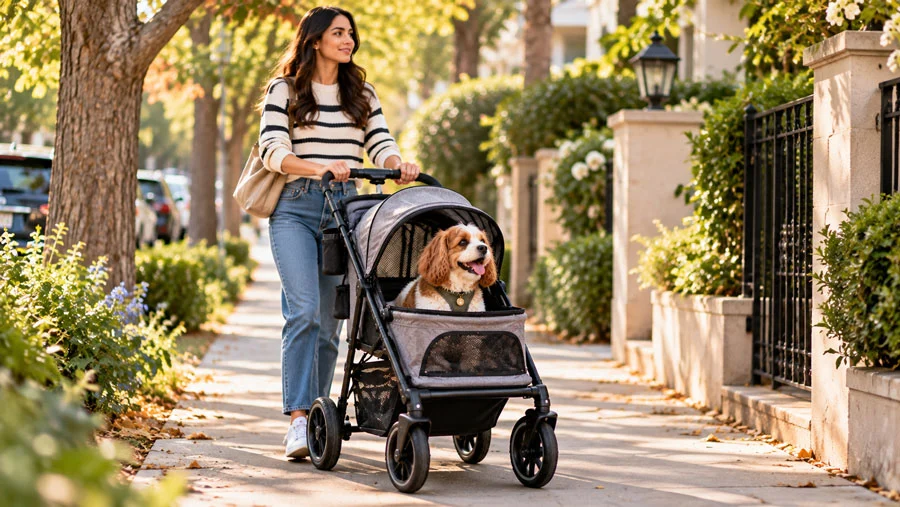
- Secure your dog properly using the stroller’s built-in attachment, making sure it never restricts breathing or movement.
- Never walk away and leave your dog unattended — a stroller can tip, overheat, or attract another animal’s attention.
- Monitor temperature closely, since enclosed compartments can heat up fast.
- Avoid busy roads, choosing quieter routes with smoother surfaces instead.
- Use the brakes every time you stop.
- Don’t overload the storage compartments, as extra weight can make the stroller unstable.
Dog Stroller vs. Regular Walks
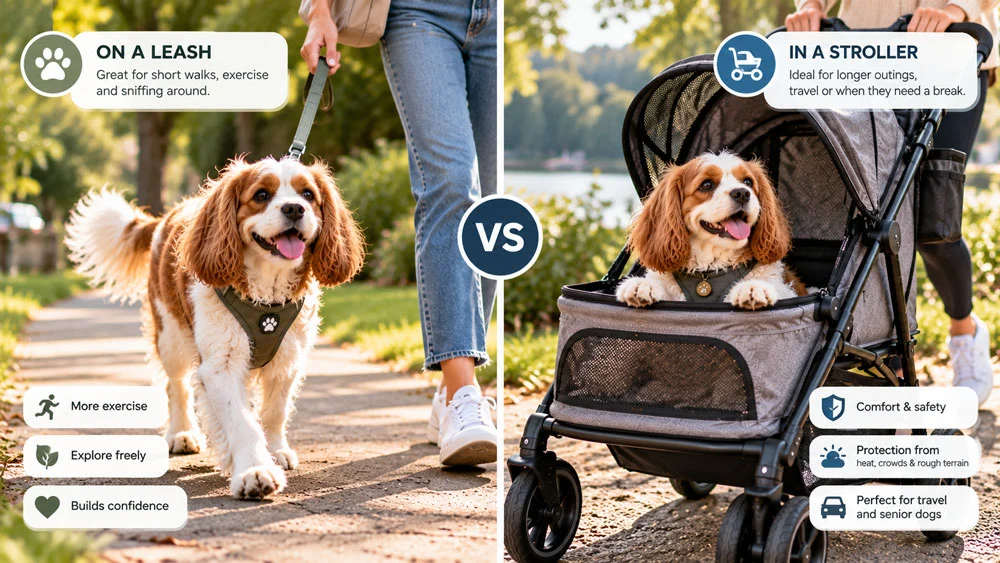
A stroller and a traditional walk aren’t interchangeable. Walking on their own paws gives a dog physical exercise, sniffing time, mental stimulation and social interaction that a stroller simply can’t replicate.
For a healthy, active dog, a stroller works best as a supplement — for trips that are too long, too hot or too crowded for walking — not a replacement for daily exercise.
For senior dogs or those with limited mobility, the stroller may reasonably take on a bigger role.
Can a Stroller Still Offer Enrichment?
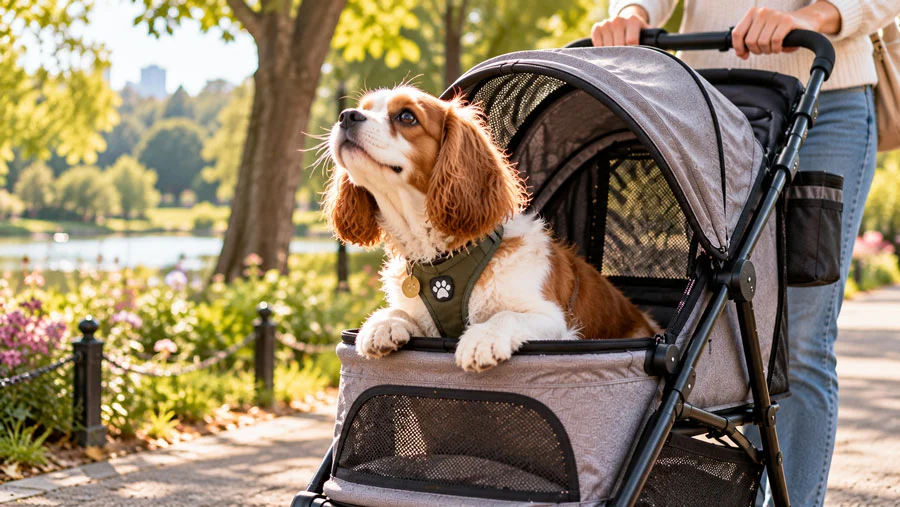
Yes — being in a stroller doesn’t mean a dog is simply switched off from the world. They can still take in new smells, sounds, sights, and fresh air, and enjoy time with their owner.
Pausing occasionally to let your dog sniff around (when their condition allows) adds even more enrichment to the outing. For dogs unable to walk long distances, these sensory experiences can be especially meaningful.
Using Strollers Safely in Hot Weather
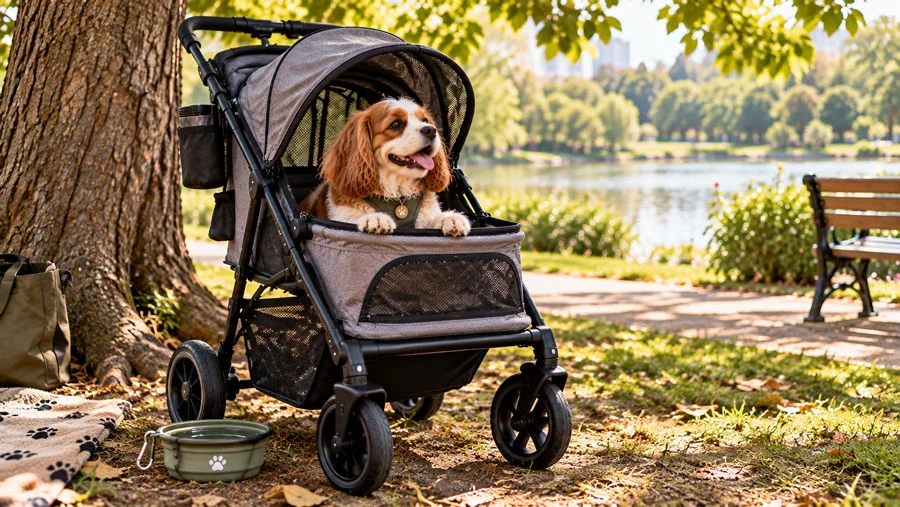
Heat deserves special caution. The interior of a stroller can warm up quickly, especially with poor airflow or direct sun exposure. Before heading out in warm weather:
- Check current weather conditions.
- Pick cooler parts of the day.
- Make sure ventilation is adequate.
- Provide shade whenever possible.
- Carry fresh water.
- Watch for signs of overheating.
- Avoid hot pavement and long stretches in direct sun.
If your dog shows signs of heat stress, move them somewhere cool immediately and contact a veterinarian if needed.
Are Strollers Suitable for Puppies?
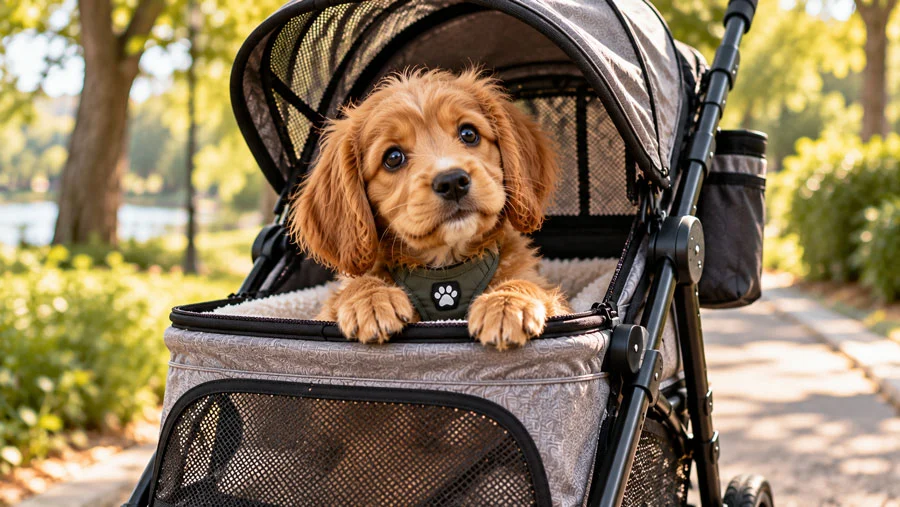
A stroller can be useful for puppies who aren’t yet fully vaccinated or cleared for unrestricted outdoor exposure, letting them safely take in new sights and sounds. That said, puppies still need age-appropriate movement, play and hands-on socialization — a stroller should support their development, not replace it.
Who Really Needs a Dog Stroller?
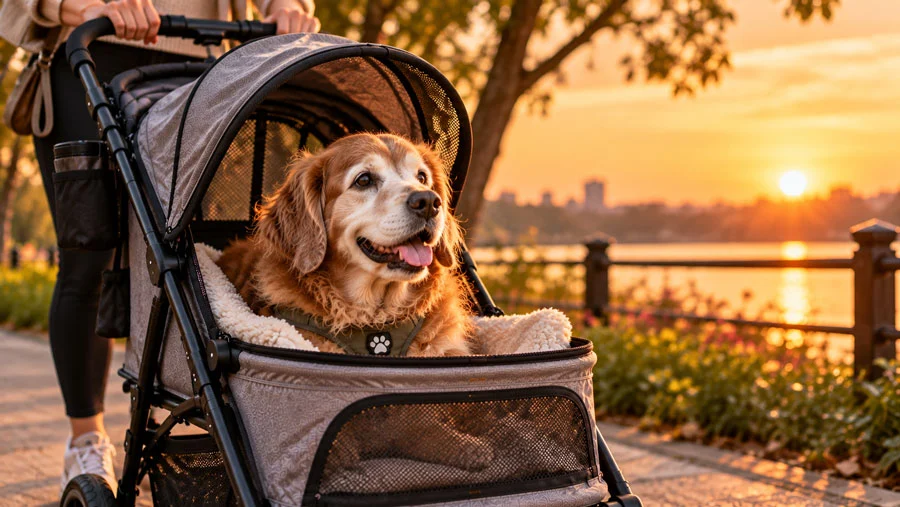
The rising popularity of dog strollers reflects how deeply pets are woven into everyday family life — travel, errands, outdoor events and more. They offer real practical value for aging dogs, small breeds, dogs with disabilities or pets recovering from injury.
But responsible ownership means choosing a stroller based on your dog’s actual needs, not simply because it’s trending.
Final Thoughts
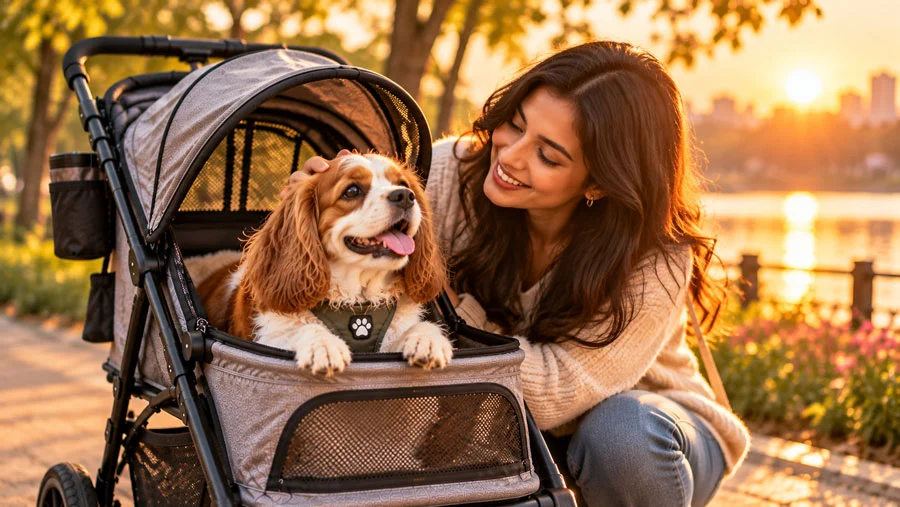
A dog stroller isn’t just another trendy accessory — for the right dog, it’s a genuine tool for mobility, comfort and continued participation in family life.
For healthy, active dogs, regular walks and exercise usually remain the better fit. Before buying one, weigh your dog’s age, size, health, temperament and activity level and check with your veterinarian if they have a medical condition or injury.
The best choice isn’t the flashiest stroller on the market — it’s the one that actually improves your dog’s day-to-day comfort and safety.