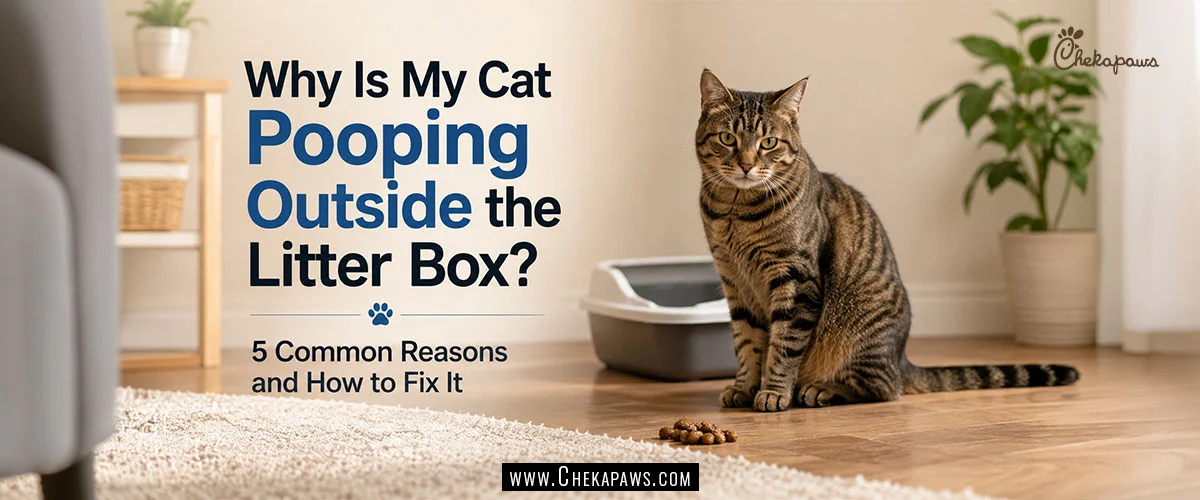
It can be annoying to discover faeces outside of your cat’s litter box, particularly if your cat has previously used it without any issues. However, rather than being an indication of unacceptable behaviour, cat pooping outside the litter box is typically a sign that something needs attention.
Health issues, stress, an uncomfortable litter box arrangement, or environmental changes can all cause cats to avoid their litter box. The first step in resolving a behavior is to recognize its cause.
Why is your cat urinating outside the litter box, then? Here are five of the most typical causes along with some solutions.
Table of Contents
The Litter Box Is Dirty
One of the most simple explanations is that your cat dislikes the condition of the litter box.
Since cats are naturally tidy creatures, many of them are especially sensitive to unpleasant smells and unclean bathroom areas. If there is too much trash in the box, your cat might find another place more enticing.
Why Cleanliness Matters
When a litter box isn’t cleaned frequently, it can:
- Create unpleasant smells
- Becoming difficult to use
- Build up excessive amounts of waste
- Make your cat reluctant to enter
- Urge your cat to use a different bathroom spot.
While some cats can tolerate filthy litter boxes better than others, all cats should have their litter boxes cleaned on a regular basis.
How to Fix It
At least once a day is ideal for regularly cleaning the litter box. When necessary, change the litter and remove any clumps of pee and feces.
Depending on the kind of litter you use and your cat’s habits, you should also frequently empty and clean the entire litter box.
Steer clear of strong-smelling cleaning supplies. Strong smells may make the litter box less inviting to cats, which have sensitive noses.
Your Cat Doesn’t Like the Litter or Litter Box
Sometimes the litter box itself is the issue rather than cleanliness.
Cats may have strong preferences when it comes to their bathroom. Your cat could not like the kind of litter, the box’s size, where it is, or even if it has a cover.
Common Preferences for Litter Boxes
Your cat might favor
- Litter without scent
- A certain texture of litter
- An uncovered box
- A box without a cover
- A quiet spot
- Simple access to the box
- A sufficiently deep litter box
Problems may also arise from a sudden shift in litter. Your cat can be reacting if you recently changed litter kinds, brands, or scents.
How to Make the Litter Box Configuration Improved
Instead of making a sudden change, think about introducing a different variety gradually if you think the litter is the issue.
Provide multiple litter boxes if you can, and try out various kinds of litter. This may help you in determining your cat’s preferences.
Generally speaking, your cat should be able to turn around and place themselves in the litter box with ease.
Your Cat Is Experiencing Stress or Anxiety
Cats are sensitive to environmental changes. Sudden changes in bathroom habits are frequently caused by stress.
Something that seems minor to you may feel significant to your cat.
What Could Lead to Stress?
Possible stress triggers include
- Relocating to a new home
- Introducing a new pet
- A newborn in the family
- Modifications to your everyday schedule
- Loud noises or construction
- Tension with another cat
- Relocating the litter box
- Modifications to feeding regimens
- Absence of secure hiding places
Stress can cause some cats to hide, become less social, alter their food patterns, or change how they use the bathroom.
How to Help a Stressed Cat
Make an effort to maintain a consistent daily schedule for your cat.
Provide them with peaceful spaces to withdraw to when they’re feeling overpowered. A more secure atmosphere can also be produced by offering hiding places, elevated rest areas, scratching posts, and frequent playing.
Provide different resources and litter boxes in different locations if another pet is making it difficult for your cat to reach the litter box.
Your Cat May Have a Health Problem
An underlying medical issue is one of the most significant causes of a cat pooping outside the litter box. Don’t assume that your cat’s sudden lack of use of the litter box is a behavioral problem.
Defecation may be painful or urgent due to health issues. Your cat might not be able to get to the litter box in time, or they can start to associate it with pain.
Possible Medical Reasons
The following circumstances may have an impact on bathroom behavior
- Constipation
- Diarrhea
- Digestive issues
- Pain while passing stool
- Mobility issues or arthritis
- Anal gland issues
- Additional digestive disorders
If an older cat has mobility or joint problems, they may also find it difficult to enter a litter box with high edges.
Keep an Eye Out for Other Warning Signs
Be mindful if your cat is also
- Straining to poop
- Passing very hard or unusually soft stool
- Going to the litter box repeatedly
- Crying while using the litter box
- Losing weight
- Eating less
- Vomiting
- Acting unusually tired
- Showing blood in the stool
Get in touch with your veterinarian if you observe sudden or ongoing changes in your cat’s toilet habits. Before ending that the conduct is purely behavioral, a medical problem should be ruled out.
There Aren’t Enough Litter Boxes
Competition for litter boxes might become an issue if you have several cats.
Certain feline species dislike having to share their bathroom. Another cat may find it difficult to comfortably enter the litter box due to a dominant or territorial cat.
What is the minimum number of litter boxes?
A widely accepted recommendation is
A commonly recommended guideline is:
Number of cats + 1 = number of litter boxes
For example:
1 cat → 2 litter boxes
2 cats → 3 litter boxes
3 cats → 4 litter boxes
Offering a variety of options helps lessen competition and make it simpler for cats to locate a hygienic, easily available box, but you don’t have to follow this recipe exactly in every home.
Place Boxes Strategically
Avoid placing litter boxes close to one another. Spread them around throughout your house if you can.
Select places that are
- Quiet
- Easily accessible
- Away from food and water
- Away from noisy appliances
- Easy for your cat to reach
Keep at least one litter box in a convenient position for older or mobility-impaired cats.
How to Stop Your Cat From Pooping Outside the Litter Box
You can start solving the issue as soon as you understand the potential reason.
Step 1: Rule Out Health Issues
Consult your veterinarian if the behavior is sudden, persistent, or accompanied by other symptoms.
Step 2: Completely Clean the Accident Area
As soon as you can, clean the places outside the litter box where your cat has pooped.
Use a suitable, odor-removing cleaner that is safe for pets. Your cat might keep going back to the same spot if the odor persists.
Step 3: Keep a Clean Litter Box
Scoop waste regularly and maintain a clean, comfortable litter box.
Step 4: Reevaluate the Litter
Think at whether the timing coincides with the start of the issue if you recently changed the litter. For cats who don’t enjoy strong scents, an unscented choice could be better.
Step 5: Adjust the Location of the Litter Box
Make sure your cat can get to the litter box without having to go through a crowded or unpleasant area.
Step 6: Lower Your Stress Level
Keep your routine consistent and provide your cat opportunity to escape, safe areas, and enrichment.
Step 7: Don’t Punish Your Cat
If your cat poops outside the litter box, don’t hit, yell at, or punish them.
Punishment can worsen the issue by causing anxiety and tension. Rather, concentrate on determining and resolving the root problem.
Why Does My Cat Poop Beside the Litter Box?
An key clue may be found if your cat often poops right next to the litter box.
Your cat might be aware that the space is intended for using the bathroom, but they might not like the box itself.
Among the potential explanations are
- The box is too small
- The litter is uncomfortable
- The box is dirty
- Your cat dislikes a covered box
- The entrance is difficult to access
- Your cat associates the box with discomfort
To find out what your cat likes, try adjusting one aspect at a time.
Why Is My Cat Pooping on the Floor?
Because the floor offers a level, solid surface and could be more accessible than an uncomfortable litter box, cats might prefer it.
If your cat consistently choose the same spot on the floor, give it a good cleaning and think about temporarily putting a litter box close by.
You can progressively move your cat to a better spot once it regularly uses the box.
Why Is My Older Cat Pooping Outside the Litter Box?
Litter box issues can arise in senior cats for a number of reasons.
Climbing inside boxes with towering sides might be challenging for people with mobility impairments. Medical issues affecting digestion, bowel movements, or their ability to swiftly get to the litter box can also affect older cats.
Think about offering an easier-to-access, low-entry litter box.
However, since medical concerns grow more significant as a cat ages, any new bathroom difficulties should be examined with a veterinarian.
Why Is My Cat Pooping Outside but Still Peeing in the Litter Box?
This is not always a sign that your cat has forgotten how to use the litter box.
It’s possible that your cat doesn’t like using the box for bowel motions yet feels at ease urinating in it. The box, litter, cleanliness, location, or discomfort during defecation could all be contributing factors.
Keep an eye out for any indications of constipation, diarrhea, straining, or pain, as well as whether the behavior began suddenly.
Should You Be Worried If Your Cat Poops Outside the Litter Box?
Accidents may occur sometimes, but abrupt or frequent changes in litter box behavior should be taken seriously.
A dirty box or an unwanted kind of litter could be the reason of the behavior. It may, however, also be linked to stress or an underlying medical condition.
Persistent changes should not be ignored, particularly if additional symptoms manifest.
Frequently Asked Questions
Why is my cat suddenly pooping outside the litter box?
A sudden change can be caused by stress, a dirty or uncomfortable litter box, changes in litter, household changes, or an underlying medical problem. If the behavior is sudden or persistent, consult your veterinarian.
How do I stop my cat from pooping outside the litter box?
Start by ruling out medical problems, then keep the litter box clean, provide an appropriate litter box setup, consider your cat’s litter preferences, reduce stress, and provide enough boxes for your household.
Should I punish my cat for pooping outside the litter box?
No. Punishment can increase stress and fear and may worsen litter box problems. Focus instead on identifying why the behavior is happening.
How often should I clean my cat’s litter box?
Remove feces and urine clumps regularly, ideally at least once daily. The box should also receive deeper cleaning and fresh litter as appropriate for the litter type and your cat’s needs.
Can stress make a cat poop outside the litter box?
Yes. Changes in the home, other animals, unfamiliar people, noise, and disrupted routines can contribute to stress-related bathroom changes.
Conclusion
It’s essential to look past the incident itself when your cat poops outside the litter box. Your cat frequently lets you know when things isn’t quite right.
The following are the five main causes
- The litter box is dirty
- Your cat dislikes the litter or box
- Your cat is stressed or anxious
- Your cat may have a health problem
- There aren’t enough litter boxes
You can frequently determine the problem and help with returning to positive litter box habits by keeping the litter box clean, making the bathroom comfortable, lowering stress levels, and keeping an eye on your cat’s health.
Above all, avoid punishing your cat. If the change is sudden, long-term, or accompanied by symptoms of disease, be patient, watch how they behave, and consult a veterinarian.