Discover how much water your cat needs daily, signs of dehydration, and expert tips to keep your feline healthy and hydrated. Learn more at ChekaPaws.
Including hydration from wet food, most cats require 2.5–4.5 ounces (75–135 ml) of water per 5 pounds (2.3 kg) of body weight per day; keep an eye on consumption and be alert for abrupt increases or drops since these may indicate health problems.
In this quick Chekapaws guide, we break down how much water a cat should drink daily, what factors affect hydration, and simple ways to encourage your cat to drink more.
Important factors include the cat’s weight, age, activity level, diet (wet vs. dry food), health issues, and surroundings.
Clarifying queries to pose to oneself Does your cat eat wet food? Has their drinking behavior recently changed? Do you have any diarrhea, vomiting, or lethargy?

Decision points: Provide fresh water, add wet food, and call your veterinarian if there is no improvement if intake is below recommended levels or you notice signs of dehydration.
Table of Contents
Why Hydration Matters for Cats
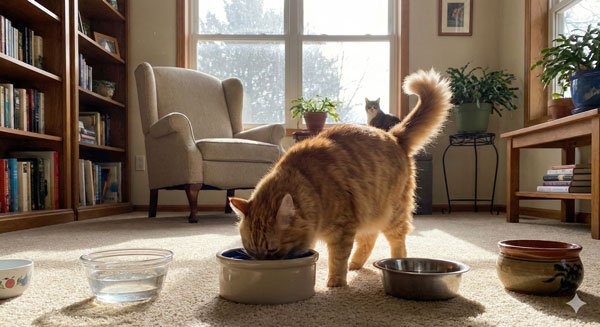
Cats are notorious for their low thirst drive, a trait inherited from their desert-dwelling ancestors. While wild cats obtained most of their hydration from prey, domestic cats rely on owners to provide adequate water.
Proper hydration is essential for kidney function, urinary tract health, digestion, and overall vitality. Even mild dehydration can lead to serious health issues, including urinary crystals, kidney disease, and constipation.
These topics may also interest you:
- Cat-Friendly Winter Holiday Tips Every Pet Parent Should Know
- Can Cats Find Their Way Home
- Can cats use cooling mats
How Much Water Do Cats Need Daily?
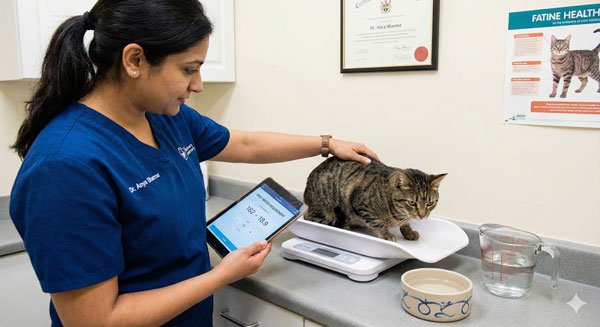
Calculating Cat Water Requirements
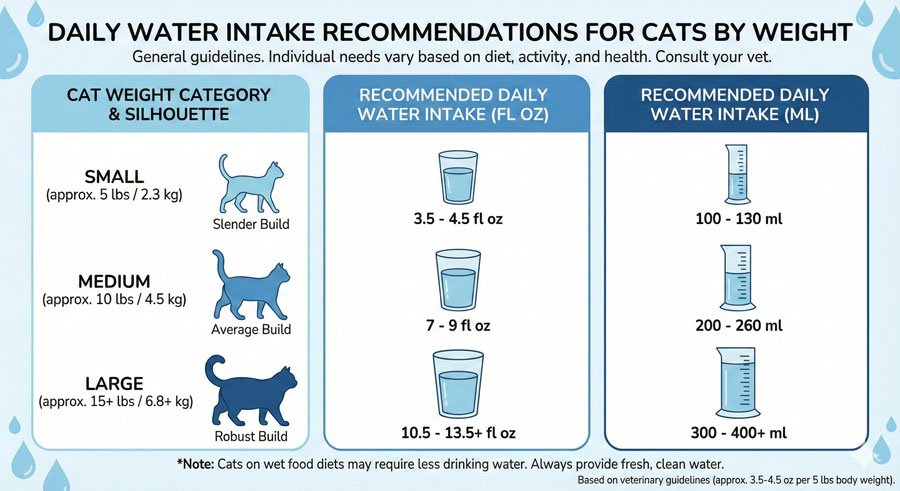
As a general guideline for daily water needs, many veterinarians recommend 4 ounces per 5 pounds of body weight (about 0.88 fl oz per pound); however, this varies depending on nutrition and personal circumstances.
Compared to cats fed solely dry kibble, cats fed wet food will require less free drinking because they get a large amount of their fluids from food. If you’re keeping an eye on a health condition, you should always measure. To determine a goal volume, weigh your cat and multiply the result by the per-pound guideline.
A healthy cat typically requires 50–60 milliliters of water per kilogram of body weight per day. For example, a 4.5 kg (10 lb) cat should consume approximately 225–270 ml of water daily.
This total includes water from food and drinking water. Factors such as age, activity level, diet type, and climate can influence individual needs.
Cats consuming wet food (70–80% moisture) may drink less water, while those on dry food (10% moisture) need to drink more to compensate.
Factors Affecting Cat Hydration
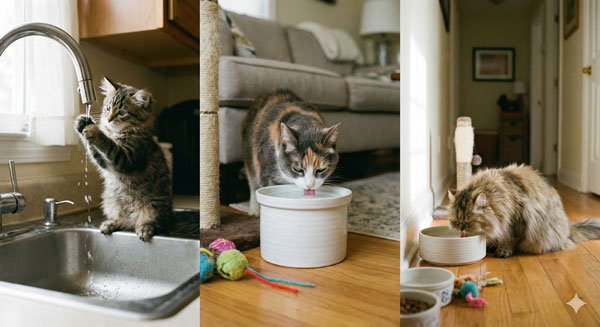
- Diet Type: Wet food provides significant hydration; dry food requires supplemental water.
- Age: Kittens and seniors have different hydration needs; older cats may have reduced thirst signals.
- Activity Level: Active cats need more water to support energy and thermoregulation.
- Climate: Hot, dry, or air-conditioned environments increase water requirements.
- Health Conditions: Kidney disease, diabetes, and hyperthyroidism can affect water needs.
These topics may also interest you:
Quick comparison of factors that affect water needs
Signs of too little or too much water (when to worry):
- Dehydration signs: dry gums, sunken eyes, reduced skin elasticity, lethargy.
- Excessive drinking (polydipsia): could indicate kidney disease, diabetes, or other illnesses and warrants veterinary evaluation.
If you notice a sudden increase or decrease in water intake, or symptoms like vomiting, weight loss, or changes in urination, contact your veterinarian promptly.
Practical tips to help your cat drink enough:
- Offer multiple fresh water bowls in quiet locations and consider a cat water fountain to encourage sipping.
- Serve wet food or add water/broth (unsalted) to dry food to boost fluid intake.
- Keep bowls clean and use shallow, wide dishes—some cats dislike whisker stress.
These topics may also interest you:
- Helping Your Cat Adjust to a New Home or Space
- How to Manage Pet Anxiety from Fireworks
- How to Tell if Your Cat is in Pain
How Much Water Should a Cat Drink Per Day
The majority of healthy cats require roughly:
- 40–60 milliliters of water per kilogram of body weight each day
- Cats’ Daily Water Intake Chart
- 3 kilogram (6.6 lb) cat: 120–180 ml daily
- Cat weighing 4 kg (8.8 lb): 160–240 ml daily
- 200–300 ml daily for a 5 kg (11 lb) cat
- This includes not only what they drink from the bowl but also water from meals.
These topics may also interest you:
- 7 Reasons Why Your Cat Is Not Eating
- Fun things to do with your pet
- The history of cats and humans living together
Does Wet Food Reduce a Cat’s Water Needs
Yes—in a big way.
Food that is wet: 70–80% moisture
Food that is dry: about 10% moisture
Since they acquire their hydration from meals, cats who eat predominantly wet food frequently drink relatively little from their water bowl. For appropriate hydration, cats fed dry food must consume more water.
Chekapaws Advice: Be especially mindful of your cat’s water consumption if they only eat dry food.
These topics may also interest you:
- 5 Tips for Training a Stubborn Pet
- Tips for keeping your pet groomed
- Top Tips for Keeping Your Cat Hydrated
Factors That Affect How Much Water a Cat Needs
The recommended amount of water for your cat could vary depending on:
Type of Diet – The largest difference is between wet and dry meals.
Age:
- Kittens require more water per kilogram.
- Due to kidney changes senior cats may consume more water.
Activity & Weather – Cats drink more after vigorous play and in hot or dry conditions.
Medical Conditions – Water requirements are increased by diseases like diabetes, kidney illness, or urinary problems.
These topics may also interest you:
- Essential Vaccinations for Cats
- Our Favorite Pet Toothbrushing Products
- 7 Best Pet Insurance Plans And Veterinary Care Options Available
How to Tell If Your Cat Is Drinking Enough
Simple Methods for Tracking Hydration:
- Every day, check the bowl’s water level.
- Monitor the discharge of the litter box
- Verify the color of your urine (light yellow is good).
- Take note of any changes in conduct.
- A visit to the veterinarian is worthwhile if you observe a sharp rise or fall in drinking.
These topics may also interest you:
- Interesting Pets That Came Into People’s Lives Unexpectedly
- Tips On Making Pet Costumes Or DIY Pet Fashion Projects
- Why Cats Purr: A Comprehensive Guide
Easy Ways to Encourage Your Cat to Drink More Water
Although many cats don’t drink much by nature, following suggestions can help.
Easy Hydration Advice for cats:
- Use bowls made of stainless steel or ceramic.
- Arrange several water basins throughout the home.
- Food and litter boxes should not be near water.
- Try a water fountain for cats.
- To meals, add a small amount of water or cat-safe broth.
- Cats are often encouraged to drink more when water is moved.
These topics may also interest you:
- Pet products you can’t live without
- Cat Food Allergies & Adverse Food Reactions
- The Healing Power of Cats
Can Cats Drink Too Much Water
Polydipsia, or excessive thirst, is abnormal and may be a sign of:
- Kidney disease
- Diabetes
- Hyperthyroidism
Make an appointment for a veterinary examination right away if your cat starts drinking significantly more than usual.
These topics may also interest you:
- DIY Cat Wall Shelves Ideas Customize Your Cat’s Vertical Playground
- Pet Shopping Guides You Should Read Before Making A Purchase
- 5 Products That Keep Your Pet’s Mind Busy While You’re at Work
Cat Daily Water Intake
What is the recommended amount of water per pound for cats?
18–27 milliliters per pound daily, including moisture from food.
Do cats kept indoors use less water?
No. The amount of water that indoor cats require is equal to that of outdoor cats.
If my cat never drinks from the bowl, should I be concerned?
Not always—this may be typical if they consume moist meals and don’t exhibit any symptoms of dehydration.
These topics may also interest you:
- What You Need to Know About Pet First Aid
- How to Deal with a Jealous Pet
- 5 Common Signs of Stress in Dogs and Cats
Conclusion
You may avoid dehydration, kidney difficulties, and urinary problems by knowing how much water a cat should drink each day. Although each cat is unique, keeping an eye on consumption, selecting a healthy diet, and providing fresh water on a daily basis can all help.
At Chekapaws, we think that being properly hydrated is one of the easiest—and most effective—ways to promote your cat’s long-term health.
These topics may also interest you:
- 10 Silly Things Our Pets Do That Are Adorable
- 5 Tips on Drama Free Cat Baths
- How To Keep Your Longhaired Cat’s Fur from Matting
- How to Introduce Your Pets to a New Baby
- How to Clip Your Pet’s Nails Without the Drama
- Common Behavioral Problems in Cats and How to Fix Them
- How to Help Your Pet Get Over Their Car Anxiety
- 10 DIY Cat Toys
- 5 Challenges That Made Me a Better Pet Parent
- What to Look for When Adopting a New Cat