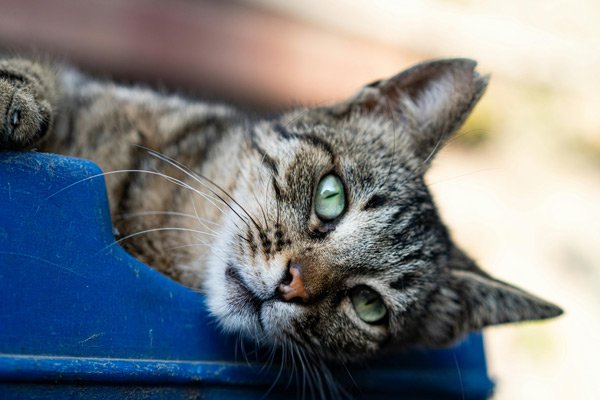
One of a cat’s obvious characteristics is its whiskers. They appear to have a life of their own as they twitch, curl, and tremble while hunting. The majority of cat owners are aware that whiskers are unique, but few realize how important they are. Whiskers are more than simply adorable facial features for cats; they are sophisticated sensory instruments that direct nearly every facet of their existence.
We examine the physics, purpose, misconceptions, and lesser-known delights of cat whiskers in this thorough, veterinarian-backed, pet-writer-polished deep dive. After reading this essay, you will realize that whiskers are not only incredibly cute but also one of the most remarkable biological systems that nature has created.
Table of Contents
What Exactly Are Whiskers?
Many mammals, including cats, have unique touch-sensitive hairs called whiskers, or vibrissae in scientific parlance. They are better defined as environmental sensors, despite the fact that they resemble long, stiff hairs.
In contrast to ordinary fur
- Through specialized follicles, whiskers are deeply rooted in the body.
- Blood-filled sinuses and densely packed nerve terminals encircle these follicles.
- As a tactile antenna, each whisker transmits data to the brain with remarkable accuracy.
A cat’s whiskers are necessary for
- Explore the surroundings
- Identify prey
- Transmit feelings,
- Keep your sense of space,
- Could even move securely in darkness.
- Knowing the structure of whiskers is the first
Different Types of Whiskers
Cats have whiskers in a number that are important Places
Mystacial Whiskers on the Cheeks
organized in neat rows on either side of the muzzle, the longest and most conspicuous. They help with
- Spatial awareness
- Hunting,
- Measuring the gaps.
Superciliary Whiskers (Eyebrows) – above the eyes. When something gets close to the face, they cause one to blink.
Genal (Side-of-Face) Whiskers – Situated on the cheeks further back. They provide the cat a broader perspective on space.
Whiskers on the mandible (chin) – Located beneath the chin. They are helpful when climbing or drinking since they can detect items beneath the face.
Whiskers on the carpal (front leg) – Situated behind the wrists. These aid cats in feeling textures, identifying prey, and assessing landing sites.
How Whiskers Help Cats Navigate
The ability of cats to move elegantly in the dark is well known. This is made feasible via whiskers.
Whiskers assist cats in the following ways because they sense air currents and surrounding objects
- Avoid Bumping into furniture,
- Navigate via confined areas,
- See barriers in dimly lit spaces,
- Assess distances before to leaping.
Because whiskers serve as a touchless navigation system, even blind cats are exceptionally good at navigating.
Additionally, whiskers are ideal built-in measuring tools because they are about the same width as a cat’s body. The cat knows instinctively that the body won’t fit through a gap if the whiskers can’t.
Whiskers and Hunting Skills
Cats’ natural predatory tendencies depend on their whiskers.
During Chasing
A cat creates a sensory field by pushing its whiskers forward, which detects
- motion
- direction
- speed
- and even faint tremors from the prey.
- While Being Captured
When a cat captures prey, its whiskers assist in determining:
- If the prey is still alive
- where the lethal bite should be delivered
- how to firmly grasp the prey
- Here, the cat’s carpal whiskers on its forelegs are particularly crucial since they allow it to grasp or pin prey with amazing accuracy.
- Toys that imitate the movement of prey, such as wands and mice, are particularly stimulating because even indoor cats use similar instincts when playing.
Whiskers as Emotional Signals
Additionally, whiskers are essential for communicating. As much as a cat’s tail or ears may convey its mood, so can its whiskers.
Relaxed/Neutral Whiskers
pointing in a different direction.
shows contentment or serenity.
Whiskers Facing Forward
alert and spread out.
shows enthusiasm, interest, or hunting mode.
Whiskers with a pulled back
pressed up against the face.
shows signs of anxiety, tension, or defensiveness.
Whiskers drooping
- Occasionally connected to fatigue, discomfort, or sickness.
- Even before your cat speaks or moves, you can frequently determine how it feels by looking at its whisker position.
Do Whiskers Affect Balance? (Debunking a Myth)
There is a common misconception that cats’ whiskers aid in their balance, although this is untrue.
The following factors regulate balance
- The inner ear
- Vision
- As well as proprioception of muscles.
- Cats use their whiskers to travel, not to keep upright. Nevertheless, they are essential to a cat’s security.
Whisker Fatigue: A Modern Cat Problem
Whiskers usually come into contact with objects more frequently in home settings than in the wild. Whisker fatigue, a form of overstimulation, may result from this.
Causes
- Eating food or liquids from deep dishes,
- Continual rubbing against small dishes,
- Crowded areas with narrow openings.
- Whisker fatigue symptoms include:
- Pawing food out of the bowl
- Refuse to consume specific foods,
Solution
Make sure the bowls are shallow, wide, and away from the whiskers.
Whisker Shedding and Regrowth
Naturally, whiskers can fall off. Occasionally, a healthy cat may lose one or two whiskers. This is typical and shouldn’t be worried about.
But excessive loss could mean
- Allergies
- Fungal infections
- Hormone Imbalance
- Skin disorders
- Stress
- trauma
It can take weeks or months for whiskers to grow back. A veterinarian should be consulted for any unexpected loss or harm.
Why You Should Never Trim a Cat’s Whiskers
Whiskers are sense organs, not just long hairs. When they are trimmed, the cat can no longer
- Judge space
- Move with assurance,
- Navigate securely,
- Successfully hunt or play.
Cats with short whiskers could develop into
- Nervous
- Clumsy
- Terrified
- reluctant to explore or jump.
- Cutting one’s whiskers should only be done when absolutely essential for medical reasons.
Breed Differences in Whiskers
Certain breeds have unique characteristics of their whiskers
- The whiskers of Maine Coons are frequently very lengthy.
- Due to heredity, sphynx cats may have short, damaged, or nonexistent whiskers.
- Because of the anatomy of their faces, Persians may have curled or uneven whiskers.
- All cats use their whiskers for the same vital purposes, despite these differences.
Conclusions
One of the most remarkable characteristics of animals is their whiskers. They support cats:
- Perceive their surroundings,
- Hunt with accuracy,
- Express their feelings,
- Travel securely in the dark.
These delicate instruments are an integral part of a cat’s everyday existence. You may support your cat’s comfort and instincts by preventing whisker clipping, selecting dishes that are whisker-friendly, and lowering environmental stress.
We may appreciate our cats more deeply when we are aware of their whiskers. There is an abundance of knowledge, feeling, and instinct behind every twitch. Cats’ whiskers help them express who they are in addition to helping them survive.